Project: "Solar Park. Feasibility study Smart Energy Hub: Nijmegen districts and companies in balance".
The City of Nijmegen, NXP, three housing associations and The Economic Board collaborated on this project to carry out a feasibility study into the exchange of energy between social housing and businesses. The aim is to increase overall prosperity by reducing tenants’ energy bills and contributing to climate targets; this forms the core of the research question. By generating more sustainable energy locally, the region becomes more self-sufficient in terms of energy. An external organisation has been commissioned to carry out this study.
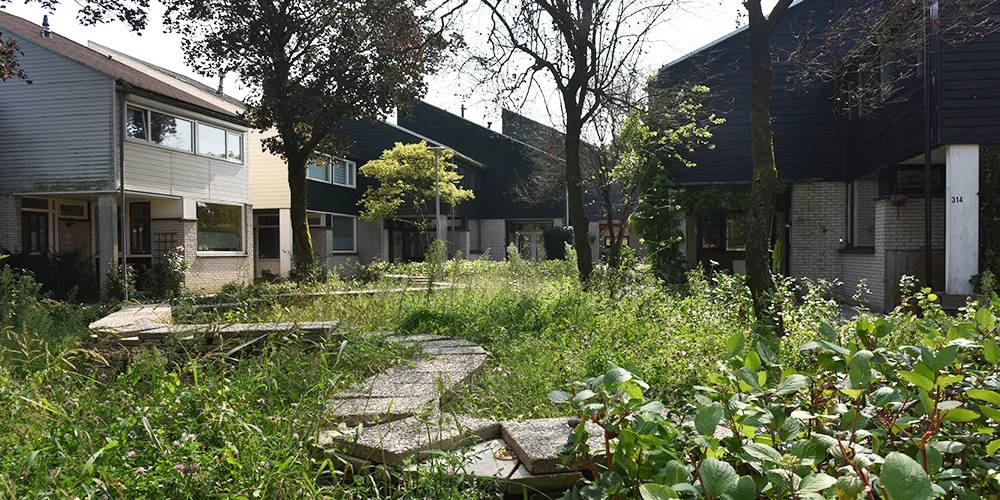
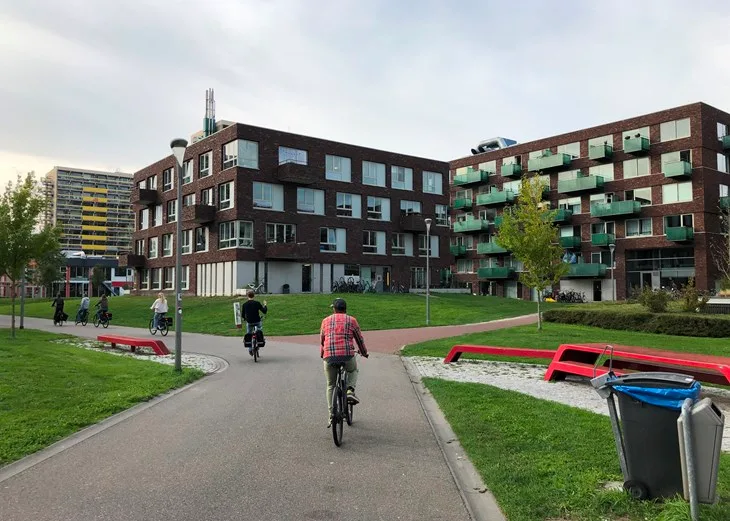
The feasibility study investigated whether the surplus electricity generated by solar panels on the roofs of social housing could be supplied to businesses. The starting point here was that the result is scalable, as the knowledge gained can also be applied in other locations where energy exchange between residential areas and businesses is desirable.
The results
The new Electricity Act offers opportunities for the virtual supply of sustainably generated electricity to third parties via the regional network operator’s electricity grid. This can be achieved through an energy co-operative. It is not possible to establish a physical connection between the solar panels on housing association properties and those on commercial premises. Following on from this feasibility study, further consideration can therefore be given to the location and the parties involved where an energy co-operative could be established to exchange electricity between residential areas and businesses.
The Solar Park project is the first Regio Deal project to have been successfully completed. Although the feasibility study shows that a direct connection of solar power from housing association homes to NXP is not financially or legally feasible, the project has yielded an important new perspective: the development of a Smart Energy Hub. It has also provided valuable insights into the technical, legal and financial conditions for local energy exchange and has strengthened cooperation between the parties involved. Building on this, work is now underway with Nijmegen City Council on energy communities, Smart Energy Hubs and area-specific energy systems as the next step in the regional energy transition.
You can read more about the research and its findings via the link to the white paper below.
Sponsor
As the project was still at an early stage – namely a feasibility study – there is no single stakeholder. The Economic Board considers it important to investigate, within a triple helix framework, the potential for energy exchange between homes and businesses and how this can be utilised in the region. That is why The Economic Board acted as the lead organisation for this project.
Regional Deal – Healthy Green Growth
This project forms part of the Arnhem-Nijmegen Regional Deal, through which we are strengthening healthy, green growth. Find out more at www.gmr.nl/regiodeal.