
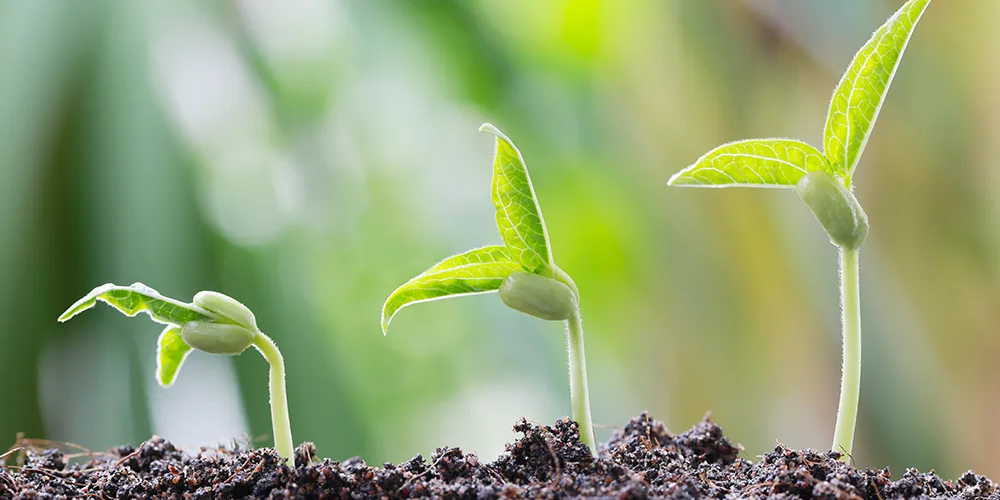
grow testGreen, that's what the Lifeport region wants. Because its big ambitions in the fields of health, energy and high-tech must not have a negative impact on people and the environment. Indeed, the region wants to be an example to others in the field of Smart Sustainability and train the professionals of the future.
Read more about sustainability in Lifeport

Would you like to view all the sustainable organisations in Lifeport?
They are shown on the interactive map of the region
Focus areas
These are the focus areas within sustainability in the Arnhem Nijmegen region.
Climate adaptation (Water, soil and greening)
The average temperature is rising and weather conditions such as drought and flooding are becoming increasingly extreme. This has consequences for residents, who may experience health complaints due to heat stress, for example, but also for the business community, which has to adapt to a new situation and associated regulations, for example farmers who are increasingly faced with periods of drought.
This requires a strong network that contributes to knowledge and innovation.
Circular construction and transformation
To enable and accelerate the construction of 60,000 homes from the Housing Deal, a transition to conceptual and circular forms of construction is needed.
This requires innovations in materials and economies of scale. More knowledge is needed among clients and contractors and new knowledge and skills among future personnel.
Circular economy
The economy of the future is circular. We are increasingly moving towards less resource consumption and more reuse of raw materials and materials.
This requires a transition in companies in all sectors, sometimes requiring major changes at the core of business operations. This requires knowledge, brainpower and a strong regional network of SMEs.
Hubs
Collaboration on the themes takes place at three specially equipped physical locations.
Soil Valley
Located at Innofields in Giesbeek, this hub provides space for research projects dealing with water and soil health.
Here, knowledge institutions, government, entrepreneurs, farmers and citizens work together on much-needed soil improvement for the future.
Read more in this article: Soil Valley – a partnership for soil restoration
Read more at soilvalley.eu
VIA-T
Centre for craftsmanship and innovation offering education and other knowledge exchange to accelerate the transition to circular and bio-based building.
Many secondary school students, lateral entrants and other interested parties come here to follow modules on sustainable and circular building.
Read the article ‘VIA-T continues to build’
Read more at via-t.nl
Lifeport@ Innovation Hub Circular
This will be a hub where education, entrepreneurs and governments work together on circular innovations.
Read the article:
Lifeport@ Innovation Hub Circular
Organisations
An overview of all (network) organisations around sustainability and circularity.
Lifeport Circular Lab
Lifeport Circular Lab (LCL) is a triple-helix partnership coordinated by The Economic Board
Members
The Economic Board,
Green Arnhem-Nijmegen Metropolitan Region,
Municipality of Nijmegen,
Arnhem City Council,
Radboud University,
Wageningen University & Research, Van Hall Larenstein University of Applied Sciences,
HAN,
Lifeport@.
Contact: Jan Luijten.
Lifeport@
Nijmegen cooperation focused on SMEs, including in circularity
Circular Council Rijk van Nijmegen region
A triplehelix collaboration with as members: ARN, Dar, HAN, Rabobank, MARN, Radboudumc, Province of Gelderland, Lifeport, Municipality of Nijmegen, Radboud University, TNO and the regional municipalities represented in the MARN.
Living Lab Circular Arnhem Region
Cooperation SMEs, from VNO-NCW, Kiemt and the municipality of Arnhem.
Members: Rijnijssel, CIRCLES, Green Alliance, Rabobank, Circle City, Connectr Energy, Sustainable Fashion 025, Samen1Energie, Lifeport.
Read more at
livinglabcirculairregioarnhem.nl
Education and research
Van Hall Larenstein University of Applied Sciences
A sustainable training provider, both in the range of courses on offer and throughout the entire curriculum.
HAN University of Applied Sciences
The HAN Centre for Multiple Value Creation helps organisations in the region with their transition towards future-proofing. It does this by working with students, academic researchers and partners on real-world sustainability issues and by sharing the knowledge gained.
HAN offers a minor and a Master’s degree in the Circular Economy.
Radboud University
Radboud University has a comprehensive sustainability programme, both in policy and in education and research.
Rijnijssel
Rijnijssel pursues a comprehensive sustainability policy.
Among other things, the training provider has developed a two-year higher professional education (HBO) programme in Sustainable Business Management in collaboration with HAN University of Applied Sciences.
ROC Nijmegen
At the ROC, we incorporate sustainability into all our courses and also implement a comprehensive sustainability policy.
Yuverta
Yuverta pursues a sustainability policy and offers training programmes specifically focused on sustainability.
Regio Deal projects
Within the Regio Deal healthy Green growth, six projects on sustainability are running in the Arnhem Nijmegen region.
Circular Arnhem Nijmegen region
A consortium of companies and institutions works on strengthening the regional ecosystem around circular economy in the Rijk van Nijmegen region.
This involves regional upscaling of the work of the Circular Council and connecting parties in and outside the region to the Lifeport@ InnovationHub Circular, in order to get more students and companies to work together on the transition to a circular economy. Such as in the project around the railway station area in Nijmegen.
In 2024, this project contributes to a stronger connection between the circular programme in Nijmegen and that in Arnhem.
Read more at Lifeport@ InnovationHub Circular/
VIA-T
VIA-T is the Hub for innovation and talent development in the future-proof built and built environment.
VIA-T wants to offer a solution for knowledge sharing, securing and thus talent development needed to realise a circular transition in the built and constructed future-proof living environment.
Via-T Foundation has a clear position in the regional ambitions around conceptual and circular construction. Consortium, proposition and business plan have been developed.
Within this hub, various projects are underway in the areas of innovation and research, knowledge sharing and talent development and inspiration, which contribute to the regional ambitions and objectives of the Regio Deal and Woondeal (the first 5,000 circular homes).
Read more in ‘VIA-T continues to build’
Lifeport Cool Lab
In the Lifeport Cool Lab (LCL) project, five municipalities together with educators HAN, Van Hall Larenstein and Yuverta are investigating which methods are suitable for bringing cooling to urban public spaces.
At six locations, researchers are testing various climate adaptations, so-called green interventions.
Read more about the Regio Deal project Lifeport Cool Lab
Soil Valley
A consortium of governments, business and knowledge institutions works on innovations in soil, water, plant and agro.
It contributes to the development of healthier soil and better water management by measuring, analysing and improving water and soil.
Many of the activities take place on a 6.5-hectare site in Giesbeek.
Measurements are also being carried out at two sites (the Berg en Dal moraine and Duivens Broek) to enable more effective measures to be taken to address soil and water issues.
Read more in Soil Valley, a partnership for soil restoration
Future-proof building
This project revolves around promoting speed and quality of circular construction through a unified joint regional approach to Circular Conceptual Building (CCB) and the circular design of public space.
Besides sustainable building, it also looks at how housing construction can be accelerated and monitors the implementation of the CREATE project (European project on circular urbanisation).
Future-proof business parks
This project revolves around developing sufficient and high-quality business sites by working on the future-proofing (and thus attractiveness) of these sites.
This is done through a higher level of organisation, greater and continuous availability of sustainable energy, better (digital) accessibility and a good balance between living environment and industry.
Read more in
Future-proof business parks Arnhem Nijmegen