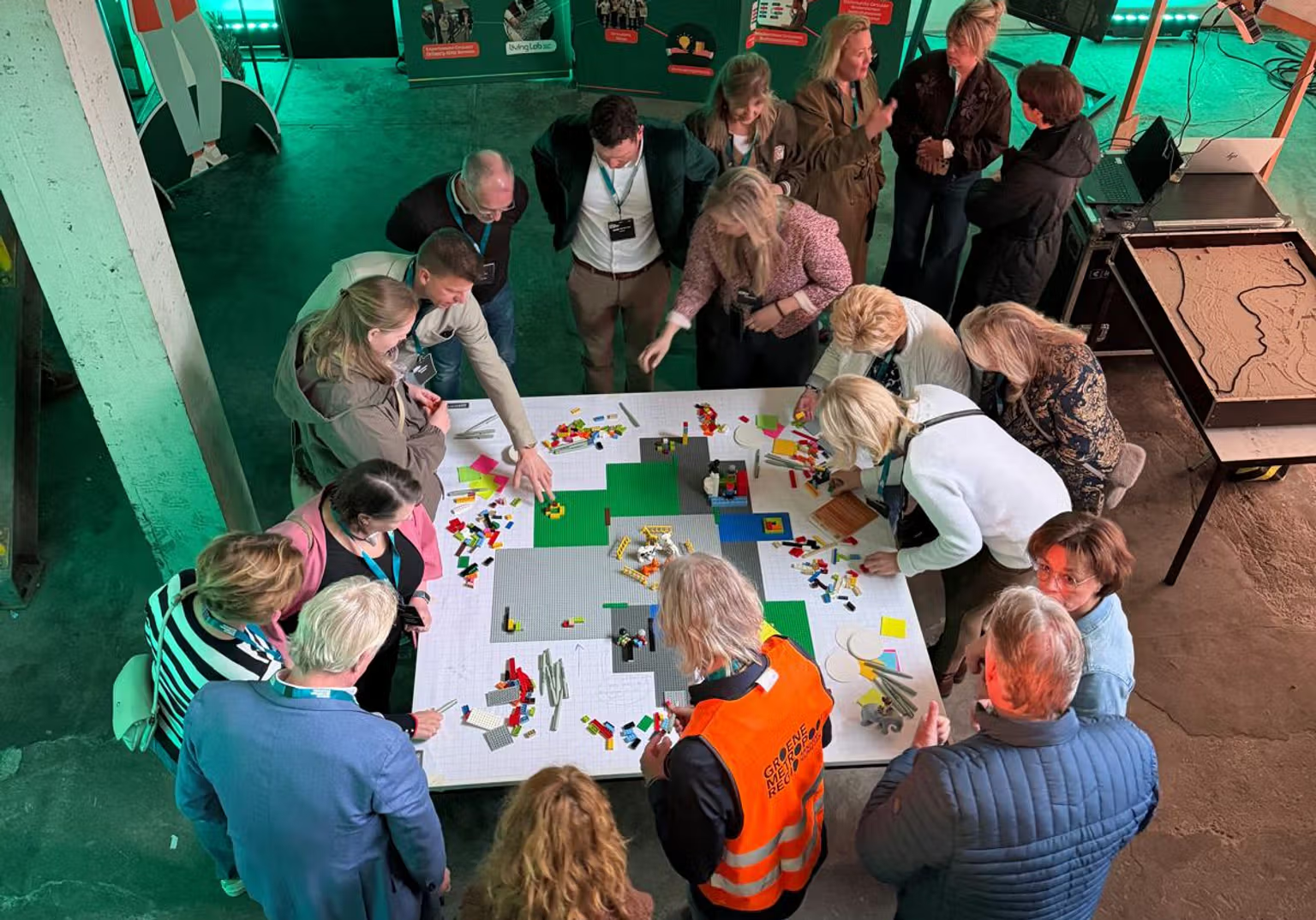
Merijn Neeleman works at Lifeport@ on a regional partnership focused on circularity. In this Lifeport@ Circular Innovation Hub, SMEs, government bodies and knowledge institutions can work together with their students (ROC, Yuverta, HAN, Van Hall Larenstein and Radboud University) to develop knowledge and conduct experiments.
Neeleman talks about the structure of this organisation and the current state of affairs.
“The idea is that these stakeholders form a community to develop and share knowledge – a kind of collective R&D, if you like.”
Merging streams
The organisation’s aim is to establish a framework for SMEs to make decisions together. This requires a broad, shared foundation and a common language.
“The government-wide Circular Economy Programme and the Raw Materials Agreement set out the targets of reducing the use of primary raw materials by 50% by 2030 and achieving a fully circular economy by 2050. Legislation designed to place broader responsibility on producers (such as the UPV) and to ensure full transparency through reporting (CSRD) will soon apply to SMEs as well. SMEs are now beginning to feel the pressure to take action, but are often still looking for a feasible approach and the right partners to work with.
We want to provide an answer to that. It’s perfectly fine that you’re all still feeling your way and heading in different directions, because if you bring them into contact with one another – like merging separate streams – they’ll come together. And by learning, working and experimenting together, we pool talent, strength and knowledge.”
What does a collaboration between SMEs, education and government yield?
Neeleman explains: “You bring all the necessary perspectives together.
Students bring a fresh perspective and represent the strength of the younger generation.
People who have been working for some time bring practical experience and a clear understanding of the needs in the field. The government brings the social perspective – the societal value. Entrepreneurs form the supply chain, from clients, designers and manufacturers to repair, waste processing and all the logistics in between.
For entrepreneurs, this approach is vital for setting their agenda; by participating, they gain a clear overview. They also receive solutions to their challenges, and perhaps most importantly: up-to-date knowledge, as this field is evolving at breakneck speed.
Students need contact with other disciplines and degree programmes, and they want to build a network with the professional field. They, too, sometimes lack sufficient knowledge of circular working; this is still limited in the curriculum and changes too quickly for the curriculum to keep pace. Tutors want to learn new forms of teaching. Rather than simply imparting knowledge, the focus these days is more on facilitating the process of people engaging in dialogue with one another.”
“The organisation will become a physical space where you methodically ensure that entrepreneurs, research and education work together. And, of course, the local authorities are also involved in innovating together.”
Part of the ecosystem
This community forms part of the wider regional circular economy system, which also comprises a research programme spanning the entire educational spectrum and a triple helix ecosystem currently being developed by the Circular Council.
Together, they stand for: innovation, building knowledge, and retaining and attracting talent.
Neeleman: “Forming a community ensures that the benefits of collaboration have a longer-lasting impact. It’s not just a one-off project and then it’s over. We want to engage people for the long term, so that their understanding of circularity grows during the project and can be applied to the next one, and then the one after that, and so on.”
What questions do companies have?
Neeleman has now started asking entrepreneurs: what challenges are you facing? What sort of questions would you like to raise here? And a whole range of issues has already come to light. For example, an IT company aiming to reduce the environmental footprint of its data storage. Or a company that has a solution to prevent large amounts of waste in hospitals, but which is coming up against an insurance system that the solution does not fit into.
Cases like these will be the driving force behind the further development of this collaboration.
Contact
Do you have questions or would you like to join the community? Then contact Merijn Neeleman at merijn.neeleman@lifeporthub.nl.