
Innovation square
Throughout the event, the Innovation Square is open as a place to explore, connect and experience. Step into the rich history of semiconductor innovation in Nijmegen and see it reimagined through the creative lens of ArtEZ. Discover how the chips of the past, once visible as 16 MB on a board, have evolved into the invisible building blocks of today’s technology.At the same time, look ahead: student teams present their visions of the future, while partners showcase their latest breakthroughs in semiconductor technology. A unique place where past, present and future innovation come together.

Chip of the Future
More than seventy years ago, Philips laid the foundation for semiconductors in Nijmegen. Today, that legacy continues to thrive. The region has grown where world-leading companies, research institutions, and governments collaborate to shape the technologies of tomorrow.

Lifeport Ecosystem
The Lifeport Arnhem Nijmegen region stands out as the only place in the Netherlands where chips are actually produced. The strong ecosystem ensures that new technologies are developed, validated and scaled here, improving lives. Meet and connect with the ecosystem.

Packaging for tomorrow’s chips
Chip packaging has evolved from a mere necessity to a crucial component for the further development of electronics. True innovation - to enable technological advancements - is only possible through packaging. CITC will demonstrate some of its latest developments.

HealthBot
HealthBot is a social robot companion designed to support elderly people living independently at home. Developed by multidisciplinary student teams at HAN University of Applied Sciences in collaboration with regional healthcare partners, HealthBot combines social interaction with smart health monitoring.

Enzyre
Enzyre is a diagnostics company, based in Nijmegen, the Netherlands with focus on blood-coagulation disorders, they stand out because they want to bring a diagnostic to the bedside of (hemofilia) patients, and eventually allow for it to be used by the patients themselves. Their first device is close to approval validating proof of concept. They are working under many international partnerships and have identified first route to market for year 2026.

Cocktail Robot
This smart cocktail robot shows how technology and creativity come together. Fully automated, surprisingly precise, and ready to shake up the Innovation Square by serving the perfect cocktail to our participants.

SELANA
After 6 years of development, SELANA passed the strictest approval process in Europe with the RDW. Making the SELANA Alpha the only legal E-step in the Netherlands.

Spacecific
Spacecific, a spin-off from the Radboud Radio Lab, develops Track Your Rocket (TYR), a GPS-independent system for highly accurate tracking of sounding rockets, already successfully tested in three rocket flights.

IMChip
IMChip is developing brain-inspired chips that tackle one of AI’s biggest challenges: inefficient hardware. By mimicking the way neurons work in the human brain, IMChip enables AI computing that is up to 100× faster, 200× more energy-efficient, and dramatically better in performance per watt.

NXP: VW ID.4
This self-driving electric car demonstrates how advanced radar technology from NXP is shaping the future of mobility. High-performance radar sensors enable critical ADAS functions, improving safety for drivers, passengers and everyone on the road.

RU: Accessible wheelchair control
The student team from Radboud University developed a wheelchair controller using buttons instead of a joystick, making it easier to use for people with hand tremors, such as Parkinson’s patients. The concept is tested in a virtual environment where users navigate a wheelchair through a small town.

Precision RF energy
PinkRF develops solid-state RF technology that enables highly precise and controllable energy delivery. Unlike traditional magnetron-based systems, RF energy offers superior control, reliability and efficiency. This makes it ideal for medical applications such as safely and evenly thawing blood products in hospitals.
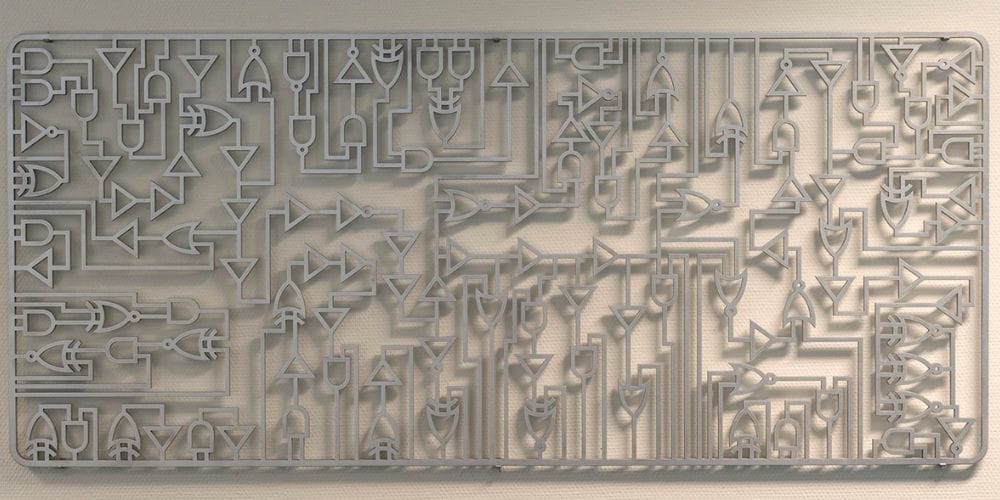
Semiconductor heritage meets art
LINK presents a unique archive of semiconductor history, tracing the journey from sand to silicon in Nijmegen. Selected artworks by ArtEZ students connect this technological heritage with contemporary art, making semiconductor technology tangible in a digital world.

Sencure: biosensor technology
Sencure develops low-power biosensor chips for wearable health devices. Its SNCE800 integrates Analog Front-End, ADC, and DSP on a single chip to accurately measure heart, breathing, and brain activity, supporting manufacturers in developing regulation-ready health solutions.