‘The region as a campus’. That motto of HAN University of Applied Sciences sounds good, but what exactly does it mean? And how does the region benefit from it? Rob Verhofstad, Chair of the Executive Board at HAN and a member of The Economic Board, explains. “Students become professionals within the region.”
“You can view ‘The region as a campus’ in several ways,” says Rob Verhofstad. “A great deal happens for our students outside our university’s campus. Where does someone really become a nurse? At a healthcare organisation. At companies in the region, both large and small, our students become professionals, just as they do at institutions and government bodies. In addition, our research is practice-oriented, driven by questions from the region, for example regarding grid congestion, health inequalities or improving treatments.”
“In fact, we see the entire Lifeport Arnhem Nijmegen region as a campus,” he explains. “I find that an inspiring idea. In industrial estates, people are thinking about how to deal smartly with energy surpluses and shortages. Students undertake work placements there, and researchers contribute ideas for solutions. That’s where it’s all happening.”
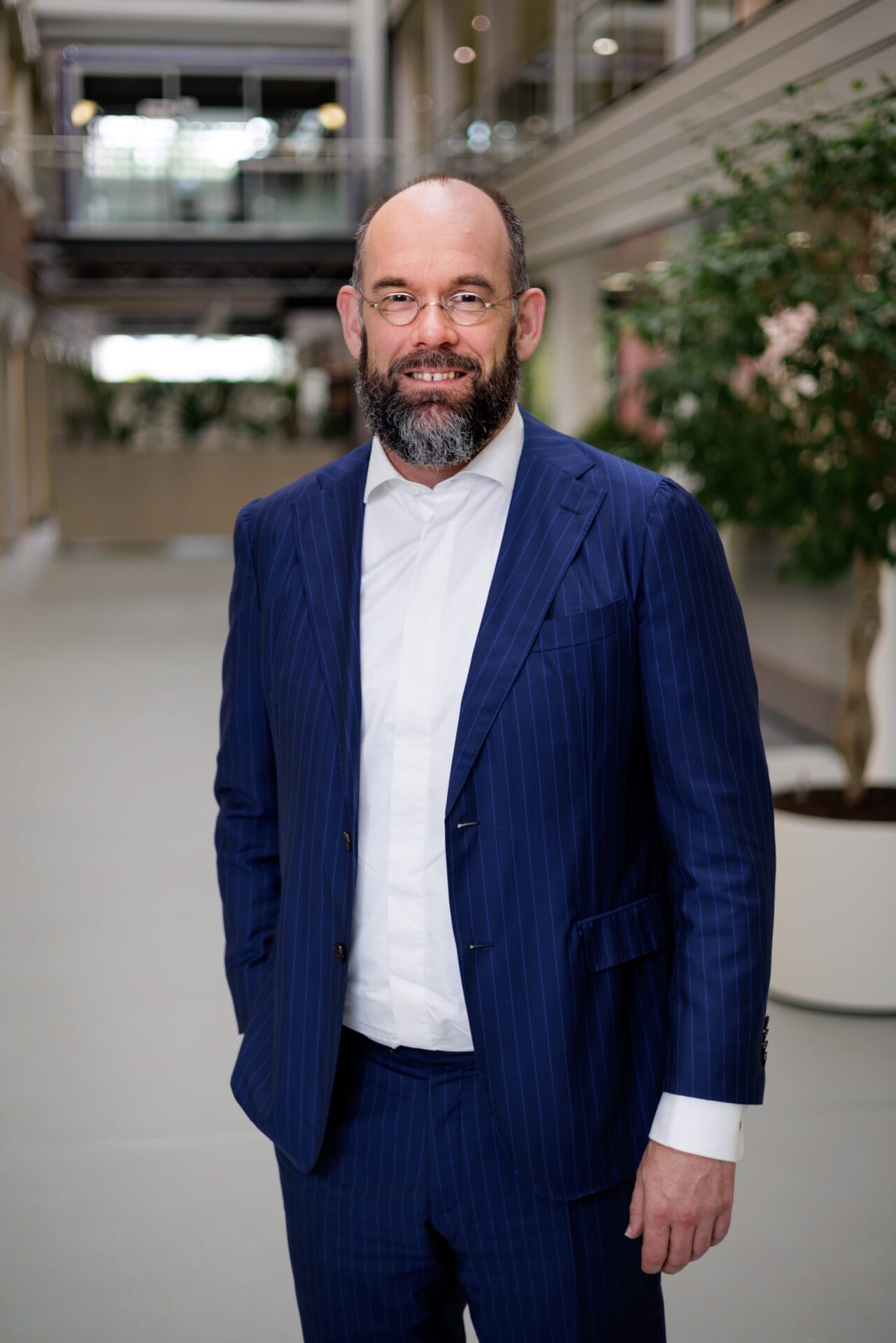
Rob Verhofstad
Labour productivity
This is of interest to students, who can gain practical experience, and to researchers. But it is also beneficial for the region as a whole, says Verhofstad. “Problems such as grid congestion or the human capital issue are highly complex. These challenges often have technical, legal, business and human dimensions. New knowledge gained through research helps to find smart solutions. And students who are well trained in practical settings ensure greater labour productivity. That, too, is very important given the current challenges.”
He has a few more thoughts on this: “Labour productivity in Europe lags behind that of the US and China, according to a report by former ECB President Mario Draghi. To change that, research and innovation are vital, as is good training, including retraining and further education. That is why, as a government, you must invest in education and not cut funding, as is currently happening.”
Incomprehensible
Verhofstad, too, would like to see students remain in the Lifeport region after completing their studies. “It may sound simple, but people settle where there is somewhere to live and where there are jobs. So, as a region, we need to ensure that this is the case. If we succeed in doing so, I see no reason whatsoever why people wouldn’t want to live here – quite the opposite, in fact. Because we view the region as a campus, students come into contact with businesses and with issues that are relevant to the region. That fosters greater engagement and increases the likelihood that they will stay.”
At the same time, he believes it is also important that talented individuals from abroad continue to be attracted to the Netherlands – and, by extension, the Lifeport region. “Sectors such as the automotive and semiconductor industries are highly international. They rely on students from abroad. But more and more barriers are being erected for this group. This also creates the impression that international students are not welcome here, whereas as a country we have always had the reputation of being a very good place for ambitious students. This has major consequences. For us, but even more so for the labour market. If the Netherlands loses its welcoming image, this could also affect the business climate for international companies. I find the policy that has been implemented truly incomprehensible, because it doesn’t solve any problems either.”
In connection
To be able to use the region as a campus, collaboration at the triple helix level is crucial. “That’s been going very well recently,” Verhofstad notes with satisfaction. “It makes sense for the Lifeport region to focus on the themes of health, energy and high-tech. We recognise the importance of a sufficient workforce, which is why the human capital agenda has been signed. There is a growing realisation that every link in the triple helix is important. You can’t do it alone.”
He cites Project Beethoven as an example. “The aim is to train 6,000 talented individuals for the semiconductor sector. Representatives from semiconductor companies, research institutions and government bodies have come together to assess what is needed and what they can all contribute. Without any one of those three links in the triple helix, it would not have been a sound plan.”
Another important point: the various research institutions are increasingly finding ways to collaborate. “Whatever issue you tackle: to take the next step, you need new knowledge, but you also need to be able to apply and implement it. That’s why you always need a combination of universities, universities of applied sciences and ROCs. The better we can work together, the greater the impact we can make.”