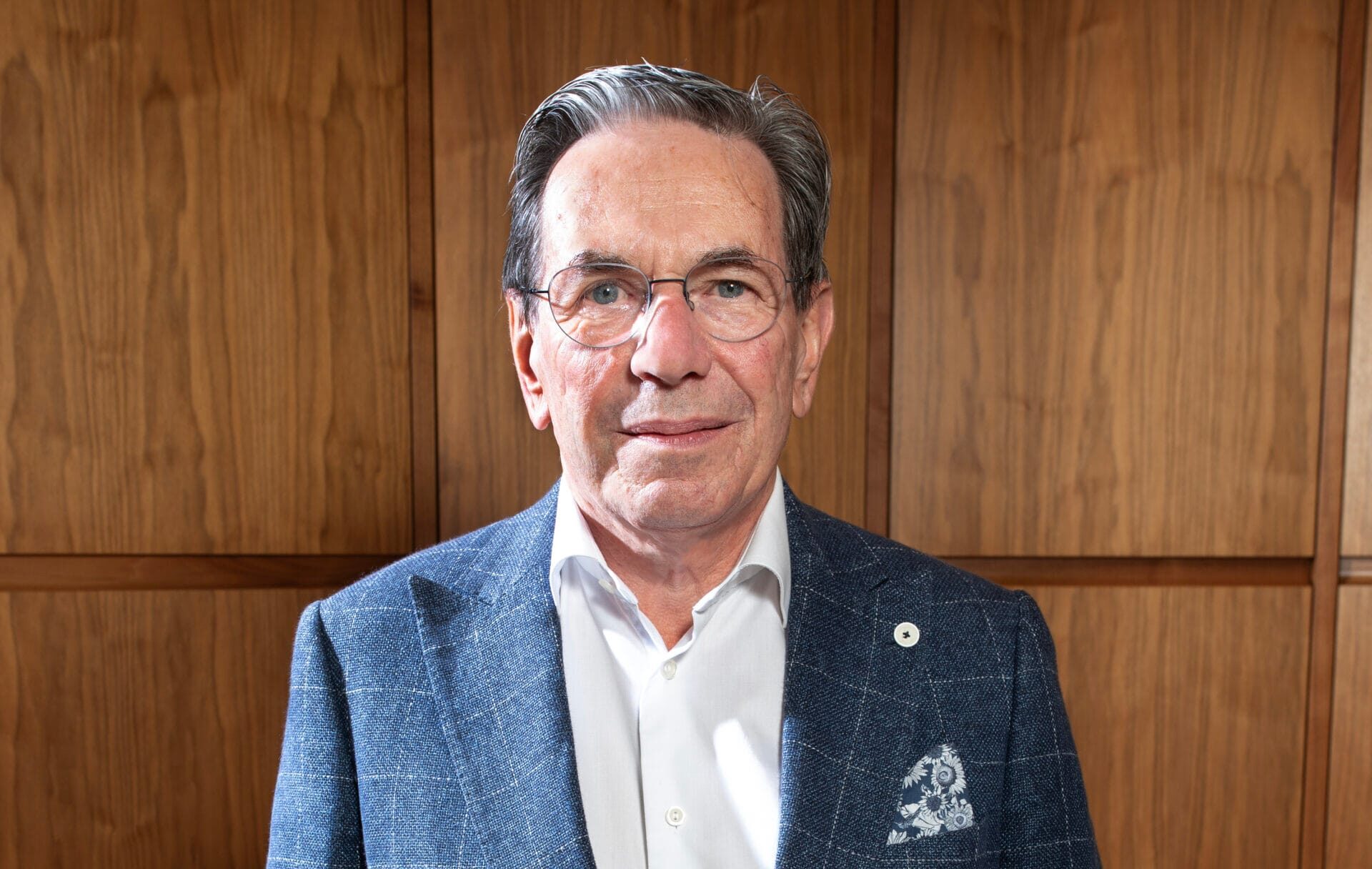
Half of all Dutch payments are processed by Arnhem-based CCV. The technology company is also becoming increasingly active beyond national borders, particularly now that it is part of multinational Fiserv. Nevertheless, CCO John Kolthof Regional collaboration remains as important as ever.
Why he is a member of The Economic Board? John Kolthof, the CCO (Chief Commercial Officer) from CCV doesn’t need to think twice. “I work and live here al twenty years and find That is why I I have a responsibility not only to my company, but also to the region. In The Economic Board will be major issues relating to technology, talent and digitalisation discussed. That We tackle things best when we work together.”
John Kolthof
3 billion transactions
The fact that CCV feels so closely connected to the region is not necessarily a given, as the Arnhem-based company has long since ceased to be a purely regional player. CCV is sometimes referred to as the company that got the Netherlands using debit cards in the 1980s and 1990s. Without people realising it, they have been dealing with CCV ever since. “LJust pop into a supermarket or look for CCV in your bank app”, says Kolthof. “We process half of all payments in the Netherlands. European This involves 3 billion transactions a year. You can find us everywhere, even on, for example, a snack machine in Italy.”
Last year, CCV was acquired by the American Fiserv, one of the world’s largest payment companies. Kolthof: “They are utilising much of the technology we have developed in Arnhem, use for a new global solution. This means we also play a role in many payments in, for example, the US or Asia.”
Moving forward together
DAccording to [source], the takeover of CCV will change Kolthof no connection with Arnhem and surrounding area. “Fiserv We have made a conscious decision to continue developing CCV from Arnhem. Our head office will remain there. We wish to use continue harnessing the knowledge and expertise available in these environment is based here. Many of our staff come from this area.”
“It is very important for us to have our network in the region, so that we know where to discuss specific issues and how we can make progress together”, he continues. “Working together offers many benefits. We lobby for example, in The Hague to attract certain investments to the region. It is in everyone’s interest cost-effective that we interesting happyven for all kinds of stakeholders. If people want to live and work here, we benefit from the talent that is available.”
CCV is also able and willing to make a difference for others in the region, emphasises Kolthof. “We’ve come a long way with digitalisation.” We are therefore keen to share that knowledge and experience. If we don’t have our affairs in order, Many people find that. That brings with it a sense of responsibility.”
It is not only other businesses and public authorities that are important partners for CCV, but certainly also the higher education institutions based in the region, such as HAN University of Applied Sciences in Arnhem. “We are keen to help students get started. That is why we take on many interns and final-year students, as well as people who are starting their careers with us. We are also always happy to take part in careers fairs and other student activities.”
Far too modest
Kolthof is positive about what is happening in the Lifeport- what is happening in the region. “But we are still not doing enough to showcase the wealth of knowledge, technology and entrepreneurship that can be found here. There are established companies and innovative start-ups, and we have excellent universities, universities of applied sciences and vocational colleges. We should therefore feel free to present ourselves to the outside world with a little more confidence. We are far too modest.”
“The challenge is that there is so much we can achieve here”, he says. “In the Brainport region of Eindhoven, everything revolves around technology, but wWe have three key priorities: health, energy and high-tech. And A company such as CCV does not really fall within that remit. On the one hand, that breadth is our strength; on the other hand, it means that it also makes it harder for us to as a region to raise its profile.” At the same time is he very enthusiastic about the term Lifeport. “It just sounds great. We must all embrace that brand and get behind it.”