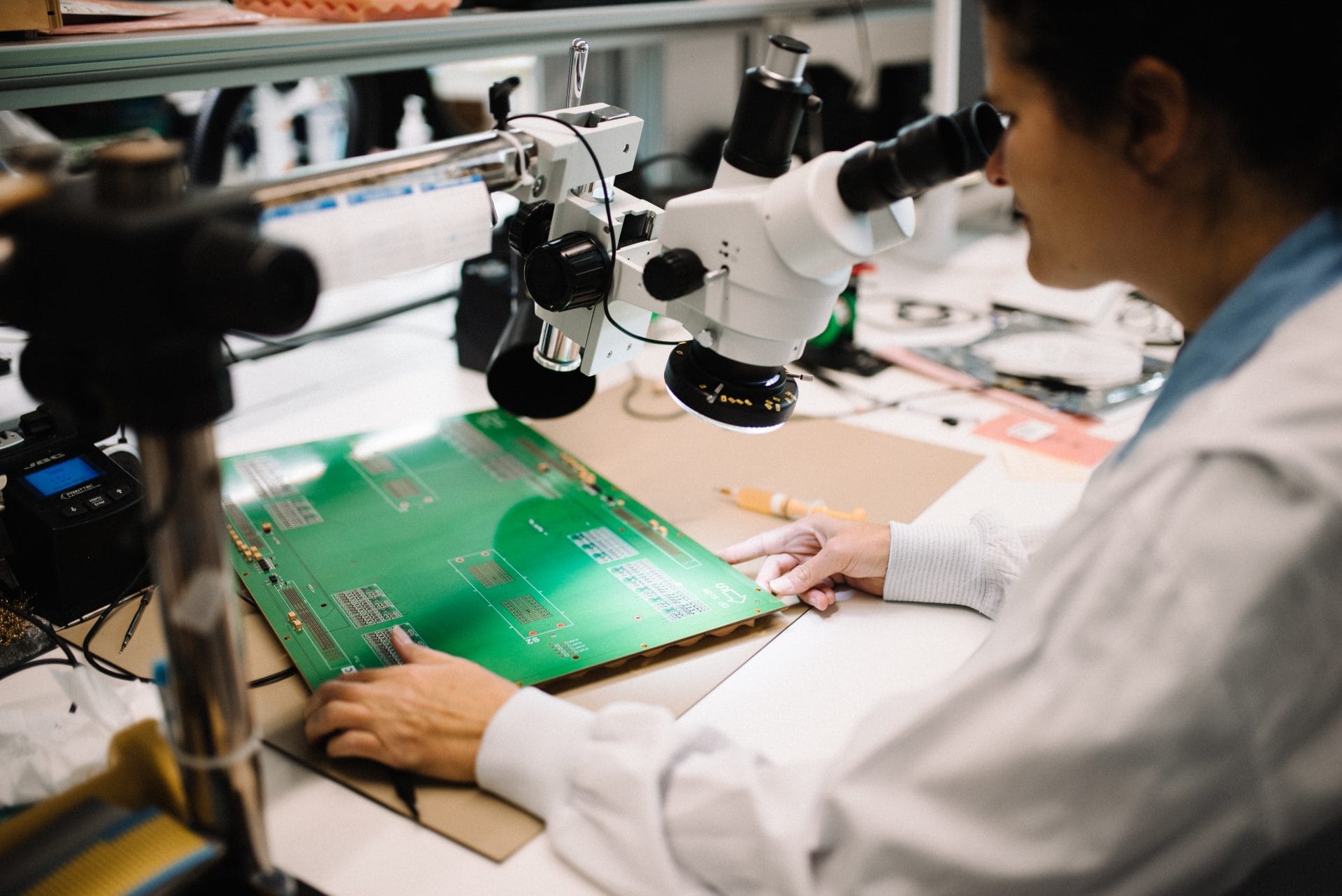
House of Nijmegen History opened the exhibition Pluralities of Scale on 3 November. Here you can see artworks inspired by electronic chips and the major influence chips have had on our society in recent decades. Some 20 accompanying objects from NXP's historical collection are also on display.
Our society would look very different without chips: mobile phones, laptops, public transport chip cards, medical equipment, self-driving cars, the banking system, the internet and modern-day space travel are all made possible by chips.
The exhibition Pluralities of Scale examines and shows the different scales at which the computer chip affects daily life, now and in the past. Many of these chips have been developed by Philips/NXP in the Netherlands since the 1950s.
ArtEZ and NXP Semiconductors
The exhibition is an initiative of the Link Foundation, which stems from a collaboration between NXP Semiconductors and the Design Art Technology (DAT) department of ArtEZ Art Academy in Arnhem.
The foundation aims to make the contribution and impact of the Dutch chip industry to today's digital age transparent to a wide audience, thus creating a better understanding about this national cultural-technological heritage.
In general, Link sees the need for a better social understanding of fundamental technologies, which are so decisive for our daily lives.
Much more in the future
Upcoming generations of chips, such as those from NXP, are there not only to make mobile phones faster, but also to make transport cleaner, electrical appliances more economical, medical devices more accurate, and payment cards more secure.
Chips and our daily lives have been inextricably linked for decades, and certainly in the future. At the exhibition, the art objects express this.
Monument for Memory
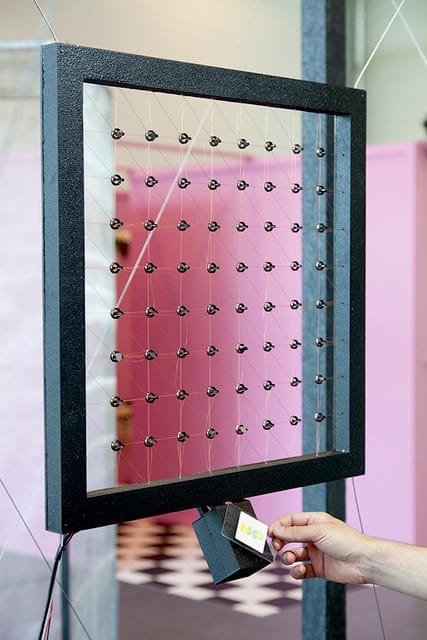
This work by Bram de Groot, an object that can be seen in operation, is based on the ring-core memory developed by Philips in the 1950s. It is a working memory in the form of magnetisable rings. An original example of this ring-core memory is also on display.
Through the Microscope Glass
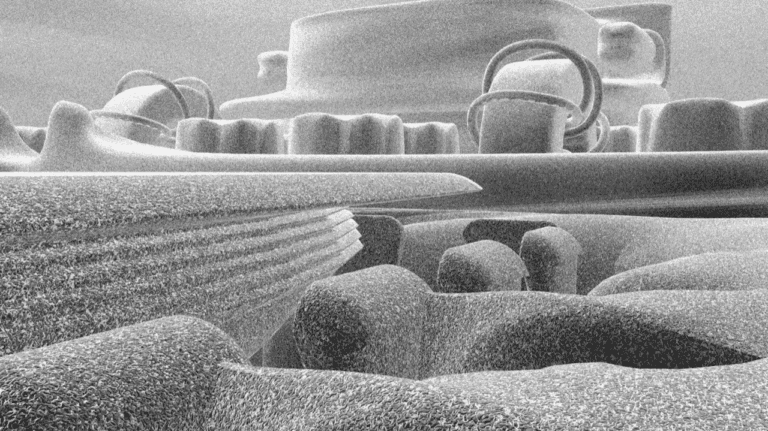
This work is by Michelle Feelders.
Her microscope photo shows the fascinating surface of a chip, somewhat reminiscent of a model of a factory or a city
At the Pluralities of Scale exhibition, see these original works, and those by artists Soyun Park, Alina Lupu, Oscar van Leest, and Benjamin Earl.
Welcome
The exhibition, at House of Nijmegen History, runs until 10 December.
Contact persons:
Martijn van Boven – mailto:info@474746.org
Florian van Zandwijk – fl.vanzandwijk@gmail.com
Want to find out more about the history of semiconductors in Nijmegen?
Visit the website on the history of Philips/NXP Semiconductors.
Lifeport and design, production and packaging of chips
There is a large cluster around chips in the Arnhem Nijmegen region. It is unique that so many chips are produced here. Development and packaging are also at a high level in the region.