The semiconductor sector in our region is developing rapidly, and there are ambitious plans for the coming years. As part of the regional ambitions for 2035, the Lifeport Semicon programme is working towards significant growth of the sector in the Lifeport Arnhem-Nijmegen region. However, this growth also presents a major challenge: it is estimated that 7,000 additional employees will be needed in the coming years.
To better understand what this means for our region, we spoke to Jan-Paul Kimmel, programme director of the Lifeport Semicon Talent Plan at The Economic Board, one of Noviotech Campus’s regional partners. In this role, he works with companies, educational institutions and innovation ecosystems, such as Noviotech Campus, to strengthen the talent pool for the semiconductor sector.
It soon became clear during the discussion that this is not a challenge that can be solved through traditional recruitment alone. The solution does not simply lie in attracting more students to degree programmes such as mechatronics or computer science. According to Jan-Paul, there is a much broader transition taking place in the way we view talent, education and collaboration.
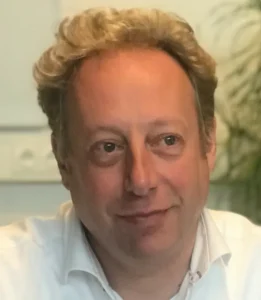
Jan-Paul Kimmel, Programme Director of the Lifeport Semicon Talent Plan
New ways of learning
Educational institutions in the region are increasingly experimenting with new forms of learning. Challenge-based education, modular learning pathways, collaborations between businesses and students, lifelong learning and practice-oriented innovation environments are becoming increasingly important.
Initiatives such as StudentBase demonstrate how companies and knowledge institutions connect different worlds in a natural and ongoing way.
StudentBase Lifeport is a regional community and programme driver that brings together students, businesses and lecturers through practical challenges, living labs, hybrid learning and working environments, and a central meeting place on the Noviotech Campus.
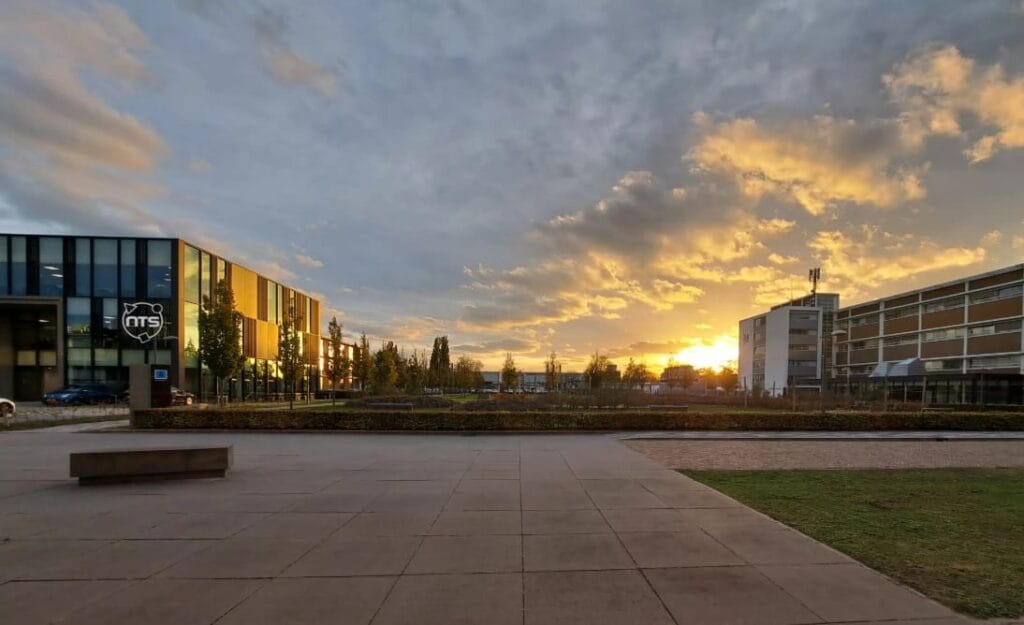
Noviotech Campus
Talent comes from a much wider range of groups
At the same time, the search for talent is becoming increasingly broad. It is not only students with a technical background who are important, but also:
- international talent already living in the region;
- people looking to change careers;
- professionals who wish to continue developing their skills;
- women in engineering;
- asylum seekers;
- experienced professionals who wish to continue applying their knowledge and expertise rather than retiring.
The collaboration is growing
The good news is that many positive developments are already taking place.
Knowledge institutions are increasingly finding ways to connect with one another and are collaborating more closely with the business community. For example, HAN University of Applied Sciences has strong links with practical applications in industry. Radboud University contributes significant expertise in fields such as AI, data science, neuromorphic computing and quantum research. ROC Nijmegen is also exploring how existing courses, such as Automotive Technology, can be expanded to include the fine mechanical and precision techniques required within the semiconductor industry.
Companies, including those at Noviotech Campus, are also increasingly open to student projects, challenges, guest lectures and other forms of collaboration.
More and more organisations are realising that attracting future talent is not just a task for HR. It is something we shape collectively as a region by making the sector visible, accessible and attractive.
The sector deserves greater visibility
This visibility is important. Many young people still do not fully understand what the semiconductor sector actually is and how much of an impact it has on daily life. Yet chips play a crucial role in innovations in healthcare, energy, artificial intelligence, mobility, security and digitalisation. There is also room for improvement when it comes to culture, diversity and engaging younger generations.
Jan-Paul cites as an inspiring example a project in which students from ArtEZ worked with historical semiconductor objects from the LINK Museum’s collection. They translated these into artistic concepts and stories. This led to unique encounters between retired engineers from the early years of the semiconductor industry and young art students: two worlds that would normally rarely intersect, but which engaged in dialogue through technology and innovation.
Cooperation between regions
Cooperation between regions is also becoming increasingly important. The challenges surrounding talent and innovation are not unique to the Lifeport Arnhem-Nijmegen region. Other semiconductor regions, such as Brainport Eindhoven and ChipTech Twente, face similar challenges.
By sharing knowledge and experiences and learning from one another, regions can strengthen one another rather than competing with one another. As one of the Dutch Top Campuses, Noviotech Campus also actively contributes to strengthening these connections.
Everyone is an ambassador
There is already a great deal happening in the region and the momentum is clearly there. More and more companies, educational institutions and innovation ecosystems, such as Noviotech Campus, are coming together and working collaboratively towards a strong future for semiconductor talent in the Netherlands.
Would you like to contribute to this too? Perhaps by hosting students within your organisation, supervising an intern, becoming a guest lecturer, taking part in a challenge or simply opening your doors to introduce others to the world of semiconductors.
Please let the NoviotechCampus know. They will be happy to put you in touch with the right people and initiatives within the network. Because whether we realise it or not, everyone working in the semiconductor sector is also an ambassador for the sector.
This article was originally published by Noviotech Campus and translated into Dutch with permission. The original article can be found at: Building the future of semicon talent together – Noviotech Campus.