
Why Lifeport Arnhem-Nijmegen Region has opted for a collaborative approach to talent development
Talent knows no sector boundaries. That is the conviction of Marloes van Haren-Bardoel, Manager at Junior Technovium; Suzanne Caspers, Director of Human Capital Akkoord; and Klaar Vernaillen, Programme Manager of the Lifeport Semicon Talent Plan. After all, anyone who inspires a child’s enthusiasm for technology today cannot yet know whether that talent will end up in Energy, Health or High Tech. That is precisely why the education sector, entrepreneurs and the government in the Lifeport Arnhem-Nijmegen region have opted for a joint approach: not training people for a single sector, but working together to build a broad regional talent pool from which all innovative sectors can benefit.
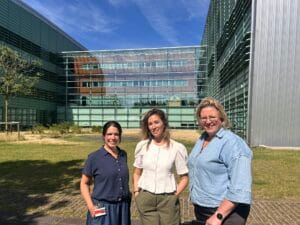
Klaar Vernaillen, Suzanne Caspers and Marloes van Haren-Bardoel
Learn young, develop broadly
According to Marloes van Haren-Bardoel, children should be given the opportunity to discover where their talents lie from an early age. At Junior Technovium, pupils get to work with technology themselves under the guidance of experienced teachers. They work on real-world projects, learn to collaborate and discover that technology is much more than just a school subject. After the summer, Junior Technovium will open a new centre in Groesbeek for schools in the municipality of Berg en Dal, where pupils can experiment with 3D printers, laser cutters and other technologies, amongst other things. Together with the existing centres in Nijmegen and Wijchen, this forms a strong foundation for technical education and talent development in the region.
Across these three locations, a total of around 15,000 pupils are introduced to this practical approach to learning every year. In doing so, we make a conscious effort to reach all children, particularly girls and young people who are less likely to come into contact with technology at home. Our mission is to help them discover their own talents and skills. Through experimentation, they discover for themselves where their strengths lie. After all, the technical sector is so broad these days that there is a place for every talent where those qualities can be put to perfect use.
Young people discover this not only in the classroom, incidentally. In our region, initiatives such as High Tech Tea, the Technology Days and the Children’s and Young People’s Square during the Four Days Marches festivities are important for giving not only young people but also their parents a more realistic picture of technology and the opportunities the sector offers. According to Klaar Vernaillen, parents play a key role in their children’s choices of study and career. By dispelling preconceptions and exposing children to technology and innovative companies from an early age, their interest in technical courses grows. In this way, these initiatives not only contribute to a greater influx of technical talent, but also to retaining talent for the Lifeport region.
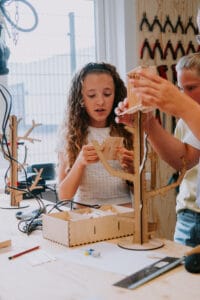
Photo credit: Junior Technovium
Building a single talent pool together
Rather than competing for talent, the three sectors are committed to joint talent development. Suzanne Caspers emphasises that Energy, Health and High Tech are ultimately all dependent on the same talent.
“After all, a twelve-year-old pupil does not yet know in which sector they would like to work later on. That is why it is important not to train people for a single sector, but to invest jointly in a broad talent pool. Building on that foundation, young people can later choose for themselves which direction suits them best. In this way, all sectors benefit from a strong influx of talent.”
This collaborative approach aligns seamlessly with the ambitions of the Human Capital Agreement 2.0, in which the education sector, government and businesses join forces to strengthen the labour market of the future. By investing jointly in talent development, a single, strong talent pool is created from which all sectors – and the Lifeport region as a whole – benefit.
Education and business as partners
According to Marloes, Suzanne and Klaar, companies play a much greater role in this than simply offering work placements. They see plenty of opportunities to involve entrepreneurs in education at an earlier stage, for example by delivering guest lectures or offering practical assignments. In this way, pupils are introduced to the practical side of the industry – and to the people behind the technology – from a young age.
It is important to note that this is not just about the large, well-known employers. It is precisely the many SMEs in the region that possess innovative expertise and offer challenging career opportunities. By raising their profile too, young people discover just how diverse the world of technology actually is. At the same time, this collaboration offers SMEs the chance to showcase, at an early stage, the innovative projects they are working on and the career opportunities they provide.
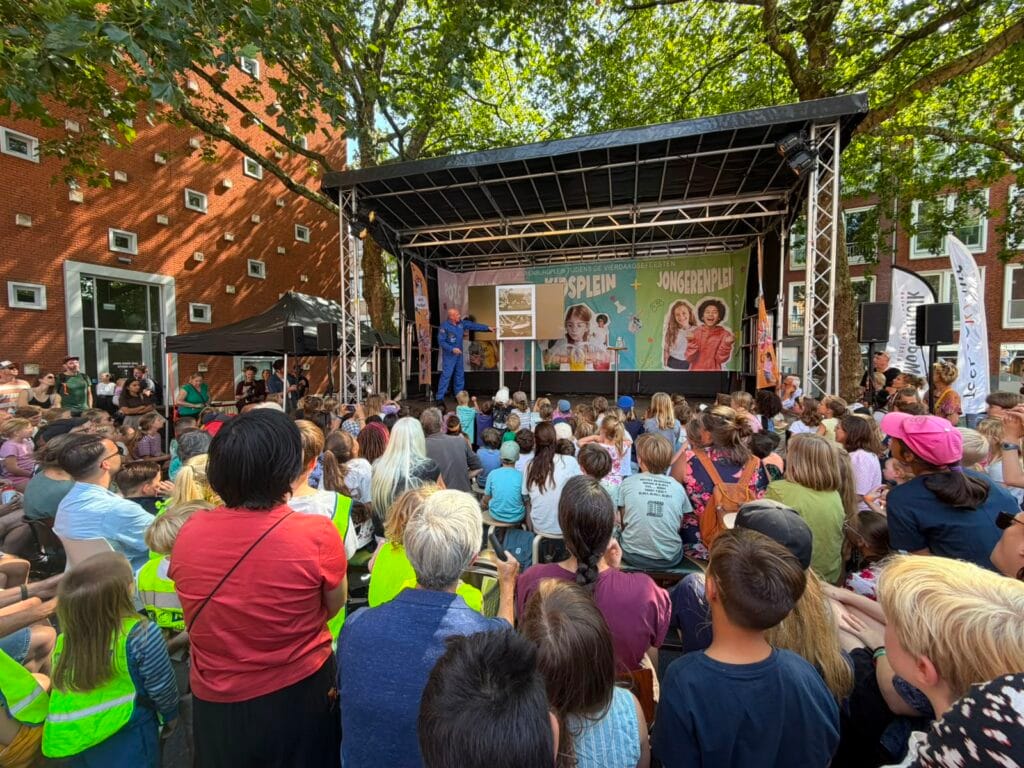 Mariënberg Kids and Jongerenplein during the 2026 Four Days’ Marches festivities
Talent knows no sector boundaries
The three organisations have a clear ambition for the next five to ten years. They would like to see a culture emerge in which education, businesses and the government naturally work together on talent development. This will enable more young people to choose a technology-based course of study and subsequently decide to build their careers in the region.
This creates a broad talent pool that provides companies across a wide range of sectors with the people they need. Ultimately, the future of the Lifeport Arnhem-Nijmegen Region will not be determined by which sector attracts the most talent, but by how successfully the region manages to develop and retain talent together, whilst offering prospects for the future.
Because talent knows no sector boundaries.
Would you like to contribute to the talent pool of tomorrow?
Are you curious about how Junior Technovium works and would your company like to deliver a guest lecture? Please contact us at info@juniortechnovium.nl and get involved!