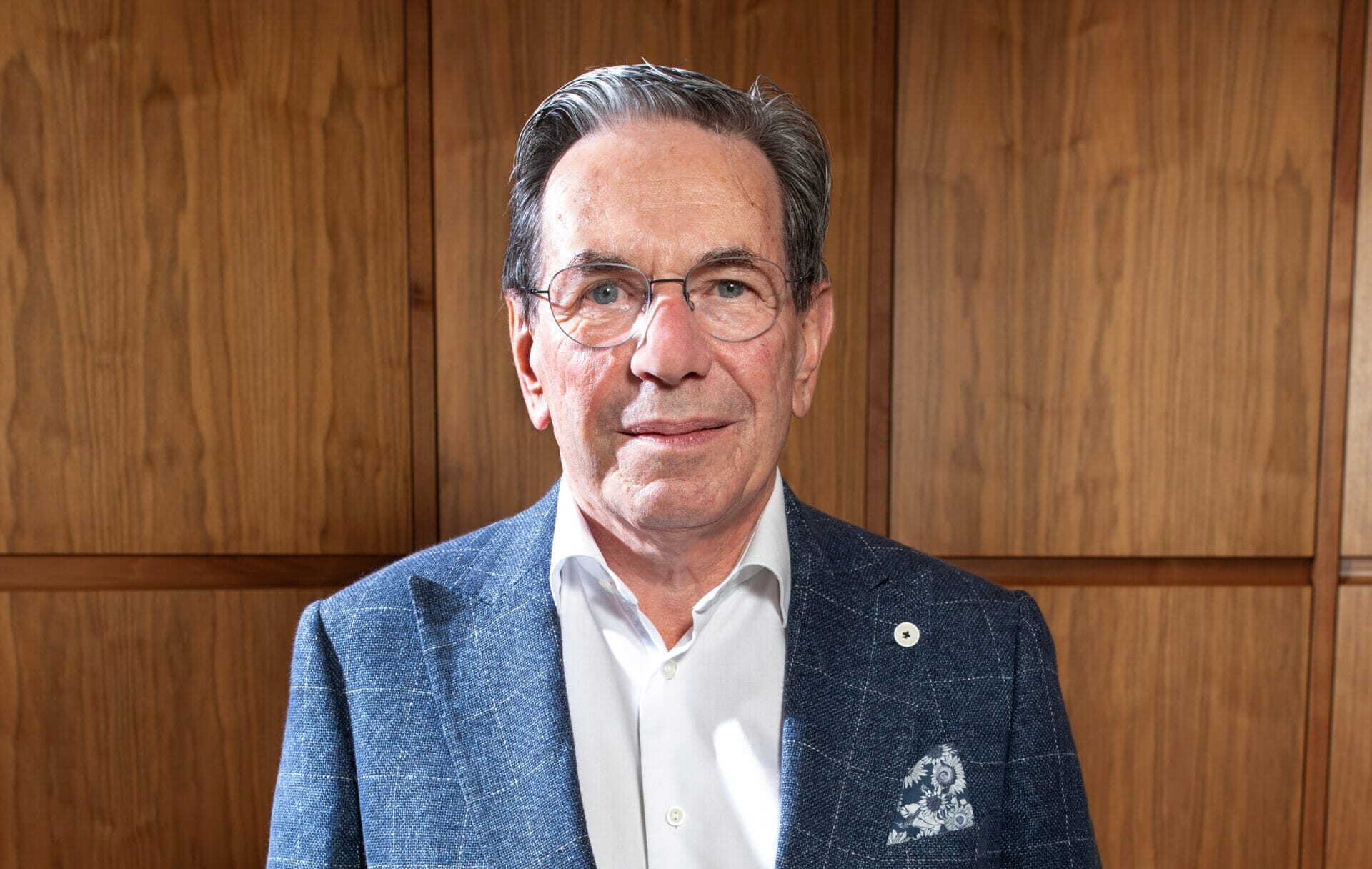
Alexandra van Huffelen’s first four months as chair of the board at Radboud University were anything but uneventful. She faced several challenges on campus. A highlight was the official launch of Lifeport Regio Arnhem Nijmegen, through which regional research institutions are also seeking to collaborate with one another and the wider world. This is exactly how Van Huffelen likes to see things.
On Wednesday 4 June, Lifeport Regio Arnhem Nijmegen was officially launched. From now on, this name symbolises triple-helix collaboration in the region. Eight knowledge institutions (Radboud University, Radboudumc, HAN University of Applied Sciences, ArtEZ, Van Hall Larenstein, ROC Nijmegen, Rijn IJssel and Yuverta) announced that day that they would be working together even more closely.
Alexandra van Huffelen, who has been Chair of the Board at Radboud University since February, is delighted with this development. “I think that’s very important. Not just collaboration between knowledge institutions themselves, but also with businesses and public authorities. It is no coincidence that our core values are ‘connected’, ‘curious’ and ‘reflective’. There are many thriving businesses in this region, including in the energy, healthcare and semiconductor sectors. In addition, there are excellent knowledge institutions of various kinds. We have a great deal to offer one another.”
Against the current
Today’s major challenges often involve a wide range of aspects, making collaboration between different types of education, as well as with businesses and public authorities, essential. Van Huffelen gives a few examples. “Take the energy transition, for example: you talk about resolving grid congestion, but cables and pipelines also need to be laid and wind turbines built. In healthcare, it’s not just about treating people, but also about preventing them from falling ill. And for that, we need dietitians and people with expertise in wellbeing, for example. That’s why we need to look for joint solutions.”
At the same time, these are challenging times. “Within the region, we all want to grow and become stronger. More economic activity, more jobs and more housing options. As knowledge institutions, we also want to grow, and that comes with its own challenges. There are major budget cuts and the total number of Dutch students is falling. Furthermore, the atmosphere surrounding science is increasingly sceptical. We are swimming against the tide. We must do this together.”
Collaboration is also important so that the region can present a united front to national and European policymakers, as the chair, who has extensive political experience, is well aware. “If you have clear ambitions and can articulate them with one voice to The Hague and Brussels, you have a much better chance of success than if everyone tells their own story.”
Sharp definition
What will the collaboration between the knowledge institutions look like? “We want to ensure a smooth transition from primary to secondary and then to higher education. We can work more closely together on this, so that we can jointly ensure everyone has a clear learning pathway towards a rewarding and suitable job. We also want to launch more joint programmes, with a view to ‘lifelong learning’. As educational institutions, we have an important role to play in providing people with further training, for example in the field of AI.”
According to Van Huffelen, it is positive that a focus has been established on energy, healthcare and semiconductors. To make Lifeport a success, she believes it is now particularly important to be specific. “The challenge lies in the fact that, in the coming period, we must make it very clear what we are going to do and be more precise about who is going to do what. If we can achieve that, we can realise our ambitious goals as a region.”
Too modest
“I’ve noticed that everyone in this region is genuinely open to collaboration,” she says. “The challenge lies in the fact that, in the coming period, we’ll need to be more precise about who does what. If we can achieve that, we’ll be able to realise our ambitious goals as a region.”
She looks to the future with confidence. “I’m very enthusiastic about what the region has to offer and what we’re doing. I believe we can grow significantly in the coming period. That growth is very important for everyone. I think the region is sometimes too modest. Especially now, with challenges on several fronts, it’s vital that we work together to clearly identify what we’re good at and where we want to go. We’re capable of overcoming challenges, but we really do need to do that together.”