46 stages across 30 venues, with over 1,100 performances. From 18 to 24 July, the Vierdaagsefeesten will once again take place in Nijmegen city centre. With 1.1 million visitors, this – the Netherlands’ most enjoyable festival week – presents a massive logistical challenge. For the first time, the organisers received assistance from artificial intelligence (AI).
Big names attract large crowds. Artists such as MEROL, Fresku, La Fuente, Frank Boeijen, Frans Bauer, Sophie Straat and Gotu Jim therefore require a carefully considered slot in the programme. Their performances can cause crowds, set large crowds in motion and consequently pose safety risks. The organisers must be able to anticipate these moments in advance and distribute the programme across the city in such a way that the crowds do not become gridlocked.
At the touch of a button
It’s a huge task: all 1,100 performances, spread across 46 stages, must be assessed for popularity, scheduling and potential safety risks.
That is why artificial intelligence was used for the first time this year. According to Joris Bouwmeister, managing director of the Vierdaagsefeesten, this delivers something that until recently seemed impossible: knowing the ideal programme at the touch of a button. Mees van Gaalen, a Master’s student in Artificial Intelligence at Radboud University, was given this assignment via MKB Datalab‑Oost.
Efficient crowd management
The popularity of the Four Days Marches Festival has been on the rise for years. Not so much because of ambition, emphasises Joris Bouwmeister, but because of demographics: “More and more people are moving to this region. And we’re also welcoming an increasing number of visitors from further afield.”
Given the huge numbers of visitors and the limited space in the city centre, efficient crowd management and safe event planning are crucial. With 46 stages across 30 venues and more than 1,100 performances over 7 days, this is a massive operation. Until this year, the programme was reviewed manually by the team, together with the police and the local council. That takes a lot of time. And sometimes things slip through the net. As was the case with Roxy Dekker, whose unexpected breakthrough three years ago caused a massive influx of people. Mees van Gaalen’s AI tool identifies such patterns in advance, enabling the organisers to make timely adjustments to the programme.

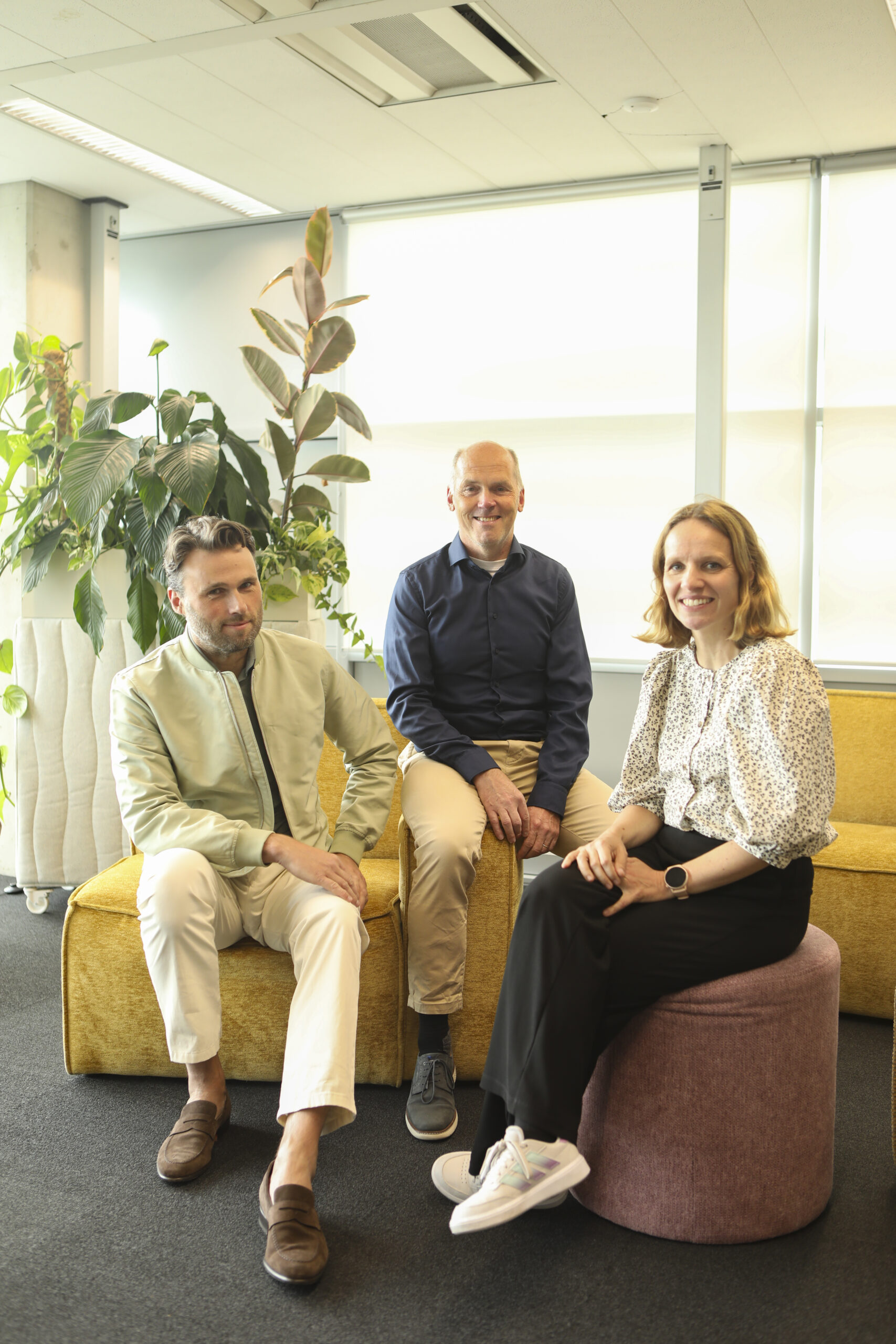
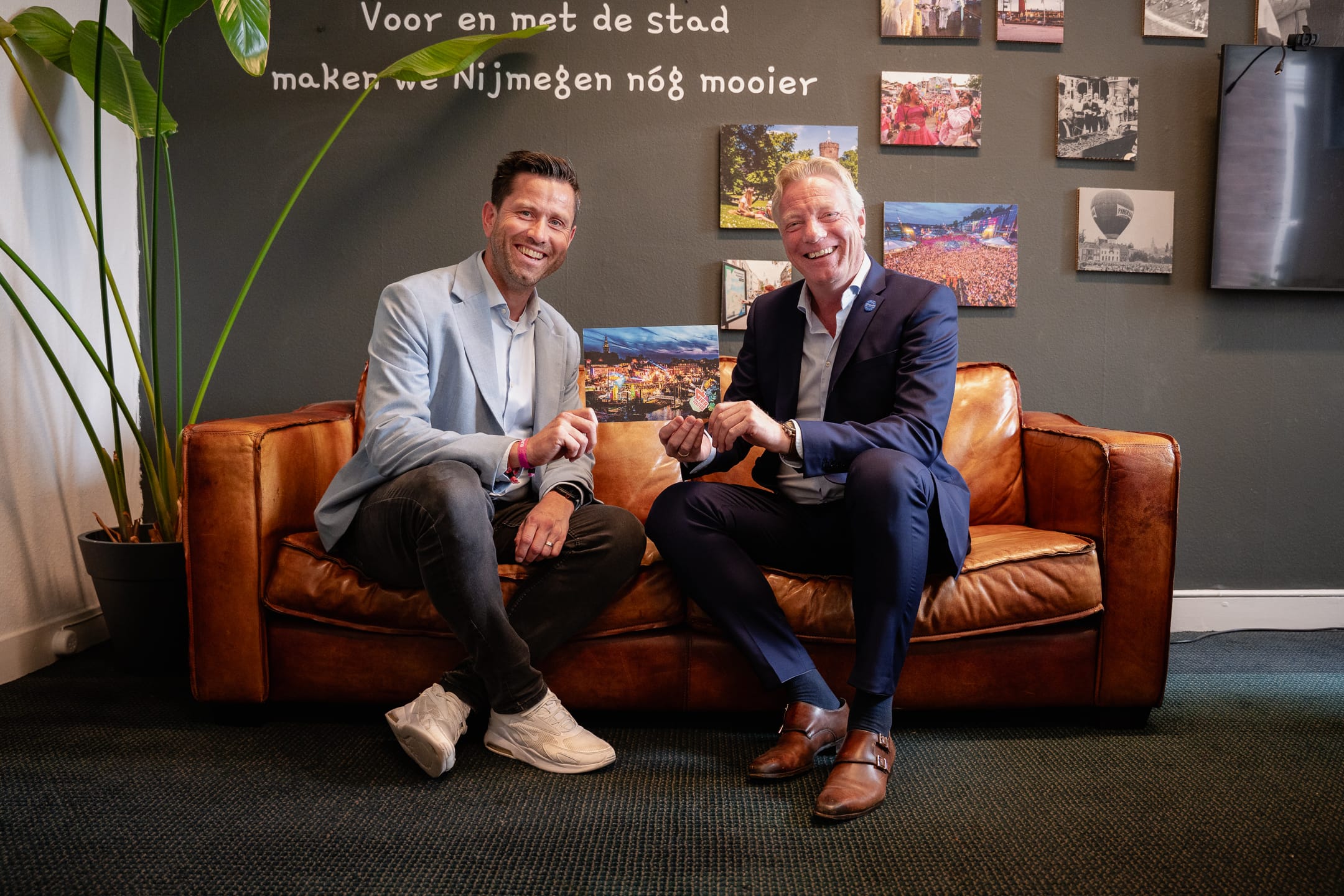
Jan van Dellen and Joris Bouwmeister
Calculations
Developing the AI tool was a process that took months. Mees van Gaalen was hard at work on it from November 2025 to April 2026. He set to work based on input from the organisers. Then came the calculations. The tool assessed each artist on three criteria: first, popularity, based on factors including Spotify streaming figures; second, the timetable, checking which acts were scheduled at the same time and where large crowds might gather; and finally, a safety check, based on previous incidents or specific circumstances.
It takes the tool many hours to sift through all the data and calculate the entire programme. This saves the organisation a huge amount of work and ensures that visitors enjoy the Four Days Marches festivities in as safe and enjoyable a way as possible.
In our own backyard
Lifeport Arnhem-Nijmegen Region is once again a partner of the Four Days Marches Festival this year. Within Lifeport, businesses, research institutions and public authorities work together on innovations that strengthen the region’s economy and contribute to solutions for societal challenges.
Jan van Dellen, director of The Economic Board: “Our partnership helps to boost pride in and awareness of this region’s innovative strength. Here, collaboration between students, universities and regional partners leads to tangible innovation.”
The AI tool for the Four Days Marches Festival is a fine example of this. If you were to have such a tool developed by a commercial company, it would easily cost between 40,000 and 100,000 euros. Far too few entrepreneurs realise that they can also turn to the MKB Datalab-Oost for this. Be sure to make use of it!”
More information
SME Datalab‑East
MKB Datalab‑Oost helps entrepreneurs discover, in an accessible way, what AI can mean for their business. Through inspirational sessions, masterclasses and small, bespoke AI projects, SMEs are given practical guidance. Students from Radboud University and the University of Twente support businesses as ‘Data Buddies’ by clearly identifying opportunities for data-driven working.
Further information can be found on the MKB Datalab‑Oost website.
Lifeport at the Four Days Marches Festival
Within Lifeport Arnhem-Nijmegen Region, businesses, research institutions and public authorities work together on innovations to build a strong and future-proof region.
During the Four Days Marches Festival, Lifeport is a partner for the second year running, with the aim of raising the region’s profile both nationally and internationally.
This visibility is demonstrated in various ways across the city, such as at the Kids & Youth Square on Mariënburgplein. Here, Lifeport partners – including Radboudumc, HAN, Radboud University, Modderkolk, NXP and Nexperia – showcase the region’s strengths in Energy, Health and High Tech.
Lifeport and AI
The Arnhem-Nijmegen region is a leading AI innovation hub, where research institutions, businesses, public authorities and entrepreneurs work together on the development and application of artificial intelligence. The AI tool for the Four Days Marches Festival is a tangible example of this. This tool, developed by Radboud University, MKB Datalab Oost and the organisers of the Four Days Marches, demonstrates how collaboration in the region leads to concrete innovations that directly contribute to a smarter and safer event.