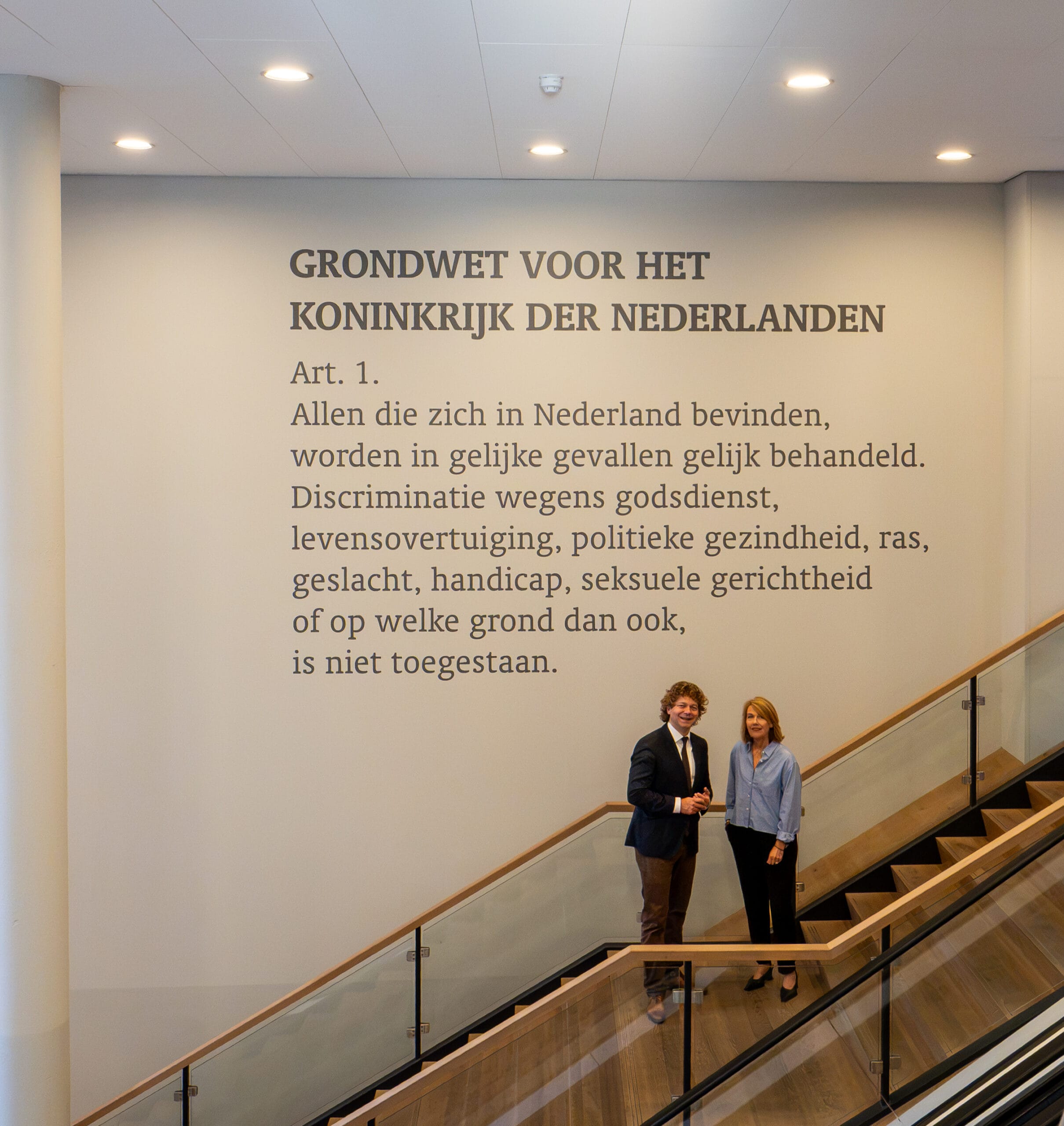
Kim Hooiveld has been working for The Economic Board for a few months, where he is involved in implementing the Human Capital Agreement. He is an enthusiastic advocate of a skills-based labour market. In his view, this holds part of the solution to the current labour market challenges.
“Everyone agrees that there is a structural shortage in the labour market and that supply and demand are not aligned,” Hooiveld begins. “Employers used to be in the position to be choosy when selecting and recruiting staff, but that’s no longer the case. The scale of this challenge is immense: it cuts across all sectors. The problem is that resolving the shortage in one sector has a cannibalising effect on another. That is why we really need a national masterplan for the labour market. You have to make choices, and that is complicated because we are not used to doing so.”
According to him, an additional challenge is that work is changing. “There are technological developments such as digitalisation and AI. As a result, the skills needed in the future will differ from those we are currently training people for. This exacerbates the mismatch in the labour market. Added to this are societal issues such as the energy transition, the water transition, the shift towards a circular economy, the impact of an ageing population on the care sector, and geopolitical tensions. Many sectors are pinning their hopes on digitalisation, but there is also a shortage of ICT professionals. The bottlenecks this creates cannot be resolved using existing methods.”
Providing insight into talents
According to Hooiveld, part of the solution – certainly not the whole solution, as he makes clear – lies in the transition to a skills-based labour market. He knows what he is talking about, as the word ‘skills’ runs like a common thread through his CV over recent years. He was programme director at‘House of Skills’, is involved in the development of a Dutch ‘skills language’ (CompetentNL) and is a board member of the Skills Ambassade foundation, which is committed to developing an infrastructure for skills passports. “The aim is to provide a clear picture of the talents people possess and the skills they have acquired, so that we can make better use of them in the labour market.”
“The value of qualifications is beyond dispute,” he says. “But they only reflect a limited aspect of what people are capable of. In a skills-based labour market, you can provide a much clearer picture of the skills people possess and how these can be utilised in the labour market. By focusing on skills, people can switch careers more easily and you can make better matches. This allows you to make better use of untapped labour potential, whilst also facilitating the necessary shifts. After all, sectors such as engineering, ICT and healthcare simply need people from other professional backgrounds. At present, it is difficult to switch to a different profession because we are used to clinging to qualifications and work experience. We need to move towards a more agile labour market.”
Attractiveness of the Randstad
Hooiveld has lived in the region for thirty years, but until recently worked for The Economic Board in Amsterdam. So he is well aware of the appeal of the Randstad. But he also knows that certainly not everything is better there. “Just try finding an affordable place to live in Amsterdam. It’s very important that we keep young people in the region. We need to clearly demonstrate the opportunities the region has to offer. We must also make it easy for them to find good jobs. To achieve this, higher education and the business community need to be closely aligned.”
He looks to the future with confidence. “This is a wonderful region to live in. There are also many strong networks, particularly in the healthcare, energy and high-tech sectors. We could certainly be a bit prouder of our region at times. Yes, we’re smaller than Amsterdam, for example, but that also has its advantages. It means we can act more decisively. With the Human Capital Agreement, we have a solid plan in place. We’ve now really started to make an impact together.”