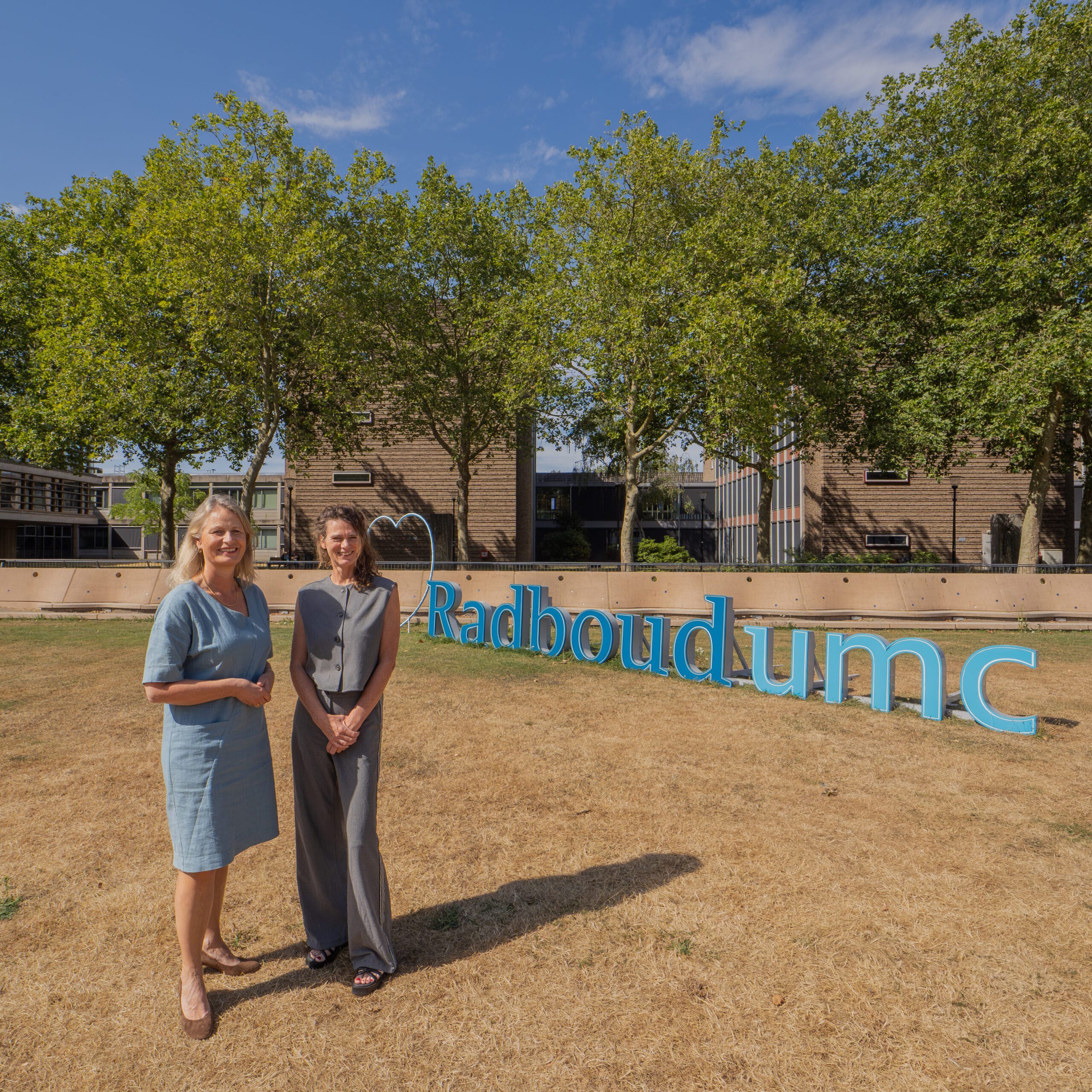
Interview with board members Carol van Eert and René Verhulst
Four ministries, 26 local authorities, two provinces (Gelderland and Utrecht), three water boards, and triple-helix organisations such as The Economic Board, the Green Metropolitan Region and the Foodvalley Region have been working on this for two years. It is now nearing completion. This concerns the Urbanisation Strategy and the accompanying Urbanisation Agreement for the Arnhem-Nijmegen and Foodvalley region. Mayors Carol van Eert (Rheden) and René Verhulst (Ede) are pleased with the result, but are also aware that some highly contentious discussions are yet to come.
"There is an agreement with all governments. We agree on the content of the strategy and how we are going to realise it," Van Eert says with due pride. Besides being mayor of Rheden, he is also chairman of the Arnhem Nijmegen Foodvalley Urbanisation Strategy Administrative Consultation. "With so many parties from all sorts of layers, it was not easy, but it does have a broad support base as a result."
A total of 900,000 additional homes need to be built. To this end, the central government appointed a number of urban regions. One of these is Arnhem-Nijmegen and Foodvalley, which has been designated as one joint region. Between now and 2040, there should be 100,000 additional homes there: 40,000 in Foodvalley, 60,000 in Arnhem/Nijmegen. The Urbanisation Strategy contains broad outlines and principles on how to do that. The accompanying Urbanisation Agreement, soon to be signed, is about who does what and who pays what bills. Verhulst, who is not only mayor of Ede but also chair of the Foodvalley region, observed an interesting process. “Land-use planning is a fascinating subject. From the 1960s onwards, there was the ‘growth centres’ policy, and there was extensive building in places such as Purmerend, Nieuwegein and Houten. From the 1990s onwards, following the Fourth Spatial Planning White Paper, the Vinex estates were developed, situated close to the major cities, to prevent mobility problems. What is fascinating about this urbanisation strategy is that it is no longer just about quality of life, architecture and mobility, but has become part of a broader debate. How does new development still fit into the landscape? How can it be carried out responsibly, for example, when it comes to nitrogen emissions? How do nature and agriculture fit into the picture?”
Van Eert also says the strategy looks very different from what it would have looked like 25 years ago, with extra room for the themes Verhulst mentioned. "We have so many green qualities as a region. We don't want to sacrifice those for bricks and mortar. We are going for a green quality boost." “I am extremely pleased with the vision we have demonstrated together with all these parties,” says Van Eert. “But I do think the central government needs to put its money where its mouth is. With all the requirements in place these days, building has become much more expensive. Local authorities cannot cover the full cost from land sales alone. We have received a sum of money, but we believe more is needed to realise those 100,000 homes.”
Verhulst notes that the political debates in the municipal councils and the Provincial Council will be difficult and at times highly contentious. “Much more difficult than in recent years. We have to make choices. The Urbanisation Strategy is the big picture, and we are very pleased with how it looks, including for Foodvalley.”
But now you have to narrow it down to a ‘postage stamp’ scale: where should those homes be built? I realise this is a difficult discussion for everyone. We’re not Australia; we don’t have any wild, untamed land left.”
He knows that the subject can be a sensitive one and that it can also be used or misused for political ends. “There will always be opponents who shout ‘not in my back garden’ and think we’re cluttering up the countryside. That is why we need to start explaining right now what we are taking into account.” Van Eert: “The people who are now saying they don’t want homes built opposite them will soon find it appalling that their grandchildren cannot find a place to live.”
The strategy is not some distant dot on the horizon. By 2030, there must already be 60,000 additional homes. Van Eert: “So residents will start to notice the difference very soon. The nitrogen problem is currently the biggest obstacle to actually getting started. If it’s possible, we’re ready to go.”
"There is an agreement with all governments. We agree on the content of the strategy and how we are going to realise it," Van Eert says with due pride. Besides being mayor of Rheden, he is also chairman of the Arnhem Nijmegen Foodvalley Urbanisation Strategy Administrative Consultation. "With so many parties from all sorts of layers, it was not easy, but it does have a broad support base as a result."
Space claims
Van Eert explains the rationale behind the strategy. “During the previous term of office, the government indicated that it wanted greater control over our country’s spatial planning. There are demands for space coming from all directions, which are not easy to meet because space is becoming increasingly scarce.”A total of 900,000 additional homes need to be built. To this end, the central government appointed a number of urban regions. One of these is Arnhem-Nijmegen and Foodvalley, which has been designated as one joint region. Between now and 2040, there should be 100,000 additional homes there: 40,000 in Foodvalley, 60,000 in Arnhem/Nijmegen. The Urbanisation Strategy contains broad outlines and principles on how to do that. The accompanying Urbanisation Agreement, soon to be signed, is about who does what and who pays what bills.
Green qualities
 Verhulst, who is not only mayor of Ede but also chair of the Foodvalley region, observed an interesting process. “Land-use planning is a fascinating subject. From the 1960s onwards, there was the ‘growth centres’ policy, and there was extensive building in places such as Purmerend, Nieuwegein and Houten. From the 1990s onwards, following the Fourth Spatial Planning White Paper, the Vinex estates were developed, situated close to the major cities, to prevent mobility problems. What is fascinating about this urbanisation strategy is that it is no longer just about quality of life, architecture and mobility, but has become part of a broader debate. How does new development still fit into the landscape? How can it be carried out responsibly, for example, when it comes to nitrogen emissions? How do nature and agriculture fit into the picture?”
Van Eert also says the strategy looks very different from what it would have looked like 25 years ago, with extra room for the themes Verhulst mentioned. "We have so many green qualities as a region. We don't want to sacrifice those for bricks and mortar. We are going for a green quality boost."
Cash on the nail
 “I am extremely pleased with the vision we have demonstrated together with all these parties,” says Van Eert. “But I do think the central government needs to put its money where its mouth is. With all the requirements in place these days, building has become much more expensive. Local authorities cannot cover the full cost from land sales alone. We have received a sum of money, but we believe more is needed to realise those 100,000 homes.”
Verhulst notes that the political debates in the municipal councils and the Provincial Council will be difficult and at times highly contentious. “Much more difficult than in recent years. We have to make choices. The Urbanisation Strategy is the big picture, and we are very pleased with how it looks, including for Foodvalley.”
But now you have to narrow it down to a ‘postage stamp’ scale: where should those homes be built? I realise this is a difficult discussion for everyone. We’re not Australia; we don’t have any wild, untamed land left.”
He knows that the subject can be a sensitive one and that it can also be used or misused for political ends. “There will always be opponents who shout ‘not in my back garden’ and think we’re cluttering up the countryside. That is why we need to start explaining right now what we are taking into account.” Van Eert: “The people who are now saying they don’t want homes built opposite them will soon find it appalling that their grandchildren cannot find a place to live.”
The strategy is not some distant dot on the horizon. By 2030, there must already be 60,000 additional homes. Van Eert: “So residents will start to notice the difference very soon. The nitrogen problem is currently the biggest obstacle to actually getting started. If it’s possible, we’re ready to go.”
Read this article from the Green Arnhem-Nijmegen Metropolitan Region too:
Carol van Eert: solutions can only be found through collaboration