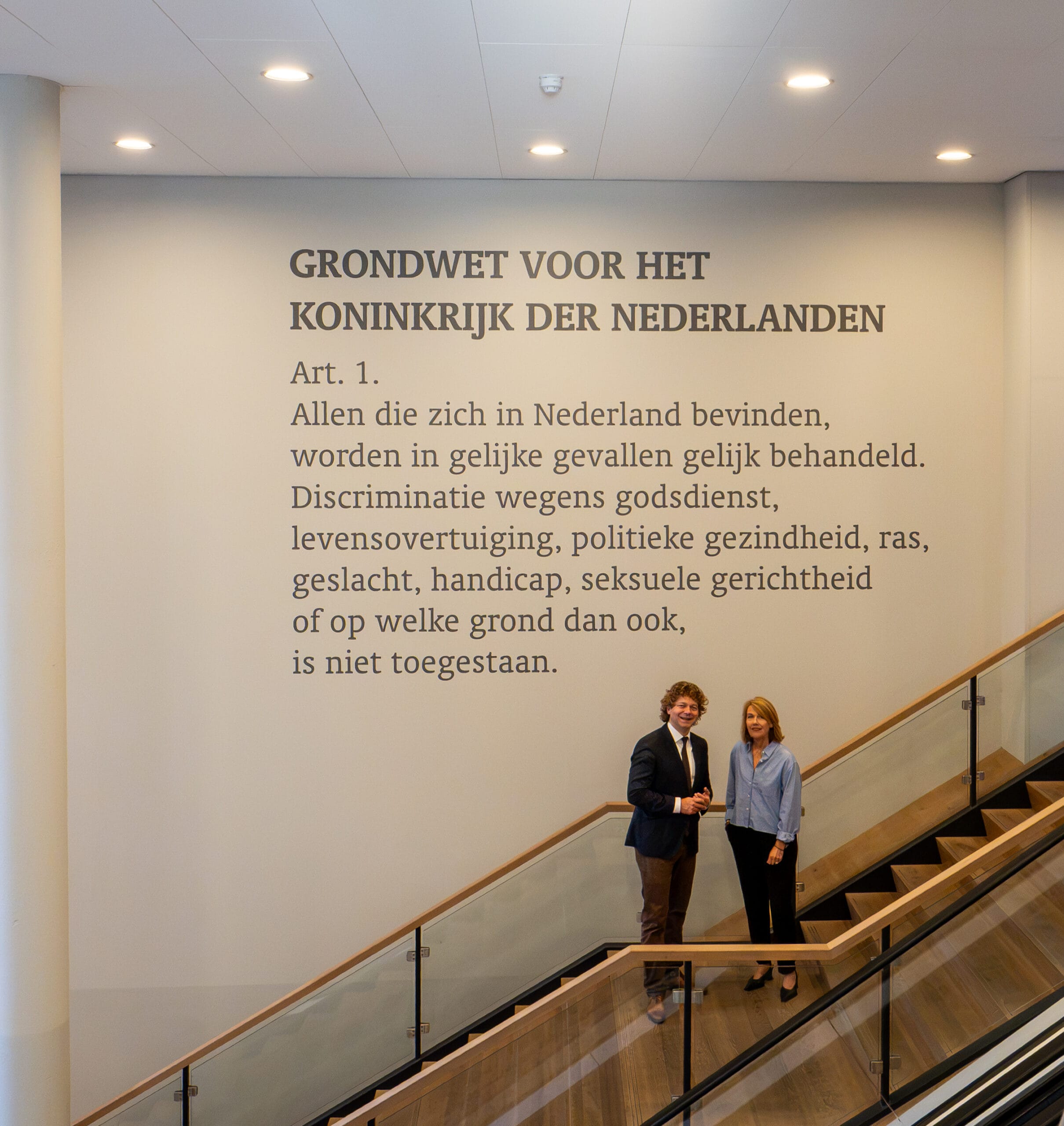
Interview with board member Daniël Wigboldus
“Fifteen per cent of students at Radboud University are from outside the Netherlands, and many sectors are facing staff shortages. If we bring these two together, we might solve part of the staffing problem,” says Daniël Wigboldus. He is Chair of the Executive Board at Radboud University and a member of The Economic Board, and in this interview he explains what solutions he sees for the labour market shortages.
Text: Eva van Otterlo / Photos: Radboud University
Text: Eva van Otterlo / Photos: Radboud University
Daniël Wigboldus offers a socio-psychological explanation: “A key issue in this region is finding and retaining talent. By that I mean all talent – young and old, whether of Dutch origin or born abroad, and at all levels of education. How do we keep these talented people in our region? It’s all about appeal. Talent attracts talent, bringing vibrancy and dynamism. It works like a magnet.”
“We have numerous excellent higher education institutions within easy reach. In addition to Radboud University, these include Wageningen University & Research, HAN University of Applied Sciences, ROC Rijn IJssel, Van Hall Larenstein University of Applied Sciences and other educational institutions. Each and every one of them acts as a magnet, attracting young people, lecturers and researchers. We offer a wide range of degree programmes and courses so that talented individuals can develop their skills and then go on to work in our region.”
To restore some balance between supply and demand in the labour market, there are three key priorities in our region: lifelong learning for everyone, activating untapped labour potential, and attracting and retaining talent. “All three of these issues are extremely important; globalisation also calls for a different way of thinking. The challenges are cross-border in nature – think of migration issues; nitrogen doesn’t respect national borders; construction, food supply, knowledge development – everything crosses borders.”
“We have numerous excellent higher education institutions within easy reach. In addition to Radboud University, these include Wageningen University & Research, HAN University of Applied Sciences, ROC Rijn IJssel, Van Hall Larenstein University of Applied Sciences and other educational institutions. Each and every one of them acts as a magnet, attracting young people, lecturers and researchers. We offer a wide range of degree programmes and courses so that talented individuals can develop their skills and then go on to work in our region.”
One Planet as an example of cooperation
How do we ensure a good match with the business community and local government? “The parties in the triple helix (education, business, government) are increasingly finding common ground, which offers unique opportunities. A concrete example of such a partnership is the One Planet programme, which was established with funding from the province of Gelderland. The One Planet Research Centre is a multidisciplinary collaboration between Wageningen University & Research, Radboud University, Radboudumc and imec, a global leader in nanotechnology. Healthy living is central to the project, and every aspect is covered – from the head of lettuce grown in the fields to the way that same lettuce is processed in your digestive system. Technology provides sensors and measurement techniques. Within this project, people are also considering how we can continue to feed the world in the future.”Solving problems together, that attracts talent
“You see the same thing in the fields of circularity and the energy transition: people from different backgrounds working together. Connectr is a good example of this. We’re good at building bridges – literally and figuratively. We are increasingly realising that collaboration pays off; we combine our areas of expertise. We need thinkers, but also doers, in the fields of energy, health and technology. That collaboration, that synergy, acts like a magnet. And it makes an impact.”
To restore some balance between supply and demand in the labour market, there are three key priorities in our region: lifelong learning for everyone, activating untapped labour potential, and attracting and retaining talent. “All three of these issues are extremely important; globalisation also calls for a different way of thinking. The challenges are cross-border in nature – think of migration issues; nitrogen doesn’t respect national borders; construction, food supply, knowledge development – everything crosses borders.”