This innovation hub is an initiative of Lifeport@ and helps SME entrepreneurs with their plans for sustainability and circularity. The approach consists of a series of meetings with experts, government bodies and knowledge institutions, during which the entrepreneurs work on circular economy issues.
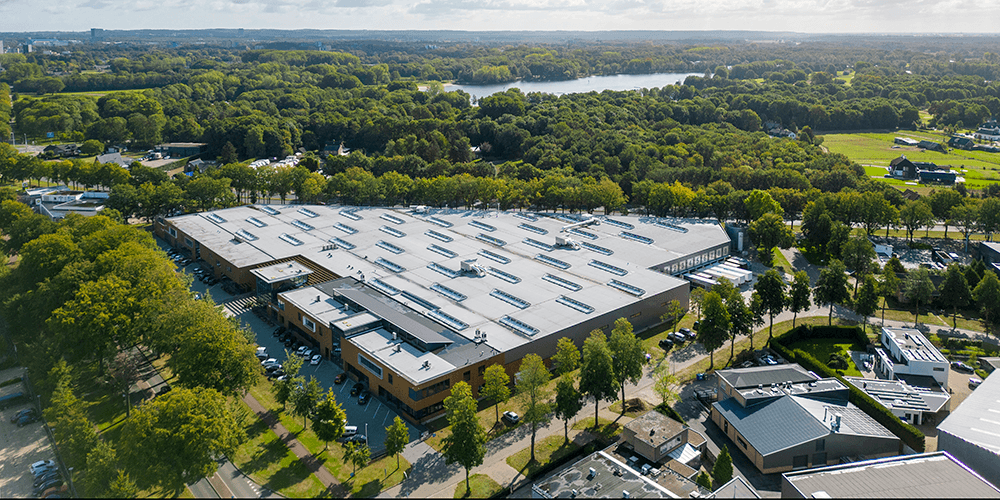
At the closing session of this first series at the Meshallen, the participants shared their experiences.
Going through your challenge with others for ten weeks creates space for creativity, learning and sustainable change.
Kristie Lamers (director Lifeport@)
Circular thinking
A bespoke circular strategy, access to young talent, fresh ideas, advice and solutions to business challenges, and connection to a strong network of entrepreneurs. The participating entrepreneurs reported having benefited from these.
At the hub, everything revolves around collaborative learning and transdisciplinary thinking. This takes time, but the participating entrepreneurs realise that it is necessary to achieve innovation. The sessions utilised design thinking: creative thinking workshops and masterclasses.
The knowledge gained from these sessions was applied to the entrepreneurs’ case studies, with reflection and support from students at HAN University of Applied Sciences and Radboud University.
Three participating companies tell
A total of eight companies took part; read a few examples of the findings here.
Blue-Beez developed a circular rainwater tank made from recycled materials, integrated into furniture. With the help of students, it explored the Product-as-a-Service (PAAS) option.
Conclusion: the PAAS model is still unfamiliar to consumers, poses logistical challenges and the upfront investment is currently too high. However, the company is ready to implement the model in the future.
Synprodo produces EPS (polystyrene) and aims to make this 100% circular. The idea was for customers to return the material. The Innovation Hub helped to identify the real demand; the aim was circularity, not consumer-led recycling. The focus should therefore not be on retrieving materials, but on collaborating within the supply chain to utilise residual streams there.
Over the ten weeks of the meetings, Monkey Vision developed an app to reduce the digital carbon footprint of websites. This app, Ecoscan, shows you instantly how much CO₂, water and energy a website consumes and how you can improve this.
The tool will soon be available free of charge.
Continuous connection with education
This process does not end with this meeting. A new round of the Innovation Hub will start in February, and until then, students from various degree programmes can continue to work on specific challenges relating to circularity and sustainability for SMEs. As an entrepreneur, you are always welcome to get in touch in the meantime via Lifeport@.
The aim is for educational and research institutions to actively contribute to societal transitions, whilst better preparing students for the real world – with the added benefit that they may choose to continue working in the region.
Next round February 2026
A new cohort will start at the Circular Innovation Hub in February 2026.
Join us!
The first edition demonstrates that there is plenty of potential for working together on circular solutions, based in the region, with students, entrepreneurs and experts.
For more information, please contact programme director Merijn Neeleman at lifeporthub.nl.
View the flyer about the Innovation Hub concept