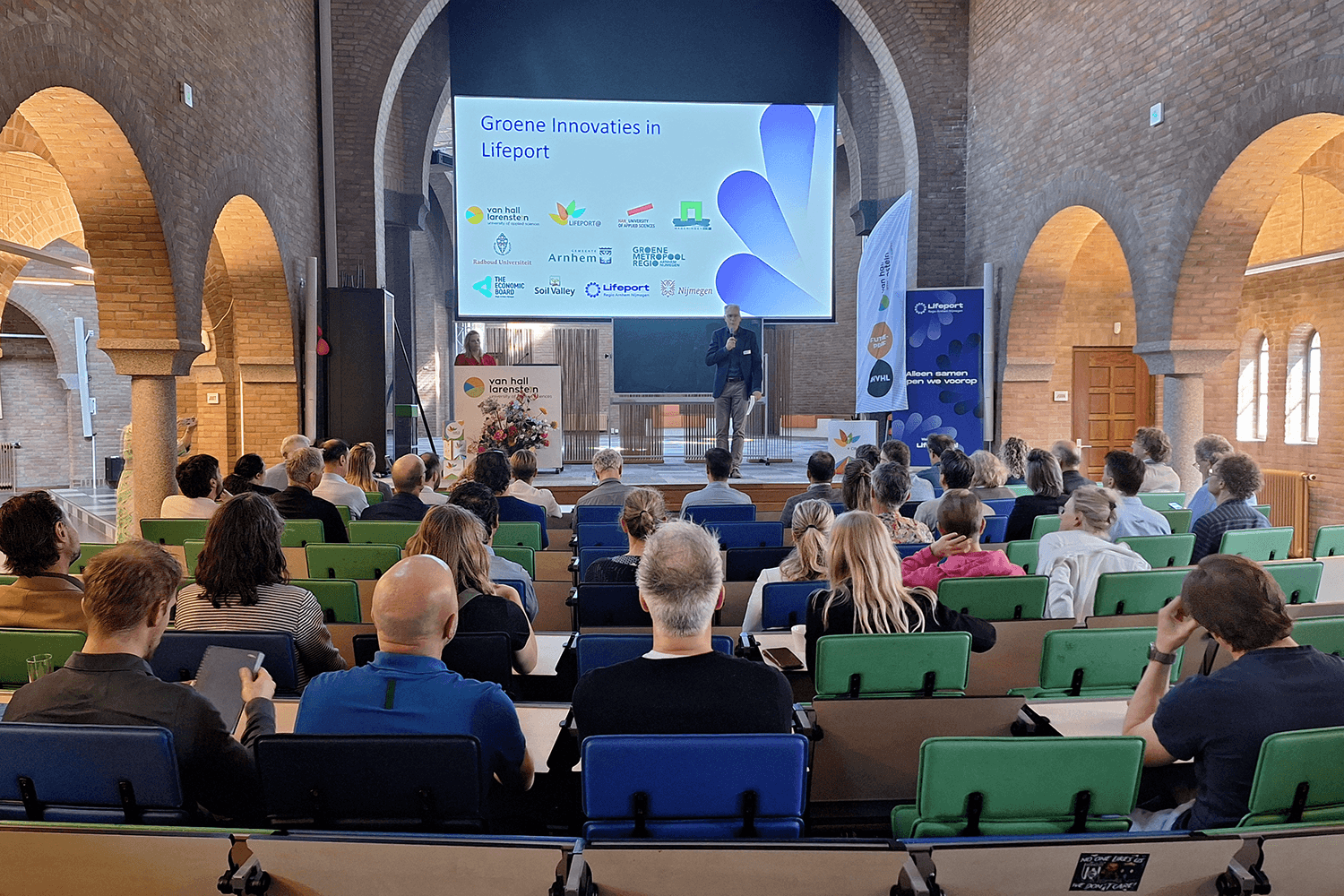
On 21 March, the triple helix group Lifeport Circular Lab organised a meeting on sustainability research in the Arnhem-Nijmegen region. On behalf of the host, Van Hall Larenstein University of Applied Sciences, Gerard Robijn, Director of Research, welcomed everyone to the beautiful chapel next to the university’s main building.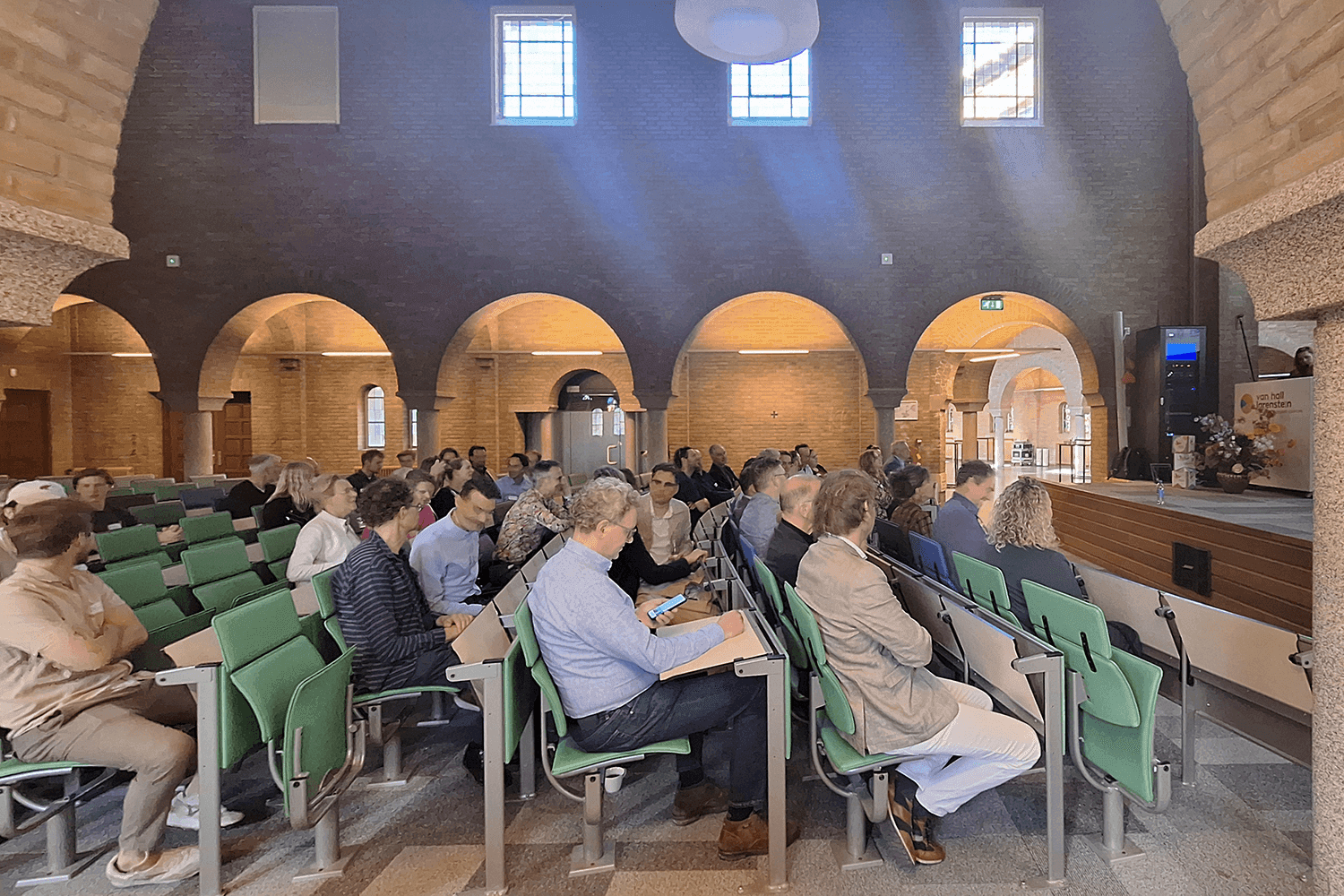
Jan van Dellen, Director of The Economic Board, noted that there had been little coverage in the national media of Circular Economy Week, of which this was the final day. Yet circularity is so important; we need to start doing everything differently. Van Hall Larenstein is involved in almost all circular projects in the region and thus plays a part in the services being developed here. Something to be proud of and to publicise more widely!
Master of Ceremonies Ruth Klein guided the audience through the rest of the programme.
To begin with, there was a relay of three keynote speakers.
Ute Sass-Klaassen (HVHL) explained how the trees we need for timber construction have run into trouble. Due to drought and mild winters, which have caused the population of the notorious spruce bark beetle to explode, the availability of spruce timber is under threat. And we need this for the transition to sustainable construction. That is why Sass-Klaassen is working on a project in Flevoland to revitalise Dutch forests, partly through diversification. With the help of AI, she measures how trees shrink and expand in response to drought.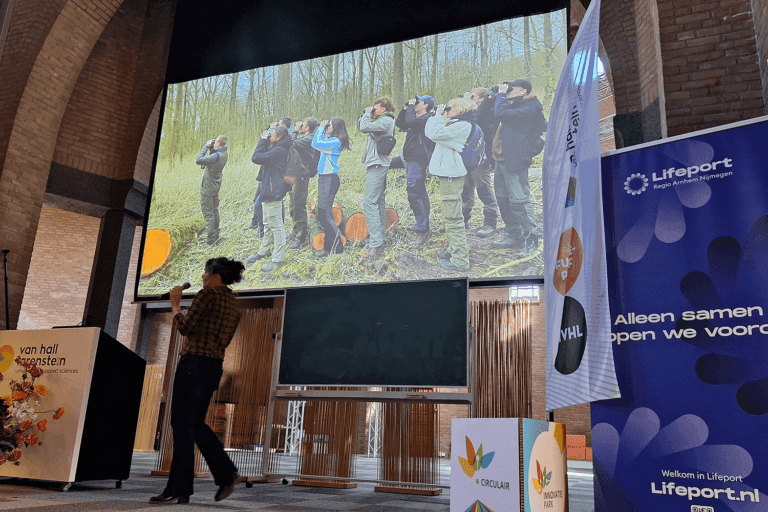
Here, she hands over to Bernard van Gastel (RU), who specialises in ICT and sustainability. How much energy and water does the use of hardware and software in research actually consume? He looks not only at software usage but also factors in the production of the necessary hardware. Data centres use a great deal of both, as well as a great deal of space. Since 2017, that consumption has risen dramatically. How can we devise solutions to this? He presented a visual aid that allows us to examine all aspects of this complex problem. 
And that brings us to Sjors Witjes (RU), Associate Professor of Strategy, who is researching how best to collaborate in order to bring about the much-needed changes. He cited the collaboration in the 1980s for Life Aid as a shining example, in which a group of famous musicians were advised: ‘check your ego at the door’. In the quest for circular ways of producing office furniture, too, it proved important to put self-interest aside. Although one of the major furniture manufacturers won the tender, the other also found that it had benefited greatly from the joint development of circular furniture.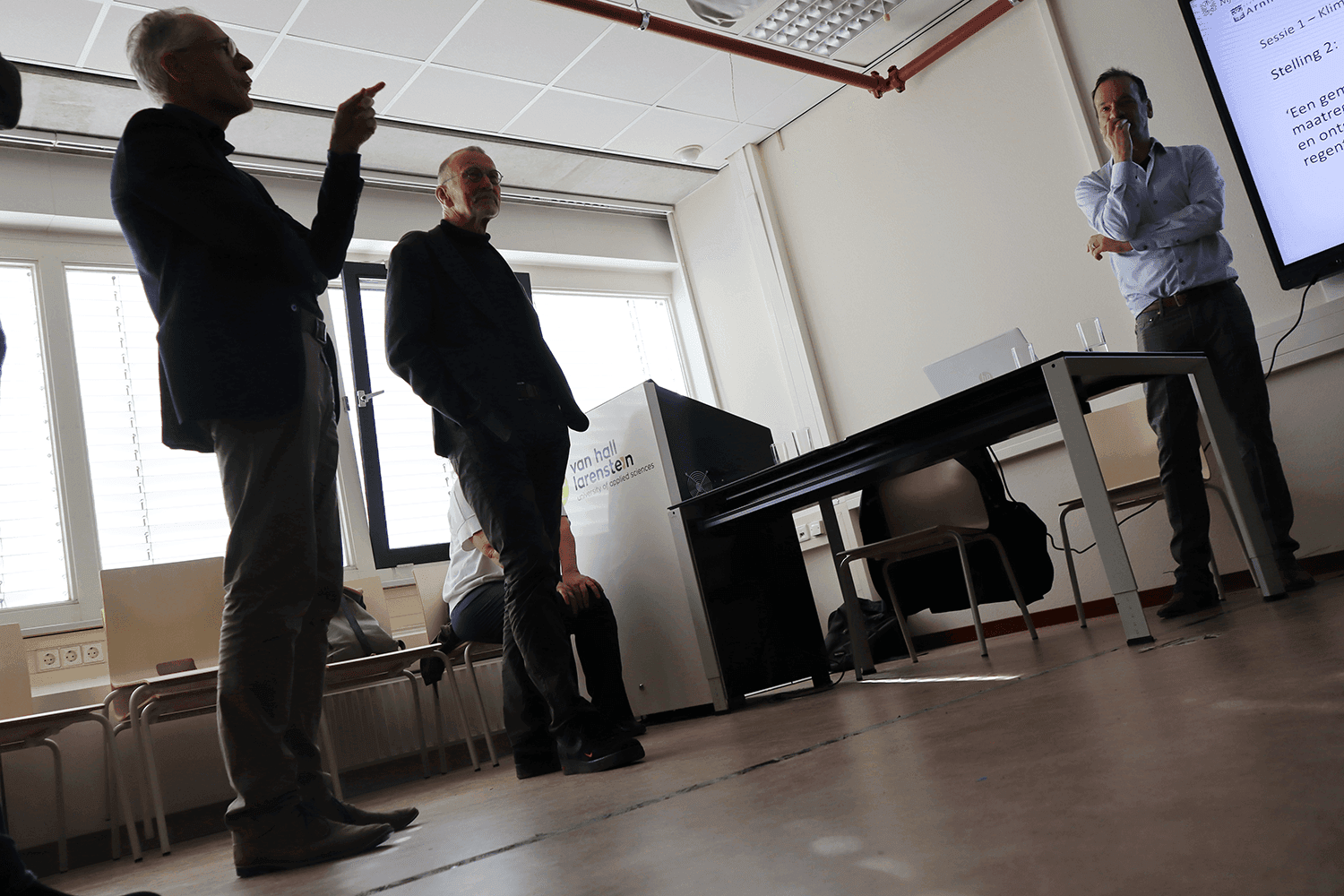
Following this insight into current research, participants were able to take part in one of three workshops: Climate Adaptation – Water and Soil, Circular Construction and the Circular Economy. Using creative materials, such as a thread with which participants wove a web or a drawing on the floor where participants could indicate their position on various propositions.

About Lifeport Circular Lab
The symposium was organised by participants in the Lifeport Circular Lab triple helix group, which consists of:
Lifeport@, The Economic Board, the Green Metropolitan Region, Wageningen University & Research, Radboud University, Van Hall Larenstein University of Applied Sciences, HAN University of Applied Sciences, the municipality of Arnhem and the municipality of Nijmegen.