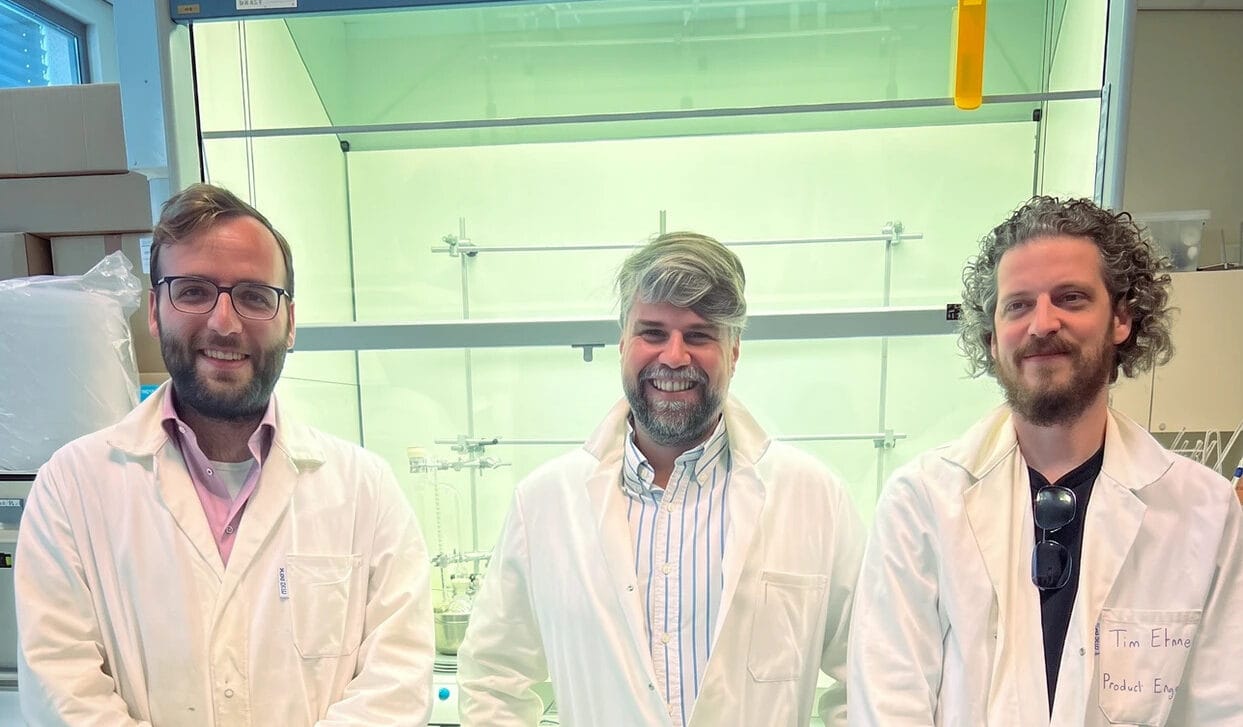
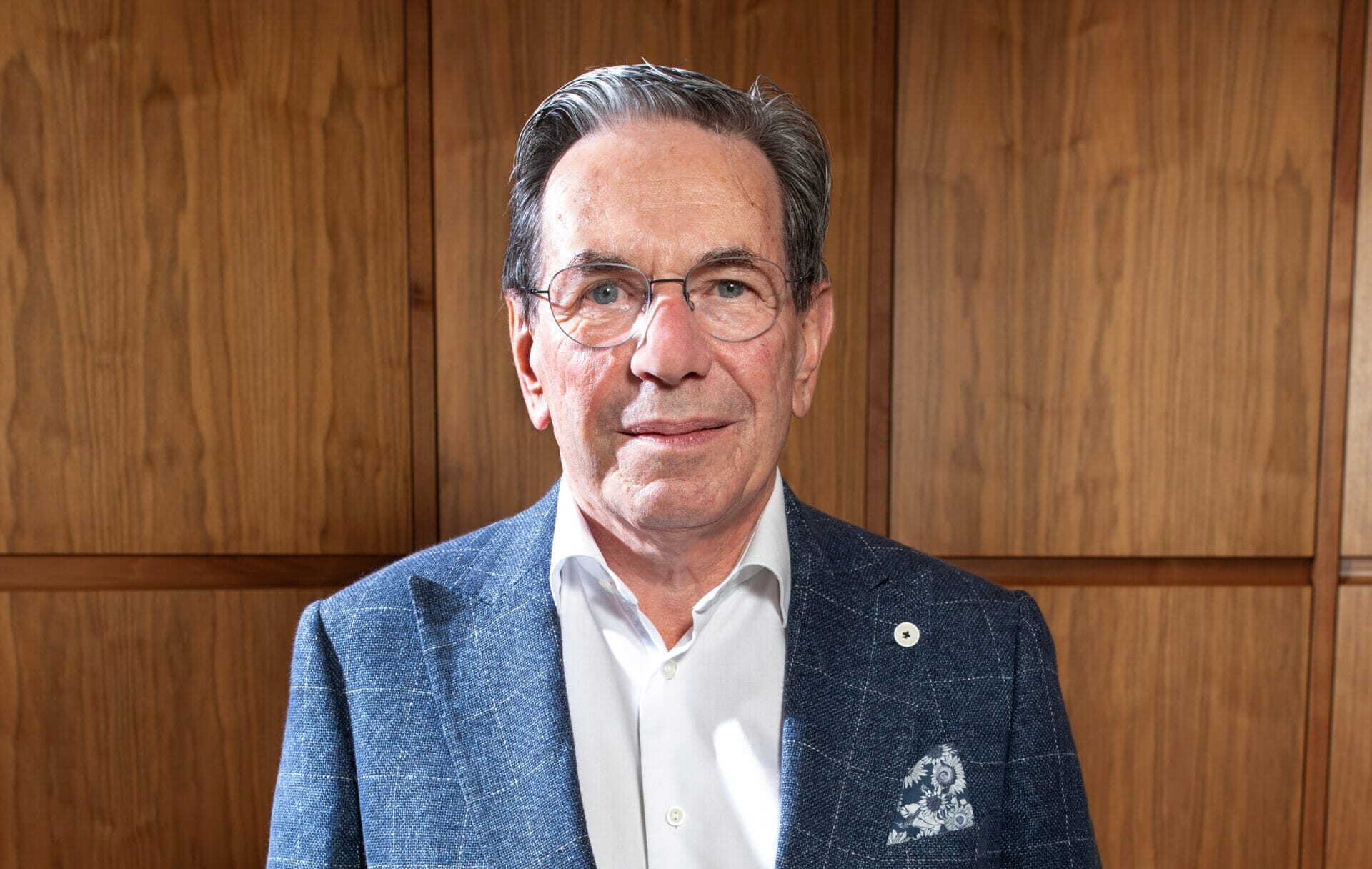
The Lifeport region wants to grow, in all sorts of ways. But it wants to do so in a green way. ‘Smart sustainability’ is therefore a key prerequisite for the region’s ambitions. Three stakeholders – all sharing the same first name – explain exactly what smart sustainability is and what is already happening in the region.
Jan Luijten has been responsible for smart sustainability at The Economic Board since 2020. “As a region, we excel in the health, energy, high-tech and food clusters,” he explains. “But if you want to grow in these areas, you always come up against limitations, such as the increasing shortage of non-renewable raw materials. Smart sustainability means that we want to use innovation to drive sustainable transitions. In this way, we also support our key clusters.”
“When you consider how we manage our scarce raw materials, smart solutions are needed,” says Jan van Dellen, director of The Economic Board. “There is a growing realisation of the need for change in this area. Significant steps are now being taken by entrepreneurs, knowledge institutions and public authorities alike.”
Luijten agrees. “This region possesses a vast amount of expertise in sustainability, as well as a high level of commitment. It is no coincidence that we have won a large number of awards in recent years. However, until recently, that expertise was rather fragmented across various organisations, initiatives and research institutions. We are now trying to bring more coherence to this.” To this end, the Lifeport Circular Lab was established a few years ago: a triple helix group, coordinated by The Economic Board, which is tackling these challenges. “Not project-driven, but bottom-up,” says Luijten. “With enthusiastic representatives from government, the business sector and educational institutions who are keen to roll up their sleeves.”
Living lab
Among other things, the triple-helix group is committed to regional learning projects. Luijten: “We want to show students just how interesting this region is, so that we can retain that talent in the region. Through these kinds of learning projects, we also help businesses to become more innovative. As the most sustainable university of applied sciences in the Netherlands, Van Hall Larenstein University of Applied Sciences wants to make a real difference to the region. HAN University of Applied Sciences shares this vision and uses the region as a ‘living lab’. Radboud University (RU) is also involved in regional learning projects.”
Van Hall Larenstein University of Applied Sciences has been voted the most sustainable university of applied sciences seven times in a row and, for the last three years, the most sustainable institution in the entire higher education sector, including universities. Chairman of the Board Jan van Iersel echoes what Luijten has already said: the university is deeply committed to the region. “Students and work placement students tackle sustainability issues in the field, and researchers work on issues relevant to the region. For example, we carry out a lot of research into the soil. It’s different here than in Friesland, which therefore requires different solutions. That’s what makes regional engagement so interesting.”
“We want to train transition-makers – people who make change possible,” he continues. “That requires a different way of thinking: you need to be able to arrive at new solutions together with stakeholders – solutions you couldn’t have thought of beforehand. That is our strength. All transitions are interconnected, and that’s what makes it so complex. Old solutions no longer work in this context.”
Clustering knowledge
Knowledge hubs can also play a major role. Connectr, the knowledge hub for energy, is a shining example of this. Luijten: “There, knowledge in the field of energy is clustered, and students and businesses come together. The same can be done in the field of sustainability.” He mentions three thematic hubs that currently exist. The first is the Soil Valley campus, an initiative led by Royal Eijkelkamp from Giesbeek. “There, a wide range of organisations are working together to restore a healthy and sustainable soil and water system. The second hub is VIA-T, a knowledge and innovation centre for circular construction. In addition, there is a collaboration between knowledge and educational institutions in the field of circularity: the HUB Gezond Circulair. You can think of this as a point of contact for SMEs with questions about circularity.”
Van Dellen and Van Iersel also cite Soil Valley as an important regional project. Van Dellen: “Managing the extremes of both heavy rain and drought is very important for this region. When building houses – which is a huge undertaking – you have to deal with this a great deal. That’s why the research in Soil Valley is so important. What happens when there’s too much or too little water, and how can you take that into account when building?”
Van Iersel emphasises the important role of water in general. “Water is crucial for the region, but the water here is also very important for other regions. This is where the tap for the whole of the Netherlands is, so what we do here has an impact on the entire country. We have a great deal of expertise in this area. Here, we train water managers who can tackle water-related issues. These students are extremely valuable and therefore highly sought after by employers.”
Luijten emphasises how important it is to effectively communicate the regional narrative and translate the objectives into programmes and funding. He cites the Arnhem-Nijmegen Regional Deal. “Three aspects are identified in it: water and climate adaptation, circular construction and circularity in SMEs. We have drawn up six research proposals across these three areas.”
Many innovations
We can be proud of what is happening in the region, says Van Dellen. “One of the things we’re good at is giving waste a second or third chance. Arnhem is home to Save Plastics, a company that won a Parel Award in June. Among other things, they make lampposts, bridges and even houses from certain types of hard-to-recycle plastic. It’s incredibly cool to see! And at IPKW, waste no longer leaves the industrial estate. It’s reused in all sorts of ways, for example as a heat source.”
Luijten shares that positive sentiment: “There’s a great deal of specialist knowledge in the region and wonderful things are happening. In some areas, we as a region are truly setting an example for others. Tackling heat stress in the centre of Arnhem, for example, has already received a lot of national attention. The dyke relocation near Nijmegen, the moraine near Berg en Dal, ARN’s tyre recycling plant in Weurt and the recycling of telephone components by the DAR are also wonderful projects. There’s a lot of innovation taking place in this region.”
Van Iersel is just as positive. “But we’re still too modest. This region really is a hidden gem. Water and energy are hot topics, and we have a great deal of expertise in those areas. We’re making progress and the local authorities are keen to get involved too. Every region is focusing on sustainability, so we’re not unique in that respect, but we are unique in our landscape, in the way the rivers flow here and in our culture.”
Green thinking
All three, however, cite one major challenge: regulation. Van Dellen: “Both at national and regional level, there are rules that stand in the way of initiatives of this kind. Furthermore, in tendering processes, certain aspects of sustainability are still not given sufficient consideration.” Van Iersel: “With transitions, you always find that laws and regulations get in the way. Great systemic solutions are emerging, but legislation and regulations are still lagging behind. It is important that governments, businesses and research institutions find common ground on this even more effectively.”
The three Jans are particularly pleased with the steps currently being taken. Van Dellen: “There is good cooperation in the region, including at the triple-helix level.” Luijten: “The future looks bright. Residents, public authorities, businesses and knowledge institutions are thinking green.” Van Iersel: “Smart sustainability is something that should underpin everything you do. That’s already the case at our school. I hope the whole region can achieve that. Because if you manage to do that, you can make huge strides. Everyone stands to gain from it.”