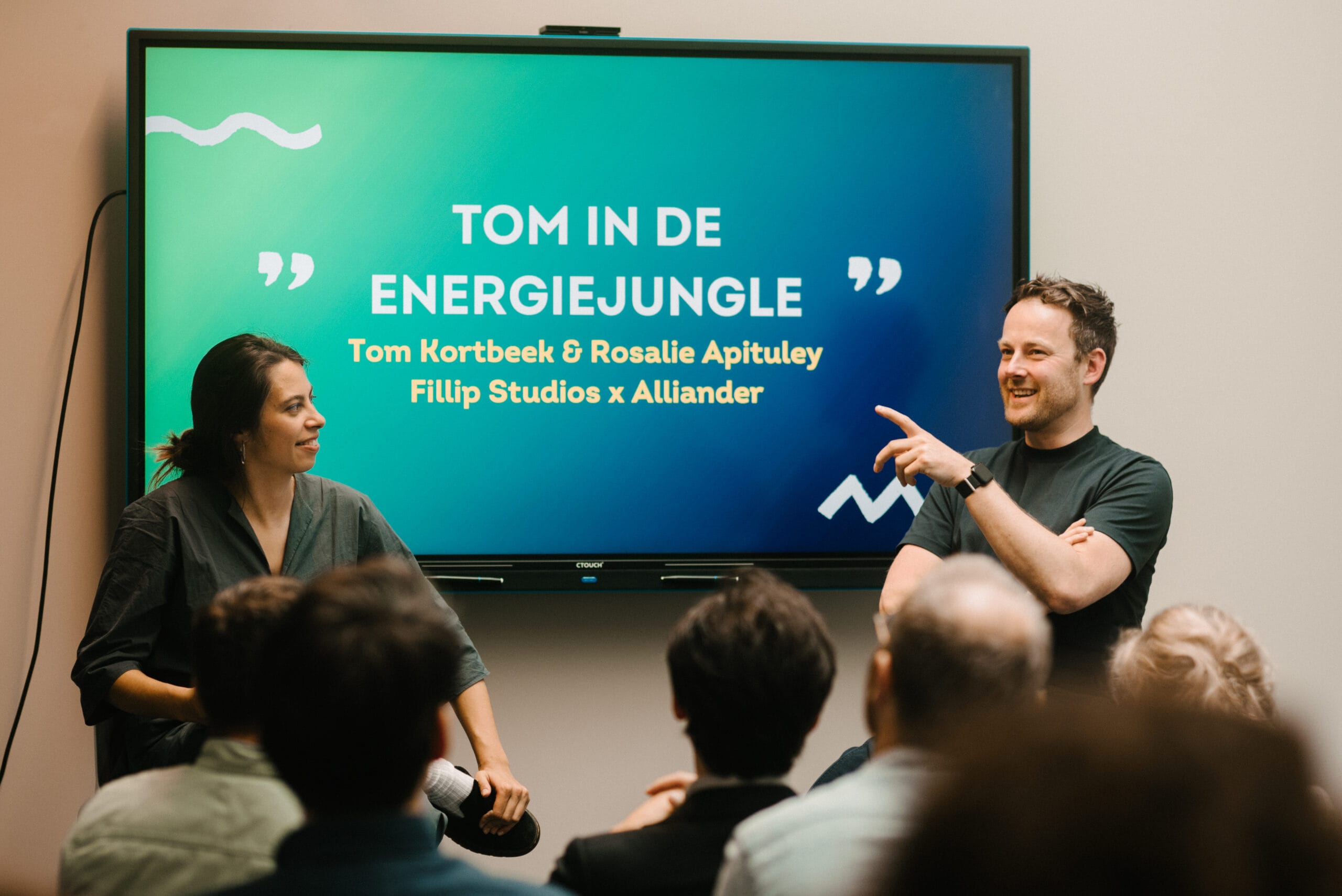
The key points of the Energy Talent Plan were presented today during Arnhem Electricity Week. This is a strategic, regionally supported initiative to tackle the growing shortage of talent in the energy sector. The Arnhem-Nijmegen region, which has the highest level of specialisation in energy in the Netherlands, aims through this plan both to meet its own need for skilled workers and to play a leading role in training talent for the whole of the Netherlands.
Over the next ten years, the region alone will need 15,000 additional skilled workers to bring about the energy transition. The Energy Talent Plan brings together the strengths of public authorities, knowledge institutions and businesses within Lifeport Arnhem-Nijmegen Region, maps out supply and demand, and focuses on training, retraining and upskilling, as well as retaining and attracting talent for both energy innovation and the practical implementation of the energy transition.
“The energy transition requires not only technology, but above all people,” says Jan van Dellen, director of The Economic Board Regio Arnhem Nijmegen. “With the Talent Plan Energy, we are taking the lead in developing the new generation of skilled workers and specialists that our region and the whole of the Netherlands needs.”
Urgent task, regional cooperation
Within the Lifeport Arnhem-Nijmegen Region – the Netherlands’ leading energy hub – the Connectr ecosystem plays a key role in both energy innovation and implementation. To strengthen this position and tackle the growing shortage of talent, entrepreneurs, educational institutions and public authorities are joining forces in the Talent Plan Energy.
This strategic plan increases technical capacity through targeted further training and reskilling, innovative partnerships and a close link between supply and demand. In this way, we ensure there are sufficient qualified professionals to enable both the acceleration of the energy transition (construction and maintenance of networks, charging infrastructure and transformer stations) and the development of energy innovations.
From our unique position, working with major players such as Alliander, TenneT, Smit Transformatoren, Milence, Hyster Yale, ElaadNL and DNV, and through strong collaboration with educational and research institutions such as Arnhem Nijmegen University of Applied Sciences, Radboud University and the ROCs Rijn-IJssel and Nijmegen, we are guiding the Netherlands in the development and training of innovative energy profiles – as a substantial contribution to the Energy Talent Plan and the labour-saving innovations required for the energy transition.
Energy Talent Plan: innovation and implementation
The Energy Talent Plan focuses on streamlining educational and business initiatives, strengthening learning pathways at knowledge institutions, optimising supply and demand in the labour market, and joint recruitment and the smart use of funding.
The emphasis is on doing what is necessary and scaling up where possible. The plan builds on existing regional and national programmes. We are focusing on concrete projects such as the Labour Matching Platform to recruit, train and match more people switching careers based on their skills, or the ‘Future Your Energy’ initiative, in which students at senior secondary vocational (MBO), higher professional (HBO) and university (WO) levels are trained using innovation challenges from the business world. And we involve energy entrepreneurs at a much earlier stage to identify their specific needs, so that knowledge institutions can tailor their provision much more effectively.
In addition, we are bringing together initiatives to attract talent to this sector, such as the ASM Student Festival and the Talent Tours Arnhem. And we ensure that it is not just the large businesses that benefit from this; rather, we focus as much as possible on all links in the chain, from large to small businesses. Think of a regional training programme, a job guarantee in the region, employers’ commitment to a paid work placement programme, a database of all energy jobs in the region, and links and collaboration with the UWV and local authorities to support jobseekers.
The demand for talent has two sides: “With the Talent Plan Energy, we are joining forces between education, government and businesses,” says Marcel Hielkema, chair of Connectr energy innovation. “We are in a position to lead the way in the Netherlands – with practice-oriented training programmes, strong networks and labour-saving innovations through, amongst others, Connectr and the soon-to-be-opened National Centre of Expertise on Grid Congestion. The scale, the expertise and the collaboration are all in place here. This also applies to talent that is currently on the sidelines.”