How can you get children to be more active? In the Elderveld neighbourhood of Arnhem, the answer is: by asking them themselves. In the Junior Activity Team, primary school pupils contribute ideas about play, physical activity and their own living environment. This not only yields better ideas for the neighbourhood, but also provides valuable learning opportunities for students and professionals.
A playground that could do with a bit of a revamp. More opportunities to play outdoors. Break times that last longer at one school than at another. In Elderveld, a neighbourhood in Arnhem-Zuid, children are being given the chance to do something about this themselves.
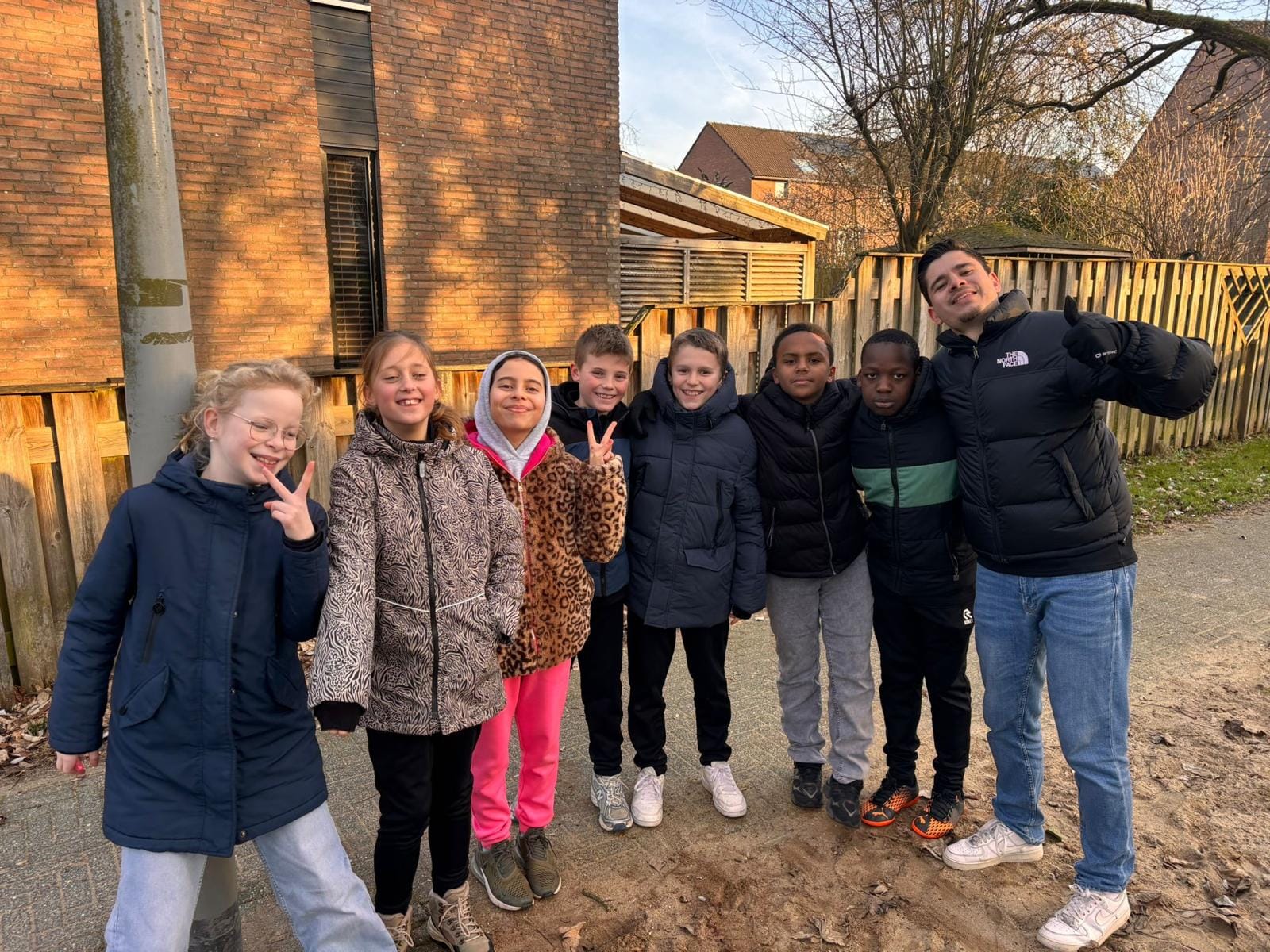
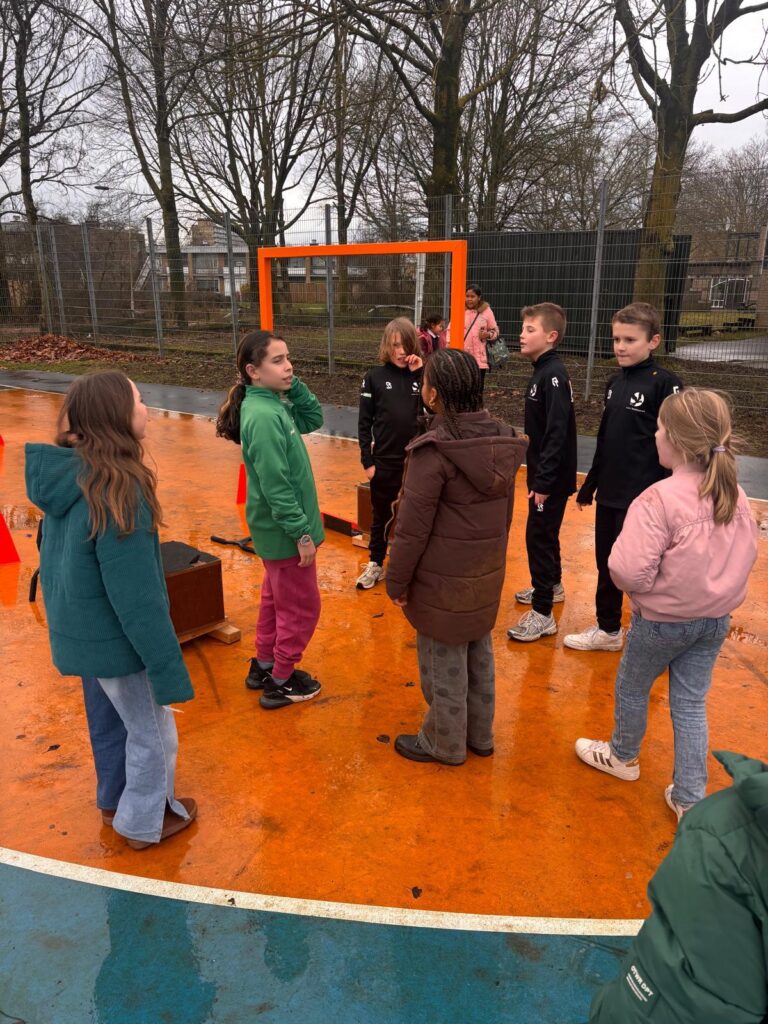
Eight pupils from Years 7 and 8 at De Klimboom and De Kringloop primary schools make up the Junior Exercise Team. They gather ideas from other children, explore ways to improve things and organise activities. In this way, the juniors actively contribute to research into outdoor play, help to devise and test ideas for the development of an outdoor play bag, and organise activities, such as those surrounding the opening of a play container in the neighbourhood.
Sport and exercise in Elderveld
Physical activity and outdoor play
The Junior Exercise Team emerged from a broader Arnhem-based initiative to encourage children to be physically active on a more regular basis. The aim is for every child to be active for five hours a week – during school hours, after school and in the local neighbourhood. This so-called ‘2+1+2’ approach links physical activity at school with what happens outside school. Subject teachers, community sports coaches and sports providers work together to achieve this within the Senior Exercise Team.
Geert Geurken, Strategic Sports Adviser at Sportbedrijf Arnhem: “This is important, because getting enough exercise and playing outdoors are not a given for all children. Moreover, the opportunities to grow up healthy and active are not the same everywhere. The Arnhem approach therefore places extra emphasis on neighbourhoods where health inequalities are greater.”
Intern Ella Hensen (4th-year Sports Science student, HAN Academy of Sport and Exercise):
“I think the Junior Exercise Team is important because children are playing outside less and less of their own accord. The activities bring children together and get them moving.”
Demand-driven provision
Geert: “To avoid thinking too much in terms of what we have to offer, it’s important to involve the target groups themselves in the process. The eight pupils not only organise the activities but also represent other children. For example, they go to their classes to gather ideas about playing outdoors. By experimenting in the neighbourhood and investigating what works and what doesn’t, you get closer to solutions than if you simply come up with new ideas and wait to see who takes an interest.”
Naomi (Year 8), Elderveld Junior Exercise Team:
“We can help children to play outdoors more often and get more exercise.”
Cycling skills
When you think of physical activity, sport and playing outdoors often spring to mind. But being able to cycle and swim well also helps children to participate actively and independently. As such, the approach in Elderveld is not just about organising activities, but also about skills that give children greater freedom of movement.
“The local business community can also play a part in this. For example, Decathlon helped develop a ‘Skillsbox’ for sport and games during school breaks. Other companies can contribute time, money, expertise or materials. Think, for instance, of adjustable bikes that allow children to practise their cycling skills,” says Geert Geurken.
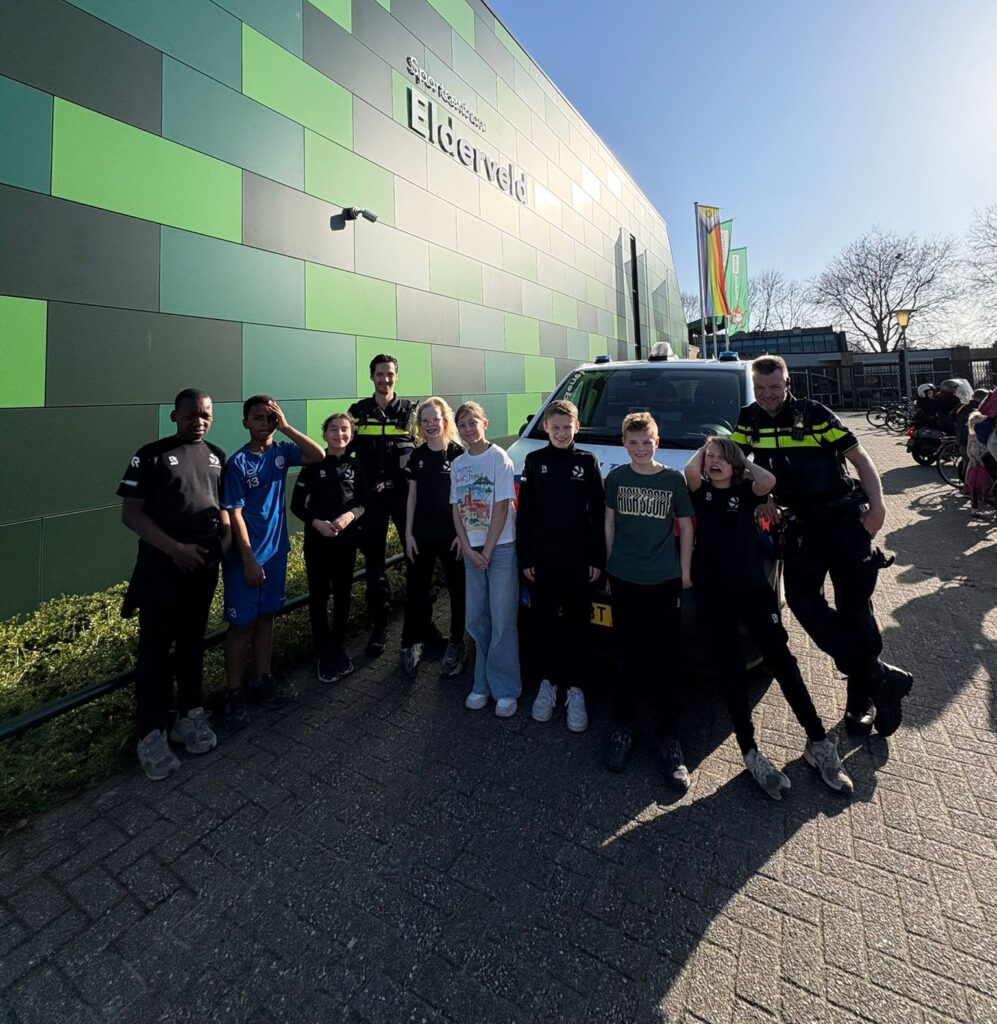
Collaboration in Elderveld
The neighbourhood as a learning environment
It is not only children who learn in Elderveld; for students and professionals too, the neighbourhood is a place to explore what works in practice. Jasper de Greef, lecturer and researcher at the HAN Academy of Sport and Physical Activity: “In Elderveld, we at HAN University of Applied Sciences work closely with Sportbedrijf Arnhem at a physical location within the neighbourhood to help sport and physical activity professionals encourage children to exercise more and better. Our students, including those from the ALO and Sports Science programmes, coach the youngsters and carry out research. In this way, they tackle real-world social issues and see the results of their efforts. This way of working together is also known as a ‘Living Lab’.”
Jasper de Greef:
“Learning and research do not take place solely within an educational institution, but rather right at the heart of society.”
Get involved and contribute your ideas
Children who learn to enjoy physical activity lay the foundations for an active and healthy life. But the Junior Exercise Team also demonstrates that health is about participation, equal opportunities and having a say in your own living environment. It is precisely by bringing together parents, professionals, the education sector and the research community that we gain an understanding of what works in practice.
The lessons learnt from Elderveld can also help other neighbourhoods and local authorities in the Lifeport Arnhem-Nijmegen Region to build a healthy environment in which children participate and contribute ideas. In this way, they learn from a young age that they themselves can make a difference.