The initiative was launched on 24 June. At the first Circular Café, held at the Peeze Coffee Roastery in Arnhem, it was announced that the grant for the circular economy in the Arnhem region had been awarded. As a result, the brand-new Living Lab Circulair Regio Arnhem will serve as a catalyst for circular developments in the region.
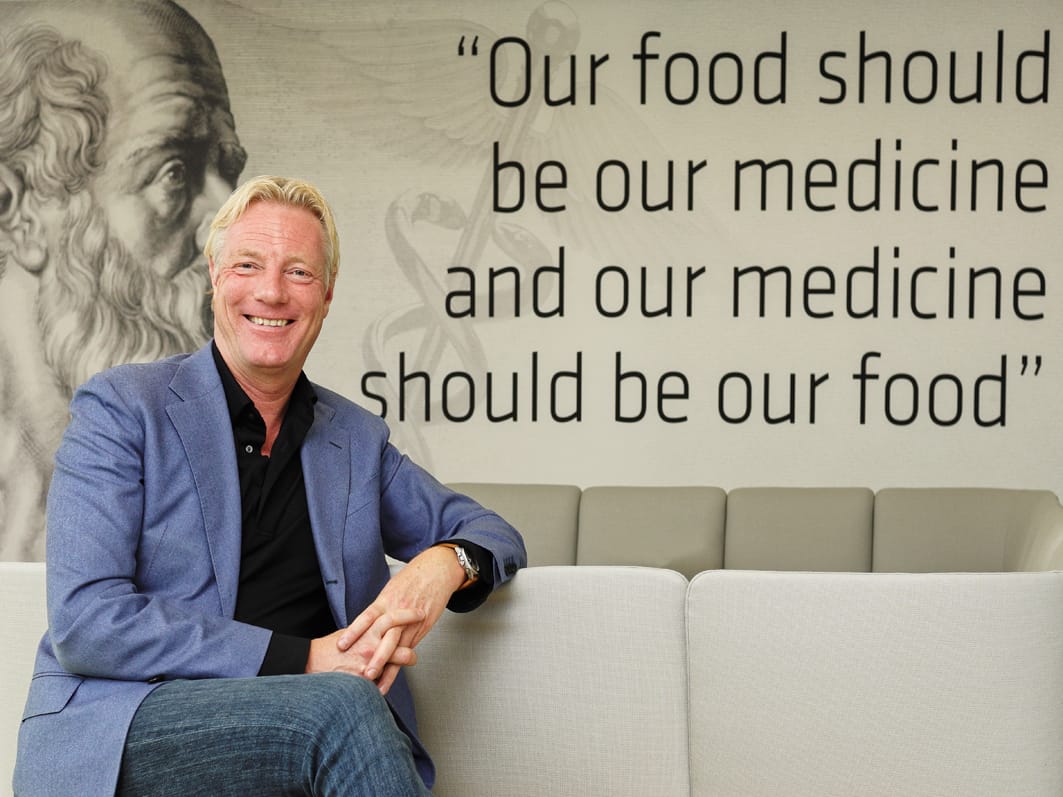
The organisation is an initiative of Kiemt, VNO-NCW Midden and Arnhem City Council. An impressive line-up of Circular Ambassadors is ready to help develop the circular economy in the region. One of them is Jan van Dellen, director of The Economic Board. He talks about his motivation for becoming an ambassador.
“Before I joined The Economic Board as director, I served as Arnhem’s alderman for the economy for four years. During that time, we realised that we had a great many circular businesses and a great many innovations. But we didn’t have a councillor for the circular economy. So I took on that role. Together with a team of civil servants, businesses and knowledge institutions, we drew up a plan and developed a vision. We visited a great many circular businesses and initiatives.
And if you just look at Arnhem alone, you see so many interesting developments. I was surprised by companies such as Safe Plastics, which actually builds houses and bridges from waste plastic. Or a small company in Schaarsbergen, Omlab, which uses 3D printing to build houses from waste.
The fact that these scarce raw materials are being reused, on a small or large scale, is something I find incredibly important. But it’s not very visible; people still know too little about it.”
Funding
“All these initiatives are grappling with the same problem, and that is funding. Because you have to invest a great deal before you can demonstrate that it actually works.”
Van Dellen explains how it works.
The municipality of Arnhem puts out tenders worth hundreds of millions each year. These range from the maintenance of roads and lampposts to office supplies. But at the time, those tenders were not designed with circularity in mind at all. So if a bridge needed to be built, it was a traditional concrete and steel bridge, not one made of plastic. The tender specifications did not state that a bridge could be made of plastic. As a result, circular economy businesses were inadvertently excluded. People were simply unaware of these developments.
“So we had to do things differently. We set up a procurement portal where suppliers from Arnhem and the wider region could indicate in advance what they were able to produce using, for example, recycled plastic. This meant we had a much better system for providing information. The council’s procurement team took this on board as well. So those suppliers were also given a chance.”
And it went further. They then started looking at areas that hadn’t yet been assessed.
A good example is the bread consumed by the council – there was a lot of it, for 2,000 civil servants. That was also put out to tender. It could have been that a baker from Amsterdam won the contract. But that baker would have had to drive from Amsterdam to Arnhem and back again, which would have resulted in higher CO₂ emissions. So distance should also be factored into such a tendering process. A company located within 10 kilometres, for example, could be given a higher score, as that results in lower emissions.
I’ve been saying for a few years now that we need to invest heavily in sustainability, but that it won’t be long before it becomes the norm. So circularity will soon be a feature of every project. This includes all the thematic clusters of The Economic Board: energy, health and high-tech.
Corporate Social Responsibility
Van Dellen: “I think that’s important: CSR – Corporate Social Responsibility. That means you also have to look at how a product is made and who it’s made with. Do you also take into account untapped labour potential? And people who are distanced from the labour market? It really inspires me when companies do that too. Take Hullekes in Arnhem, for example, a circular fashion designer who creates top-quality designs from waste materials with people who are distanced from the labour market.”
Living Lab Circular Arnhem Region
The Living Lab will be working with the Circular Council in Nijmegen on part of a Regional Deal project. Together, they will build a Triple Helix Ecosystem for the Arnhem-Nijmegen region.
Van Dellen: “We’ve brought together a great group of ambassadors for this, including fellow board member Nermina Kundić, a councillor in Arnhem, with whom we aim to make a difference. And it’s not just about Arnhem; it’s about the region and, ultimately, the whole of the Netherlands.”