Ilko Bosman runs several companies, is chairman of VNO-NCW Arnhem-Nijmegen Region and a member of The Economic Board. Nevertheless, he was keen to take on the challenge of also becoming chairman of Lifeport@.
Bosman explains: “I am, of course, first and foremost an entrepreneur; I take on the other roles alongside that. The reason I’ve taken on this role is that it complements my roles on the board and at VNO-NCW. That means I believe I’ll need less time to achieve the same – or perhaps even more – than someone who is less involved in that network.”
Scale
And this is a subject very close to Bosman’s heart: “I don’t really believe that you can implement the economic policy we all consider important on a small scale. You do need to work closely with entrepreneurs, but you also need a certain critical mass.
And if an Economic Board is doing that for this region, then it is important that the primary organisations responsible for implementation also operate on the same scale. Just as Briskr and Connectr do for the High-tech, Health and Energy clusters. They, in turn, have a slightly different organisational model and different arrangements with The Economic Board, but they also operate on the same regional scale. The fact that Lifeport@ has now also chosen this region was an important consideration for me.
This means that, across The Economic Board’s entire area of operation, we can work together to deliver everything from strategy and policy, through lobbying and advocacy, right through to actual execution, roll-out and implementation – specifically for SMEs, as that is where the impact and the need are greatest. That way, you simply have a strong network of partners at regional level.”
Roles
In the second half of 2024, Bosman, as part of a small working group within the board, took a critical look at the role of The Economic Board and that of Lifeport@. It became clear that the board takes a truly strategic approach, whilst partners such as Lifeport@ are there to connect, organise and coordinate.
“Lifeport@ is really there to strengthen SMEs and help them work together. Large companies are also very welcome. But that is not the primary target group. That is small and medium-sized enterprises – the name says it all – which have limited capacity. They cannot do everything themselves. So they have a much greater need for collaboration. If you then link this to education, connect entrepreneurs with one another and provide expertise and coordination, you can be of enormous help to entrepreneurs with issues that might initially seem very complex to an individual entrepreneur.”
Alignment
Bosman explains how he views the collaboration between The Economic Board and Lifeport@.
“There is already coordination at programme level, and part of the Regional Deal has also been assigned to Lifeport@. But as far as I’m concerned, the roles could be much more firmly established. You need to ensure that your objectives and policies are aligned; this shouldn’t be left to chance, but should be done very deliberately through coordination.”
An example: Food Community
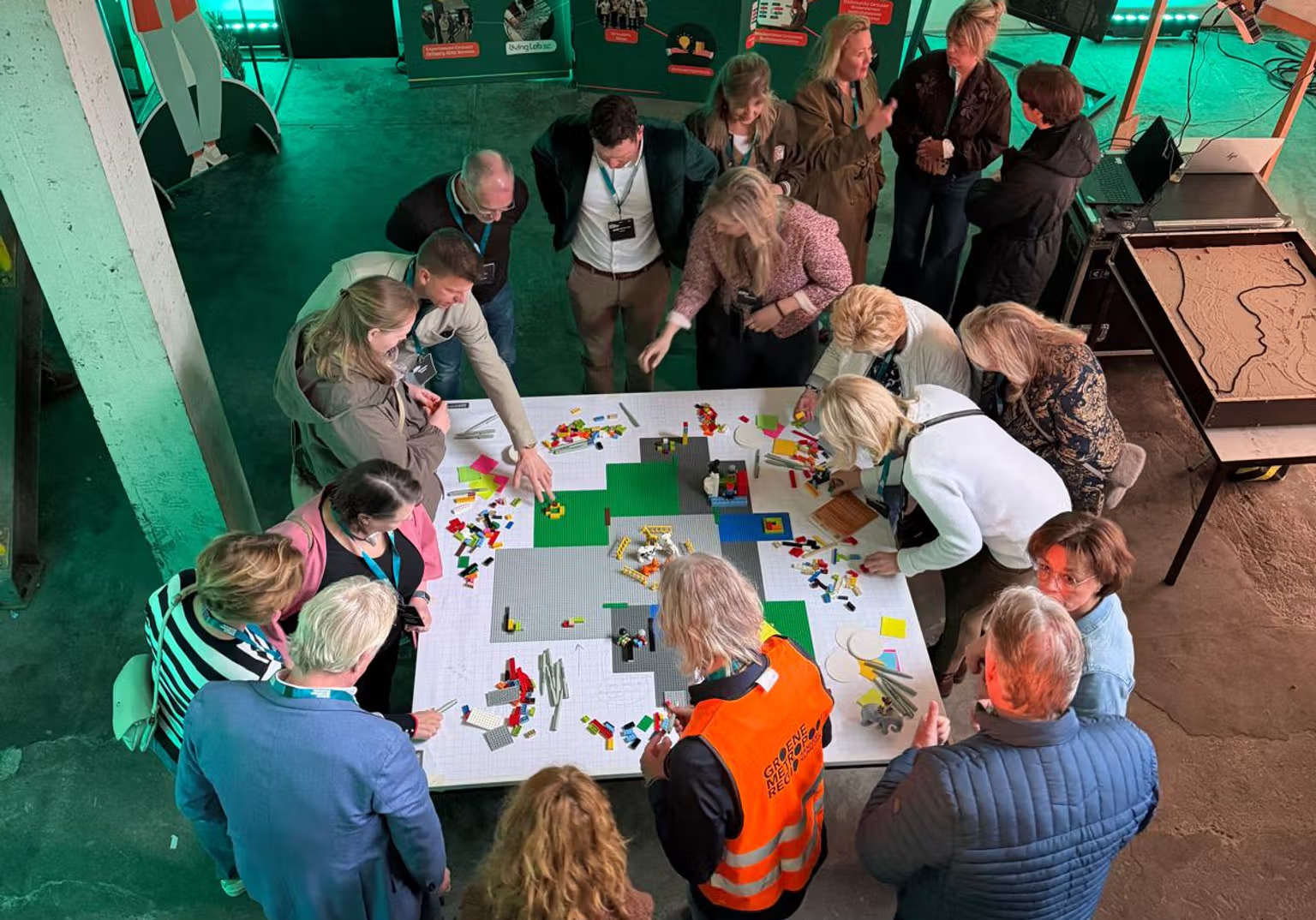
A fine example of what collaboration between SMEs can look like with the help of Lifeport@ is the Food Community Gelderland
“What is perhaps not so well known is that we have a large network of companies in the food industry in the region. And this is not so much in the Wageningen area, but more in the retail and catering sectors.
One of the ongoing projects in the food sector brings together entrepreneurs with the education sector and healthcare institutions. Naturally, a great deal of food is supplied to these institutions by external caterers. And a lot of it ends up being thrown away. That’s obviously a shame. This project is looking at how we can better match supply and demand, so that there is little overproduction and less waste. It’s also exploring how any leftovers can be quickly repurposed whilst still fresh for other uses. The aim is to ensure, at the very least, that it doesn’t end up in the bin.
This request came from the SMEs themselves. What helps is having an organisation that can coordinate things and say: ‘We’ll facilitate you getting together.’ That’s often simply difficult for entrepreneurs. They’re busy running their businesses and don’t have time to ring everyone up to arrange meetings. And in many cases, it also helps to have an independent party involved. If a single party in the food industry were to invite potential competitors as well, that could be a sensitive issue. But if an independent party does it, it might be easier to sit down with potential competitors after all. So that’s where the strength lies, I think.”