The Lifeport region is working together more and more effectively on sustainability and circularity. Naturally, this pleases Jan van Iersel of Van Hall Larenstein University of Applied Sciences. But he also sees opportunities that remain untapped. He wants to collaborate more with entrepreneurs from the Nijmegen region, and links with SMEs in general are also weaker than he would like.
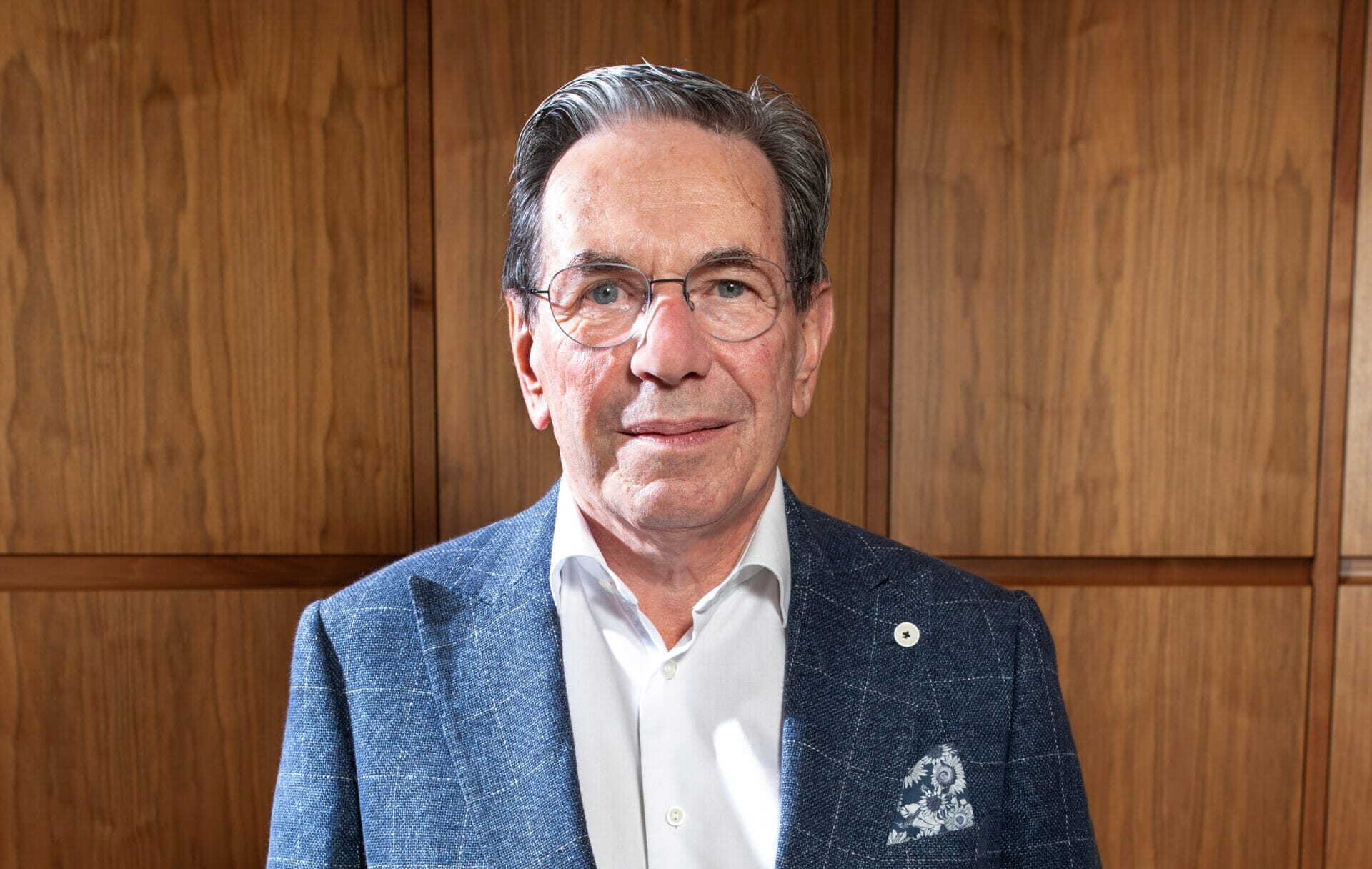
Van Iersel is the chair of the Executive Board of Van Hall Larenstein University of Applied Sciences (HVHL). The institution, with campuses in Velp and Leeuwarden, is renowned both at home and abroad for its expertise in ‘green and blue’ – in other words, sustainability and water. For many years now, HVHL has been virtually unbeatable in the vote for the most sustainable university or university of applied sciences in the Netherlands.
For the wider region
“We really do have something to offer the region,” says Van Iersel, and rightly so. He is a member of The Economic Board for good reason, as he is keen to seek collaboration across the wider Lifeport region. He often succeeds in this, but he also feels that the region does not yet always function as a single entity. “I’ve noticed that we attract relatively few students from the area south of the rivers – that is, the Nijmegen area. Nor do we have as much contact with entrepreneurs from that area as I would like. Perhaps we’re simply not as well known there. Things are picking up, but there are still many untapped opportunities.”
“We don’t always realise, across the wider region, what unique expertise on circularity is available – including here at our institution,” he continues. “There are only three universities of applied sciences of this kind in the whole of the Netherlands. We’re trying to focus more and more on the region’s interests, alongside the national and international projects we’re involved in. In Nijmegen, we’re very heavily involved in the station area. We enjoy a very good working relationship with the local council on this. They’ve certainly found us, but the business community could do with getting more involved.”
Helping SMEs
Apart from the divide between the regions north and south of the rivers that he sometimes senses, there is another challenge that Van Iersel is keen to highlight. “The larger organisations do find us, but that isn’t necessarily the case for the thousands of SMEs in the region. Those companies are grappling with issues around sustainability and circularity. They often need to change, either because of legislation or to become more attractive to talent. They face challenges that we can help them with.”
There are many benefits to collaboration, for both sides, as Van Iersel explains. “It’s very important to us that our higher vocational education students – and our lecturers too – can engage with real-world issues rather than hypothetical ones. Lecturers can then incorporate the knowledge they gain into their courses. We can also act as a hub, connecting companies with one another.”
Bitterballen and beer
There are already some excellent collaborations in place. “Students have developed products, including bitterballen, using lupin beans as a base. Lupin beans are high in protein and make a very sustainable meat substitute. The project was set up with support from the province of Gelderland and the EU. The students have now registered with the Chamber of Commerce and are set to sell the bitterballen through their company.”
“Another student has developed a beer made from whey (a by-product of cheese production, ed.) as part of a final-year project, in collaboration with cheese maker Remeker,” he continues. “That too is now being launched on the market.”
Battle for water
“It is becoming increasingly difficult for SMEs to source raw materials,” he points out. He cites water as an example. “The battle for water is becoming an ever-greater issue. Not just drinking water, but also water used in industry, amongst other things. It is very important for a business to retain those kinds of raw materials within its own environment, rather than throwing them away. That is why, even as an SME, you need to explore whether circularity is feasible. Not just out of idealism, but because in the future it will simply be a prerequisite for survival. We can certainly play a part in this. By helping businesses directly, but also by putting the knowledge we’re building up across the board to good use.”
HVHL’s expertise extends beyond just circularity and water. Van Iersel mentions the use and reuse of wood, as well as heat stress. “We’re conducting a lot of research into heat stress in cities, but also on industrial estates. A two-degree rise in temperature could mean that some trees stop growing. That’s why, on and around our estate in Velp, we’re experimenting with trees that can withstand heat better because they retain water for longer. That, too, is valuable knowledge for businesses.”
Backbone of the economy
Van Iersel would like to see HVHL and other knowledge institutions become more accessible to SMEs. "It would be good if there is a widely used portal where the questions of SMEs come in. In doing so, someone needs to connect the existing initiatives. We could certainly take that role, together with the HAN and Radboud University, for example. Yes, I like to help SMEs move forward. It is the backbone of our economy."