A series on how we are working together in the Lifeport region to build a future-proof labour market.
Tomorrow’s labour market demands more than just new solutions. It also calls for a new way of working together. That is why, in the Lifeport region, we have consciously opted for a design-based approach: researching, experimenting, learning and building together to create a Human Capital Agreement that addresses the challenges of both today and tomorrow.
Adam Galijašević (HCA team), Tom Kortbeek and Simone van Bennekom (Creatief Arnhem) will be offering a behind-the-scenes look at the review of the Human Capital Agreement for the Lifeport region over the coming period. We’ll show what we’re learning, the dilemmas we’re facing, the perspectives that are coming together, and how design can contribute to a future-proof labour market and a strong, regional, learning ecosystem.
So this is not a final account, but an open insight into a process that is still very much in progress.
Making room for complexity
Report and initial findings from the review process of the regional Human Capital Agreement (HCA 2.0)
“If you do what you’ve always done, you’ll get what you’ve always got.”
That statement certainly stuck with Lifeport Arnhem-Nijmegen Region following the second co-creation session of the regional Human Capital Agreement.
Not because too little has been achieved in recent years. On the contrary. During the meeting, Adam Galijašević, programme manager for Human Capital Akkoord, and Renate Bouwman presented the outcomes of four years of regional collaboration. A period in which much has been achieved: a dedicated HCA team, a growing regional ecosystem, new partnerships and concrete projects. Impressive results have been achieved, such as the now annual ASM Student Festival in Arnhem and a Techadoptie practorate. Financially too, the collaboration demonstrates that investing at the outset pays off; every euro invested has now yielded a fivefold return.
Are we doing the things we need to do; are we doing them properly?
But reassessing also means reflecting. What have we achieved? What have we learnt? Are we doing what is necessary? And are we doing it in the right way? A SWOT analysis made it clear that the context in which we operate remains in a state of flux. In the Netherlands, and therefore also in our region, we are facing an ageing population and a working-age population that is barely growing; here too, we must structurally adapt to technological developments, such as artificial intelligence, and to changes in the nature of work and the skills required for it.
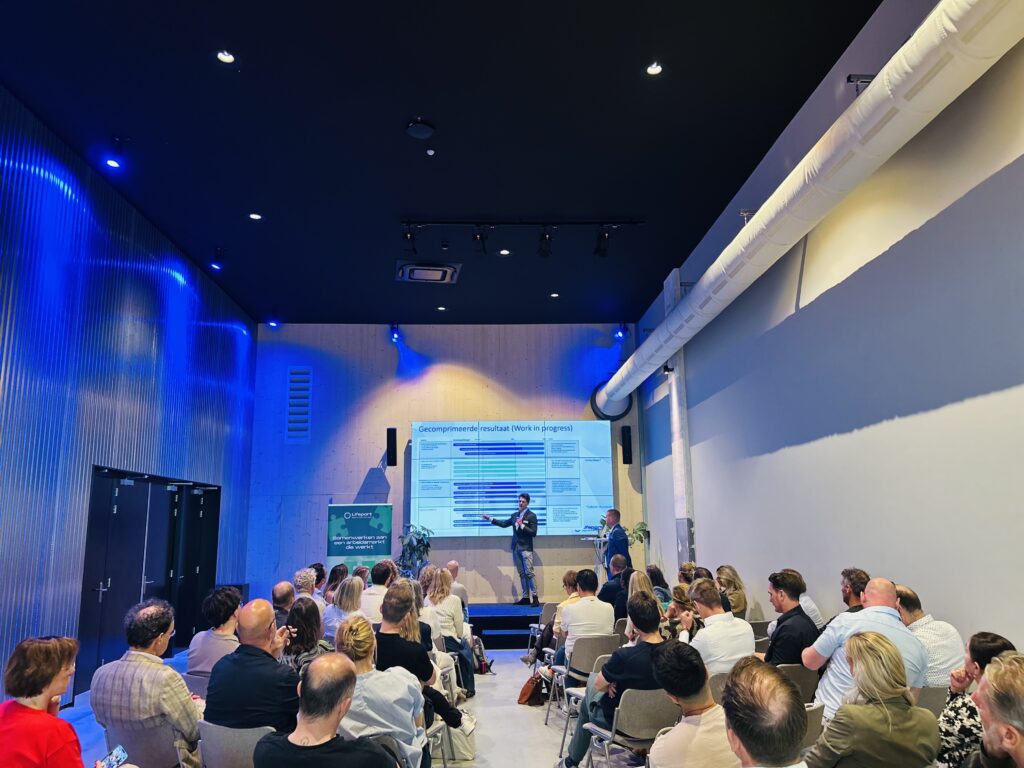
Co-creation session on 2 July 2026
Building a future-proof region
Building on this reflection, we spent two days exploring the central question: how do we build a region in which people remain engaged – in other words, are able to continue working in a way that is healthy, meaningful and future-proof? How do we ensure that people can continue to develop, organisations reinforce one another, and innovation genuinely contributes to broad prosperity and the quality of life that we all envisage here together? These are issues that no single organisation can solve on its own; they require a regional ecosystem in which public authorities, entrepreneurs, the education sector, knowledge institutions and civil society organisations learn, experiment, reflect and develop together. But how do you go about doing that?
“These are challenges that no single organisation can solve on its own; they require a regional ecosystem in which local authorities, entrepreneurs, the education sector, knowledge institutions and civil society organisations learn, experiment, take action, reflect and continue to develop together. But how do you go about doing that?”
Recognising complexity as a starting point
Over the past few months, the Human Capital Agreement team, the systemic design agency Shoshin and Creatief Arnhem have been working together to take stock of the progress made, reflect on it and, at a systemic level and in co-creation with the ecosystem, look ahead and define potential solutions. Team HCA has recognised the need to work in a way that acknowledges complexity and has chosen to adopt a design-based approach.
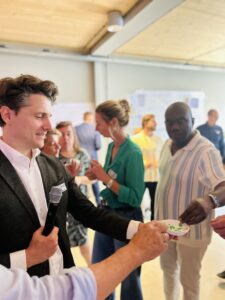
Getting creative
Working with a design-led approach
A design-led approach does not start with the answer, but with recognising the complexity of the challenge. In this context, design is not a step at the end of a process, but a way of working together to better understand what is really at stake.
- What assumptions guide our thinking?
- What interests are at stake?
- What perspectives are still missing?
- And what opportunities might we not yet have spotted?
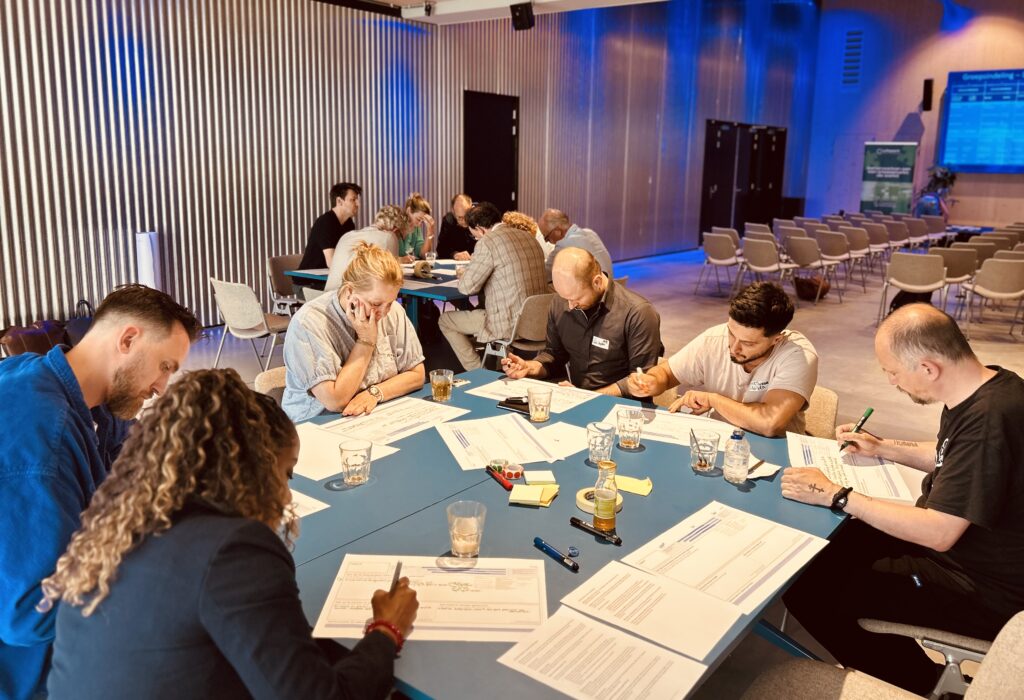
Co-creation session on 2 July 2026
Co-creation to address three regional challenges
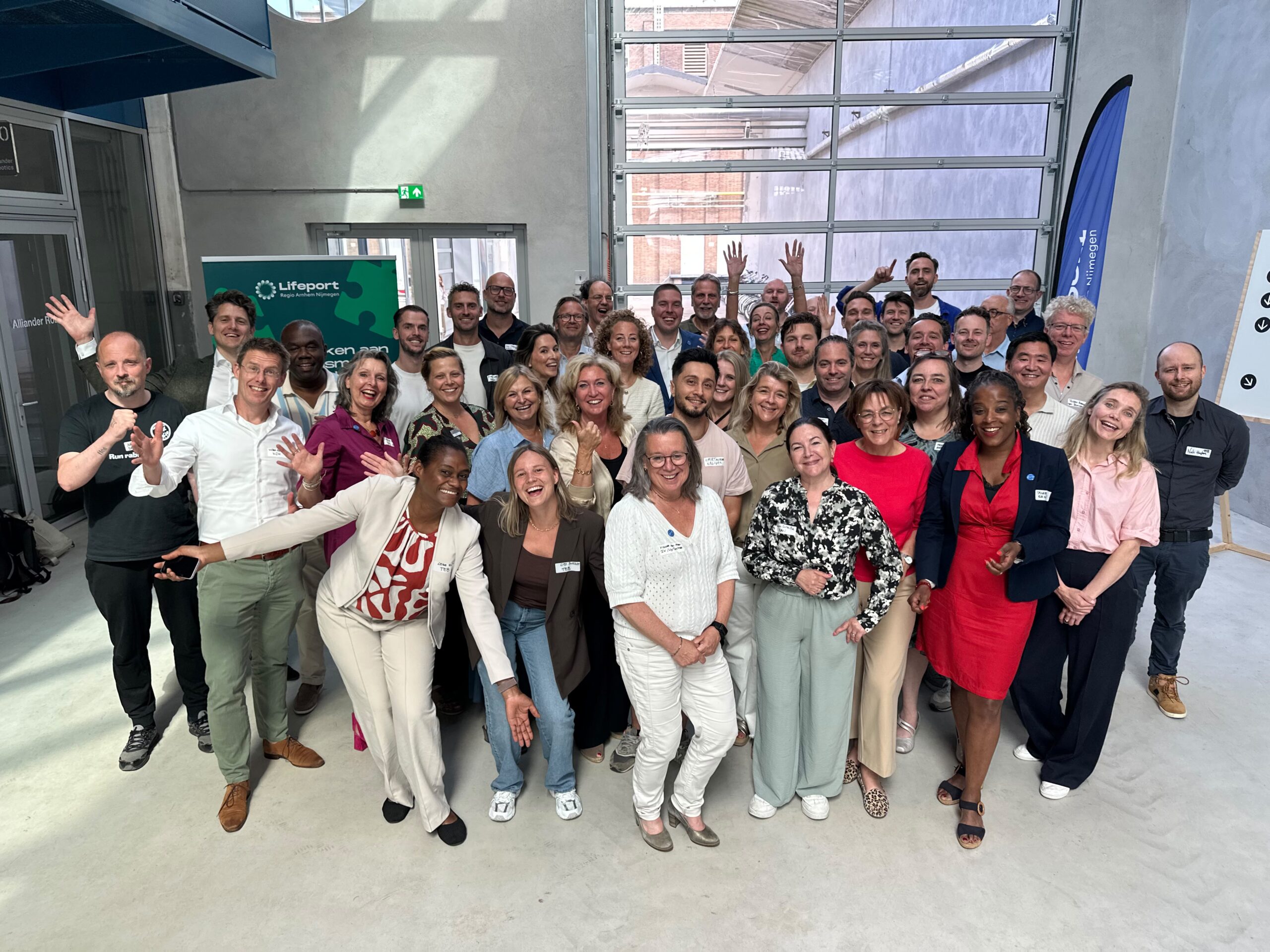
During two regional co-creation sessions – at HAN University of Applied Sciences in Nijmegen and at CleanTech Park Arnhem – employers, public authorities, the education sector, research institutions and civil society organisations engaged in discussions on precisely these topics. As Shoshin aptly put it:
“A design-led approach begins with recognising complexity.” Perhaps that is the most important step of all. Because only when we accept that complex issues do not have simple answers will there be scope to learn together, to experiment and to move forward step by step.”
During the co-creation sessions, three regional challenges took centre stage:
- Getting more people into sustainable employment and keeping them there.
- Training more people for tomorrow’s economy.
- Accelerating labour-saving innovation by combining technology, social innovation and new ways of working together.
It is precisely in these challenges that it becomes clear that technological innovation alone is not enough. The way in which people collaborate, learn, organise themselves and embrace new technology ultimately determines whether innovation actually has a social impact. A design-led approach can help to link social and technological innovation on an equal footing. Not as a creative addition to an existing process, but as a way of bringing different perspectives together, revealing patterns and jointly exploring new directions.
The power of language
During the discussions, it was also striking how language influences our thinking.
Terms such as ‘untapped labour potential’ are understandable from an economic and policy perspective, but at the same time raise the question of what view of humanity lies behind them. Words matter. They determine not only how we view issues, but also which solutions subsequently seem logical. Or as Simone van Bennekom, director of Creatief Arnhem, put it: “Perhaps that is why a future-proof Human Capital Agreement begins with a different way of looking at people. Not as a resource to be utilised to the full, but as people with talents, experiences, ambitions and the potential to contribute in various ways to a resilient region”. Adam Galijašević says he is “extremely pleased with all the input provided by everyone, and the commitment shown by so many in setting aside two whole days in their busy diaries demonstrates that this ecosystem is ready for the next step”.
Team HCA is building towards the next phase in shaping the new Human Capital Agreement, in which, together with Creatief Arnhem, we are exploring how to further develop a learning ecosystem in which different perspectives are harnessed as a source of innovation and mutual reinforcement. We would like to thank everyone for their active contribution during these two days of co-creation and will keep you informed of further developments and progress.
For now, have a lovely summer!
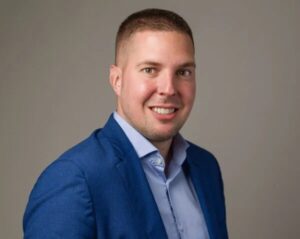
Adam Galijašević – Programme Manager for the Human Capital Agreement in the Lifeport region and responsible for the review of the regional Human Capital Agreement.
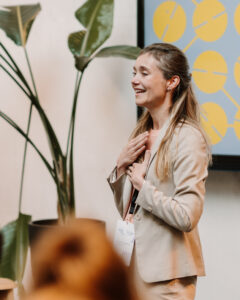
Simone van Bennekom – Managing Director of Creatief Arnhem and, in that role, involved in the review of the Human Capital Agreement and the application of a design-led approach to regional social challenges.
Stakeholders:
Renate Bouwman – Strategist for the Human Capital Agreement team and involved in the development of the regional Human Capital Agreement from the outset.
The HCA team – The programme team behind the regional Human Capital Agreement. The team works on behalf of the regional partners on the development, implementation and further refinement of the Human Capital Agreement and brings together public authorities, the education sector, businesses and civil society organisations to address joint labour market issues.
Shoshin – Agency for systemic design and organisational change. Shoshin guided the design-led approach and facilitated the co-creation sessions.
Creatief Arnhem – Strategic innovation partner within the review process. Drawing on the power of design and the creative industries, Creatief Arnhem contributes to the development of new ways of collaborating, learning and innovating.
Tom Kortbeek – Co-founder of Fillip Studios and a key facilitator within the Human Capital Agreement. Drawing on his expertise in innovation and design, he contributes to the development of new forms of collaboration and the design-led approach within the review process.
And the many dozens of indispensable partners from the business community, educational institutions and public authorities who are working together to create a future-proof labour market.