From 15 to 17 March 2022, the programme included the Health Valley Event in Nijmegen. This event is about innovations, science and business around the theme of Health. Experts speak there about major social challenges, such as the staff shortage in healthcare. The solution must come through the 'wisdom of the masses' (and a mass of innovation).
The operation earlier this year in which a heart from a genetically modified pig was implemented in a human being was pure innovation. Yet this medical breakthrough is not blissful - and not just because the patient died two months later. The future of healthcare is better served by wider adoption of innovation.
Innovation seen differently
"When we think of innovation, everyone thinks of an app or an ICT solution. But innovation needs to encompass much more. In healthcare, we need a whole of technical, medical and organisational innovation," said Mark van Houdenhoven, chairman of the Board of Directors of Sint Maartenskliniek. This hospital in Nijmegen (which also has six other locations in the Netherlands) specialises in orthopaedics, rheumatology, rehabilitation and pain management.
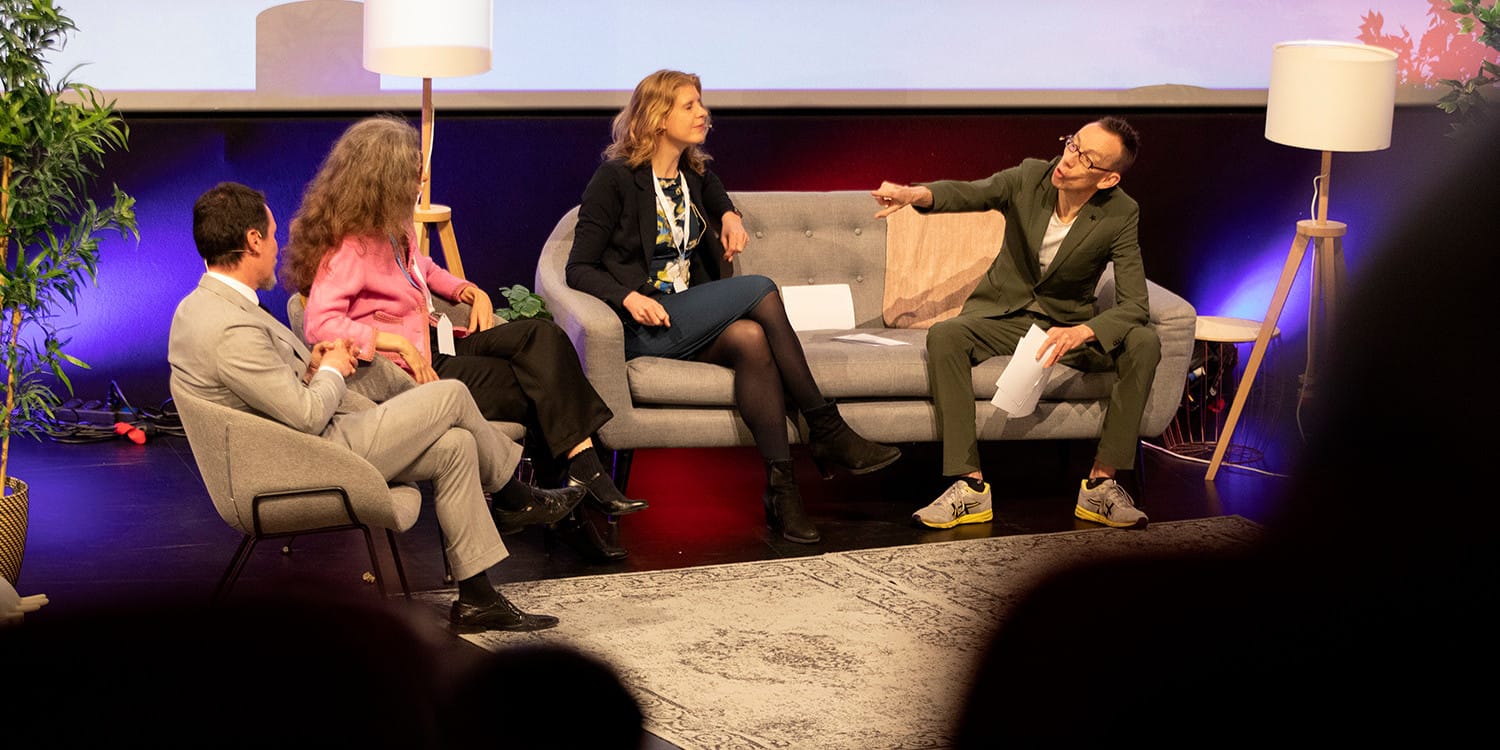
Photo: Health Valley / Jasper Groen Fotografie
Shortage of personnel
A broad palette of innovations is needed to tackle a current and pressing issue, which is not so much ageing, a new, aggressive tumour or a future pandemic. No, the problem is much more basic. "The big issue in healthcare is the shortage of staff. That is a problem for the next 20-30 years given the course of ageing and population growth," says the 53-year-old director.
To address this problem, Van Houdenhoven believes, all economic sectors should put their heads together to come up with an overall solution. After all, staff shortages are not a problem of healthcare alone, but also of the police, transport, engineering and construction. "It makes no sense for a hospital to compete with other hospitals, or even the police, to attract staff," says Van Houdenhoven, who is also a professor of Economic Management in Healthcare. At the bottom line, too few hands are left anyway. In short: it is a social problem.
Impact of medical innovation
This next quarter-century problem can only be tackled with innovative interventions, says Van Houdenhoven. "In 2000, Sint Maartenskliniek started administering biologicals, a new form of medication. We had 60 beds 22 years ago, thanks to therapy with these biological rheumatoid arthritis inhibitors. multi-day hospital treatment is no longer necessary. As a result, we no longer have beds at rheumatology and can deploy those nurses elsewhere."
It is a great example of the impact of medical innovation. An important set of solutions must also come from prevention. The longer people stay healthy, the less (quickly) they need to claim care. Prevention has to do with innovation in many areas. There is no silver bullet, as Van Houdenhoven calls it, no panacea. "There is not one solution to the issue, but there are hundreds, a thousand. No one should think that a particular hospital or company can bring in the panacea or that a particular technology will provide the solution."
Wisdom of the masses
Innovation in healthcare today is different from before. "The goal of innovation was once to become more cost-efficient. But now innovations are not so much about saving money, but people. Innovation to ensure that fewer staff need to be employed."
Van Houdenhoven carries that vision forward at Health Valley. "The beauty of Health Valley is," says Van Houdenhoven, "that representatives from different fields and backgrounds come together to think about the issues of the future. They are companies, grant makers, hospitals, elderly care providers, start-ups, philosophers, economists who have the will to work together. It creates a network and a wisdom of crowds."
This "wisdom of the masses" should almost automatically start leading to solutions, Van Houdenhoven says. "The great thing is also that there are many innovations we don't know about right now. This does not mean that we should do nothing and just wait and see, but rather that through cross-fertilisation and hard work, we will almost automatically arrive at innovations. So we need not despair."
Cooperation within Lifeport
Within Lifeport, companies, knowledge institutes and government join forces to find solutions for this major societal challenge. Are you curious about the resulting innovations? Then read more about the news around Health, Hightech Food and Labour Market on our website.
Would you like to be kept up to date with the latest news from this innovative region or events such as the Health Valley Event? Then subscribe to our newsletter. With it, you will receive monthly updates on developments in the Arnhem - Nijmegen - Wageningen region.