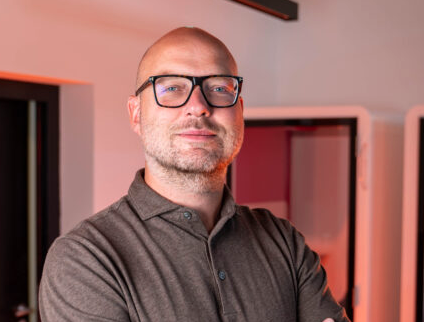
There are plenty of job opportunities in technology. Especially in the area of energy transition. These opportunities also exist for people who currently have a non-technical profession or are following a non-technical education. The Arbeidsmatchplatform focuses precisely on that group. Roy Fasen sees great results. But for companies it is a marathon and not a sprint, he points out.
The energy transition requires large numbers of technicians. That demand cannot be met by people with a technical education alone. That shortage is a challenge for the entire region, knows Roy Fasen, manager of partnerships at the Arbeidsmatchplatform. "That is why we want to supply this part of the labour market with new talent, from non-technical courses and non-technical professions. This benefits the entire Lifeport region. It prevents companies from shedding experienced technicians from each other.
Seven major technical employers in the energy transition(Alliander, Enexis, KPN, Stedin, Tennet, Van Gelder and Van Voskuilen) established the Labour Match Platform in 2023. "The aim is to help talent who are not technically trained to get into engineering," Fasen explains. "By matching jobseekers' skills with the skills associated with certain technical professions, we achieve an objective and inclusive match. As a result, employers are offered a new talent target group."
A special platform provides those links between jobseekers and employers. Fasen: "That platform is our basis. But more importantly, we create and strengthen connections between jobseekers, employees, public parties and educators. We get employers to cooperate with each other, for example in the field of training. We do that in regional ecosystems."
Fine motor skills
Matchmaking is done with a skills-oriented approach. He gives an example. "A pastry chef has developed fine motor skills through years of experience and can work well under time pressure. A meter changer also needs those skills. These are skills through work experience. But even starters with non-technical training have relevant skills. For example, through hobbies. Someone might have been in scouting or likes to tinker with cars or mopeds."
"Working on the basis of skills gives a much better picture of what someone is currently capable of than looking at a CV, which mainly tells what someone has done so far," he continues. "I therefore believe that this approach adds something to the traditional way of recruitment and selection. The story of a person, with his or her motivations, remains important in addition, of course."
Sharing success stories
He finds that employers, especially in SMEs, often face a number of challenges. "Training and supervising large numbers of non-technical people is time-consuming. You have to partly free up your experienced technicians for it, while you desperately need them. The whole process is a marathon and not a sprint. My tip would be to work together. You can learn from each other. Some parties are already very far along in this. We can share those success stories."
“Universities, universities of applied sciences, vocational colleges and regional training centres (ROCs) are home to students with skills that are well suited to the priority professions set out in the Arnhem-Nijmegen region’s Human Capital Agreement,” emphasises Fasen. “It sounds simple to bring these two worlds together, but it’s actually quite complex. Recently, we helped someone from the hospitality sector find a job in engineering. He’d entered the hospitality sector at a young age, through a part-time job. You hardly ever find part-time jobs like that in engineering. Even people studying technical subjects usually work part-time in a supermarket or in the hospitality sector. It’s very important to get young people excited about the engineering sector through real-life stories. There are opportunities there to create a win-win-win situation together with employers and training providers.”
Meanwhile, he sees beautiful concrete results, small and large.