In mid-2023, the SME Datalab East from launch. Dar, an organisation focusing on waste management and public space management, was one of the first customers. The company did an AI project through the lab with student Lindsey de Beer into reports on waste collection and public space management.
Dar not only collects waste in Nijmegen and the surrounding area, but also provides ice-clearing services, sewer and gully cleaning, pest and weed control, and site and street cleaning.
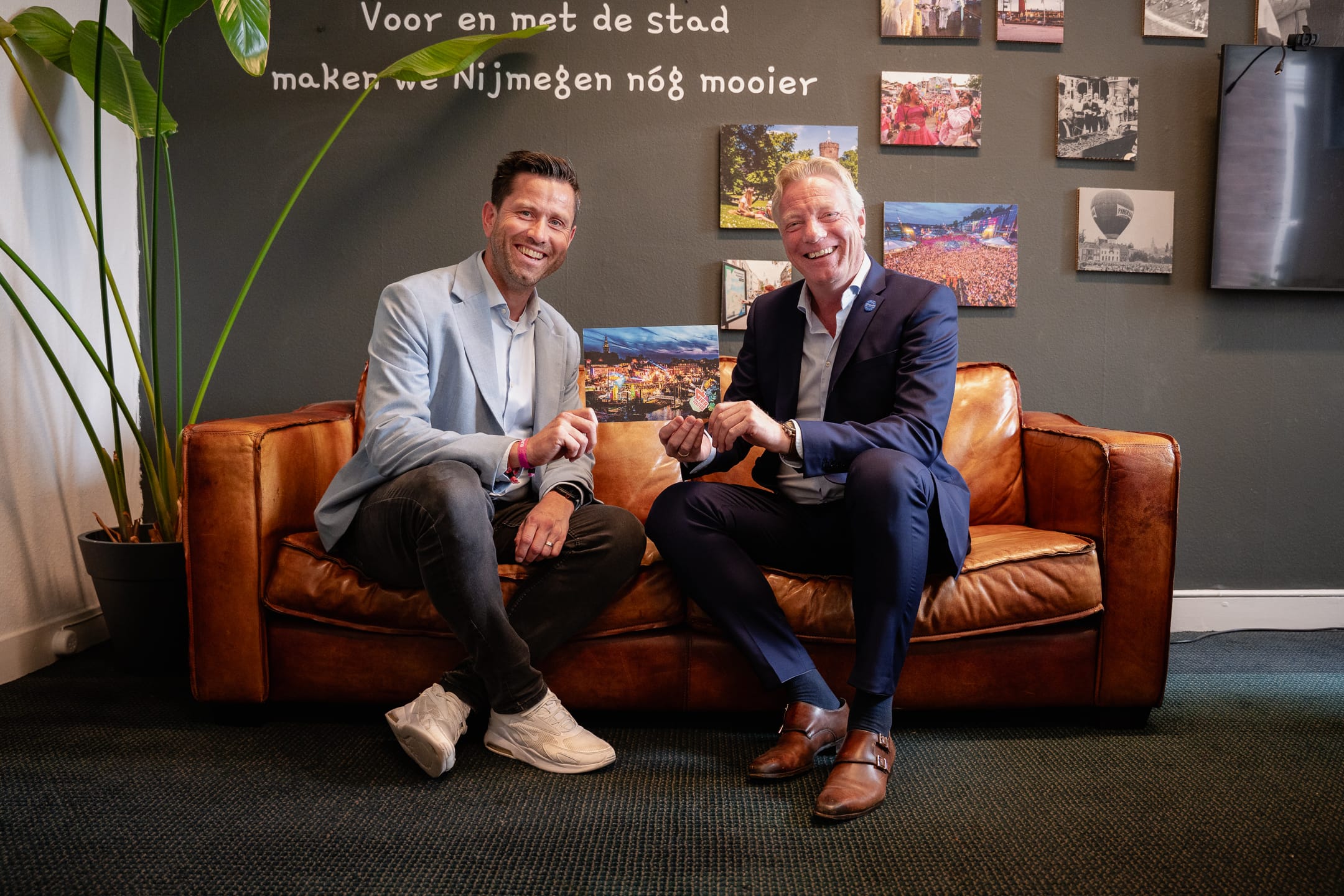
We speak to Patrick van Drunen and Koen van Aken, who supervised the project at Dar. We also speak to Lindsey de Beer, the student who did the project.
Patrick says: "We have been looking at what AI can do for our services for quite some time. For instance, we want to use vision technology, where you put cameras on cars, for instance, to visualise outdoor spaces so that you can respond to litter, for instance. To start this project, we still need to coordinate with different parties."
Notifications and decision tree
"Meanwhile, we came into contact with Dirk van Schaijk from the Radboud, who told us about the SME Datalab Oost in which students are deployed on AI and data science issues. We thought it would be interesting to deploy a student on reports by residents about the problems they see in their neighbourhood."
Dar has a lot of data on this, through calls to the customer contact centre and from the notification app. The municipality of Nijmegen also forwards incoming reports to Dar. Some 40,000 to 50,000 reports come in annually from the service area: besides Nijmegen, also Berg en Dal, Beuningen, Druten, Heumen, Mook and Middelaar and Wijchen. The reports can concern anything from requesting a waste pass to forgetting to empty a container at home or slipperiness on the road.
Patrick explains: "The assignment was: identify repeat notifications, to prevent them leading to a complaint (a third notification Dar automatically calls a complaint). For example, a paper container that Dar forgets to empty every month."
“We wanted to know the difference between how we identify repeat reports and how the computer does it. That difference was huge; we can only identify ten per cent of repeat reports. It’s actually very laborious and time-consuming to do this manually. You have to check whether it happened within a certain number of months, at which address, and so on. The customer contact centre then has to count and check how long ago the previous report was made.”
A computer makes no mistakes in this, just follows a decision tree and it recognises that a notification is compliant and gets a label. With this, we identify 100 per cent of repeat notifications."
Koen adds: "On the one hand, you can see opportunities for quality improvement of our services, you can respond to problems more upfront instead of reactively. On the other hand, you can also save time because the people from the customer contact centre no longer have to go through and label those reports manually."
Text and algorithm
Lindsey explains how she and the team also tried to identify a duplicate report using speech recognition.
"If there are three reports within six months, about collecting waste paper for example, then it is a complaint according to the decision tree. You can catch this with programming 100 per cent, but there are also reports that are negative expressions against staff, or aggressive behaviour or a text like: this happens every time. Those are not a complaint according to the decision tree, but by the language used you can see that they might be complaints after all. Those are the complaints you can pick out with a text algorithm. That was difficult because Dar didn't have enough specific data for that yet. Now they are going to collect more text, to be able to use an algorithm."
“It’s interesting to start by having your company take the courses, with several people, to see what we can achieve with this. And then sit down with students or lecturers to discuss what we can all do with AI.”

Are you an SME and interested?
Lindsey really enjoyed working for a real client. And she has advice for SMEs who also want to work with the lab. "I think it is very interesting for small companies to get started with this. Then I would first do the preliminary process, the workshop and course. Then you can look at what kind of data you already have in house, and how you could collect it further. The result of your first project might not be a dream solution to all your questions, but more like a preliminary that you can continue with later. Now it is only beginning for Dar. The organisation goes on to discover even more."