On 10 October, cooperative VIA-T officially opened registration for members. This was done with a festive programme in the Linnaeus building on Campus Heyendaal, which is itself an example of a sustainable approach, as it is now being rebuilt instead of demolished. Radboud University and HAN are jointly developing the concept for this.
Motto: Need for trust
Eric Willems has been director of VIA-T since August 2024 and explains exactly what this organisation is – and isn’t. “In a co-operative, members work together to achieve more than they could on their own. The members – for example, entrepreneurs, consumers and public authorities – join forces within the co-operative to achieve their individual goals.”
This means:
Not sharing all your trade secrets, but sharing knowledge, innovation and success.
Don’t share profits, but do help one another.
Not passing on contracts to one another, but sharing information about projects and making use of the network.
Don’t just take; take and give.
Not targeting a single specific target group or company in the built environment sector, but pooling all the expertise of all partners in the construction industry.
And last but not least: VIA-T strengthens and facilitates, but does not undertake projects itself.
Four pillars
By working across four areas simultaneously, everything can come together – from the development of new materials to education on these topics, right through to the upscaling of sustainable building methods.
Willems sums up where we stand now: “All the innovations we want to implement by 2030 are already possible, but we really must get started now!”
Young generation faces unknown future
Keynote speaker Lucas de Man also noted that innovations to build sustainably are already there and are also feasible and affordable. So what is the problem?

He explains that it is not about one crisis, no, there are several and they intertwine. In rapid succession, the various problems pass by: climate crisis, warming, livestock farming, energy, CO2, water, subsidence, drought, biodiversity, nitrogen.
As a result, we do not know what the future holds and today's young generation is the first in history not to have to rely on progress and to look for solutions themselves. In doing so, they need help from triple helix alliances, because many new people need to start talking to each other. After all, sustainability is a social thing, everyone has to participate and start trusting each other.
The first members
Nijmegen’s alderman Tobias van Elferen is enrolling the first new members, including businesses, public authorities and educational institutions. This is an invitation to the rest of the world to get involved too.
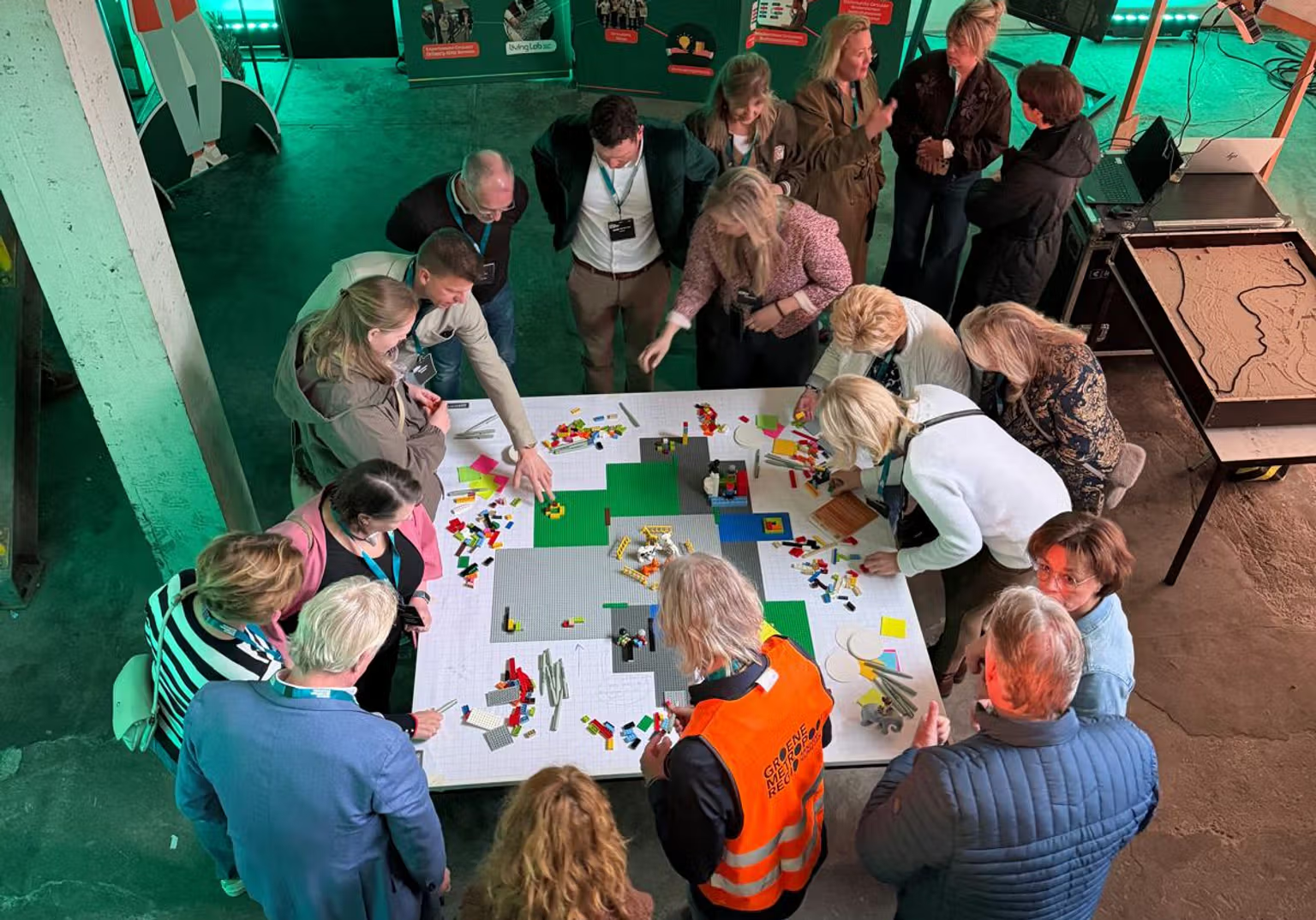
The benefits of this become immediately apparent when all visitors to the event take part in workshops. During these, they identify the areas they would like to address in the construction process to achieve greater sustainability. The results will, in fact, be shared with the members shortly!