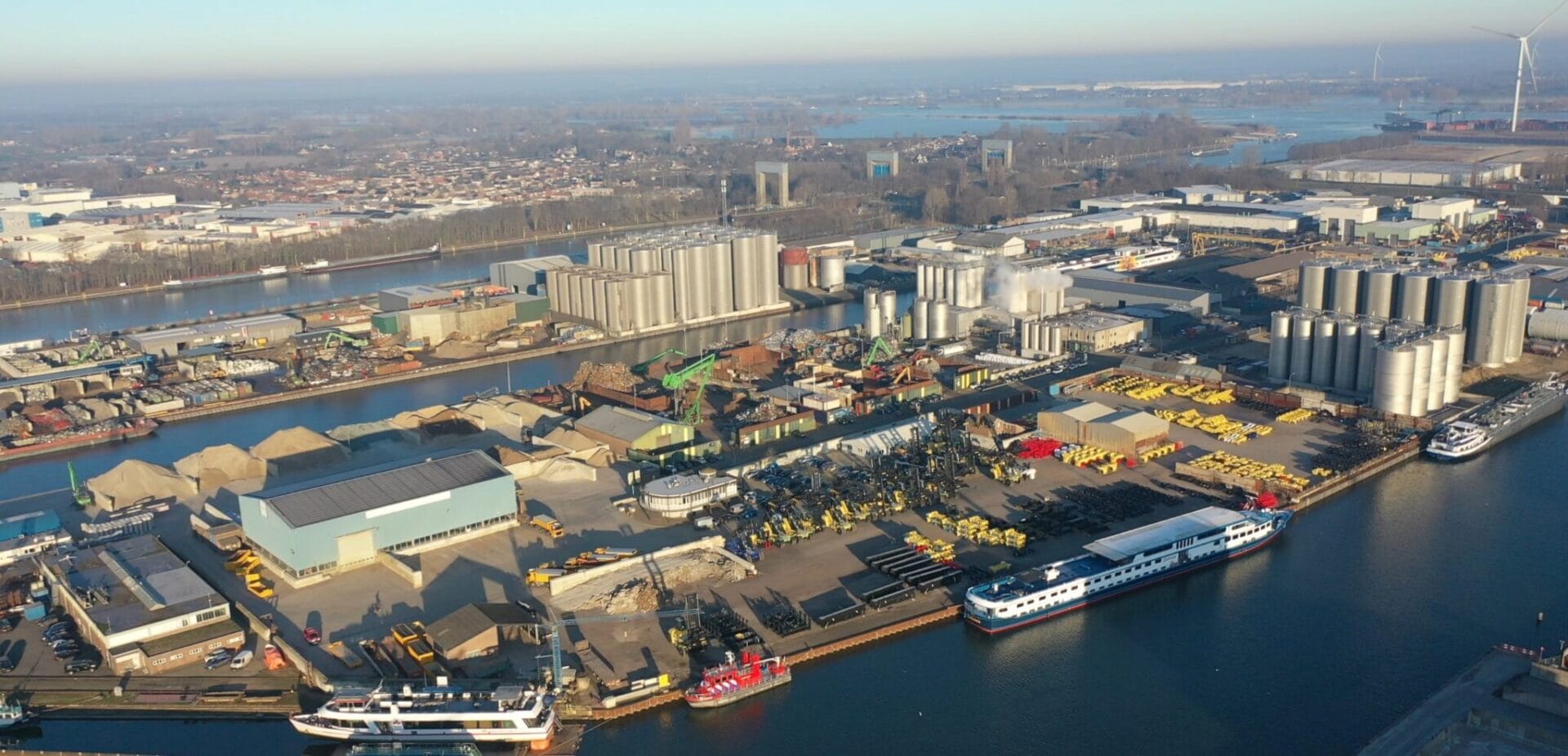
Business parks can make a substantial contribution to the objectives for energy transition, climate adaptation and circularity. Governments, business associations and educational institutions support this sustainability drive in the Arnhem-Nijmegen region.
"The business parks of the (near) future will be fundamentally different," opens Chris Lorist. He is project leader at VNO-NCW Midden and driving the approach around organising entrepreneurs at business parks around the theme of sustainability. "The sites of the future will reflect the wishes of generation Z in terms of working environment and work experience. The working environment will be a meeting place with shared facilities such as energy supply and lunch and sports facilities. It will also include landscaping, in line with the ambitions of the Green Metropolitan Region Arnhem - Nijmegen."
Structural cooperation
Before this stage is reached, however, there is work to be done. For instance, there are big differences between the business parks in the Arnhem - Nijmegen region. The type of companies differs and so does the degree of organisation of the companies on the site and of park management. There are beginners and advanced players. However, the line of march is clear.
Director of The Economic Board Jan van Dellen: "Business parks can contribute substantially to realising sustainability goals in the field of energy transition, circularity and climate adaptation. However, it appears difficult for companies themselves to give hands and feet to this. We want to change this with projects that improve organisational capacity. In concrete terms: we want cooperation and organisation in the fields to be structurally sound. But also that they can learn from each other."
Helping each other
In the Regional Deal for the Arnhem-Nijmegen region – Healthy Green Growth, agreements have been made to improve the quality of life, housing and working conditions for residents and businesses in the Arnhem-Nijmegen region. “These agreements between the 18 local authorities in the region provide a solid basis for putting concrete measures in place,” says Nermina Kundić, Councillor for Education and Youth, Sustainable Mobility and the Economy in Arnhem. “Building on the Regional Deal, we are entering into Green Deals with business parks. In Arnhem, for example, we have done this with the Gelderse Poort office park, the IJsseloord 1 business park and Nieuwe Haven. The approach is for local authorities, businesses and business organisations to help one another with issues relating to sustainability. HAN University of Applied Sciences is also participating by identifying issues and exploring solutions.”
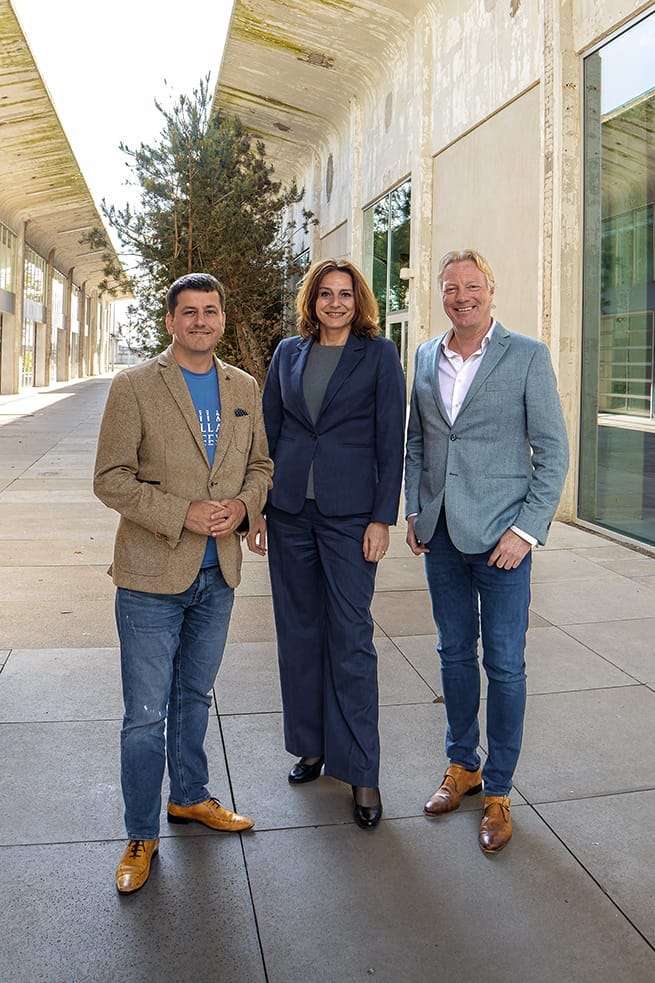
From left to right: Chris Lorist, Nermina Kundić and Jan van Dellen: The forerunners in energy transition are an example and blueprint for other business parks.
Photo: Huub Luijten
Smart Energy Hubs
With sustainability, a lot intertwines, to maintain focus the emphasis is on the energy transition. Lorist: "We have to channel the clout of all stakeholders. Companies are used to competing with each other. Now they need to start working together. Consider also that every business park is diverse in terms of composition and activities. There is permanent movement in every area. New companies come, companies move, companies expand, business processes are redesigned."
Regarding energy transition, a number of so-called Smart Energy Hubs have been designated, for example: TPN-West in Nijmegen, business park De Aam in Elst and Synergiepark InnoFase in Duiven. These are 'living labs' where work is carried out to realise stable but flexible energy systems. These involve using the existing power grid plus local, sustainable alternatives for energy generation, storage and use. Because those alternatives - wind, solar, water and biomass - are unstable, it is important to balance supply and demand in energy use. This can be done through smart distribution keys and local energy storage (in batteries), but it is a complicated mega task.
Blueprint
"The aim is for the forerunners in the energy transition to be an example and blueprint for other business parks," notes Van Dellen. "Above all, we should not keep trying to reinvent the wheel ourselves, but share knowledge. This is where research and education have an important role as booster and supporter. For instance, students Industrial Product Design, Electrical Engineering and Embedded Systems Engineering from the HAN are doing research into possibilities for technical integration of solar power at TPN-West. We can use that knowledge elsewhere too."
"The main thing is to be realistic," Kundić believes. "We have to be especially pragmatic, because the matter is very complicated for companies. Solutions to questions of this magnitude take time. The first programmes, which we have been working on for about six years, are now starting in concrete terms. Thanks to the Regio Deal, we have the financial muscle to do so. But besides the financial resources, our behaviour and commitment will determine the pace at which we realise the system change. Achieving results together helps enormously."
This article was posted in Het Ondernemersbelang