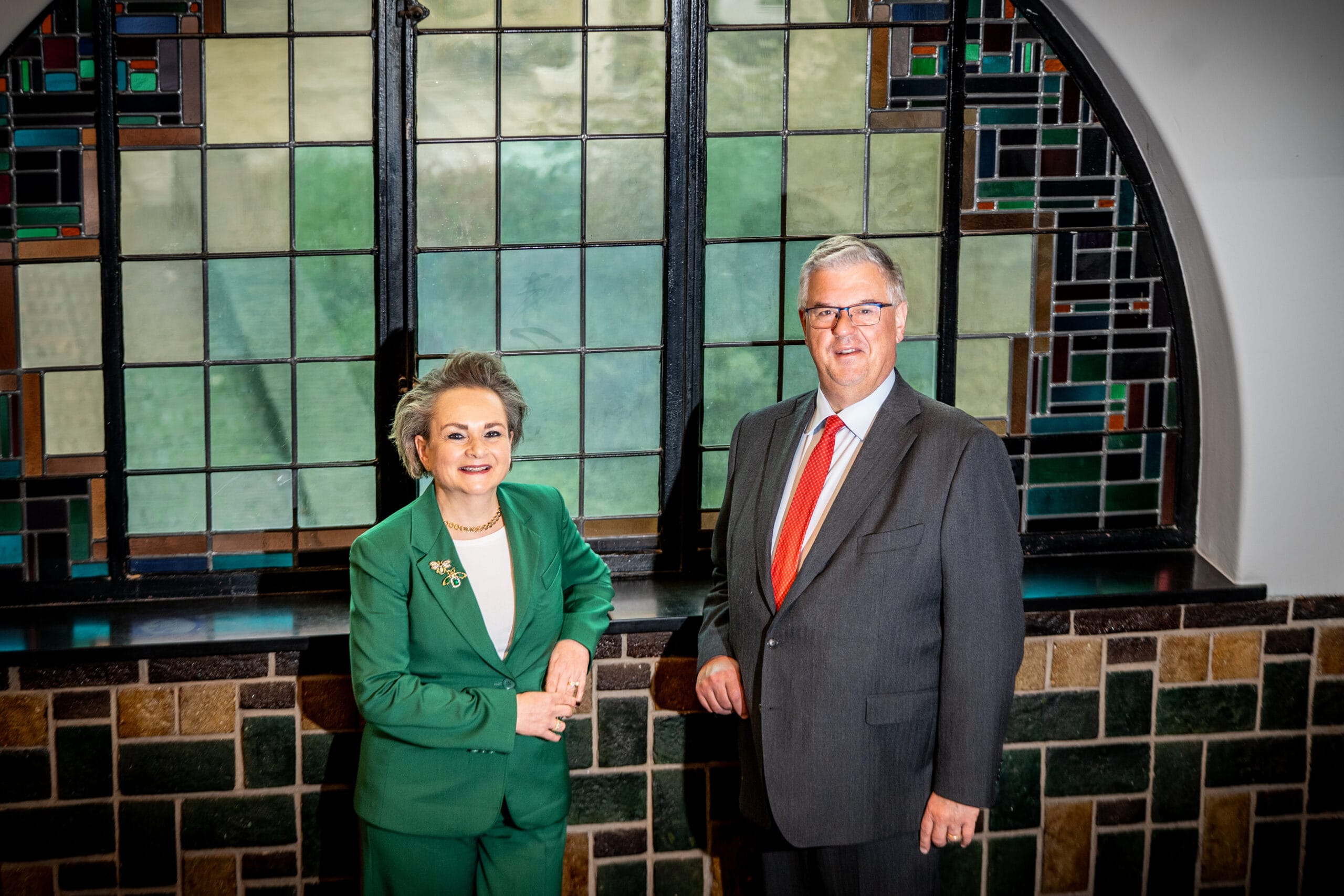
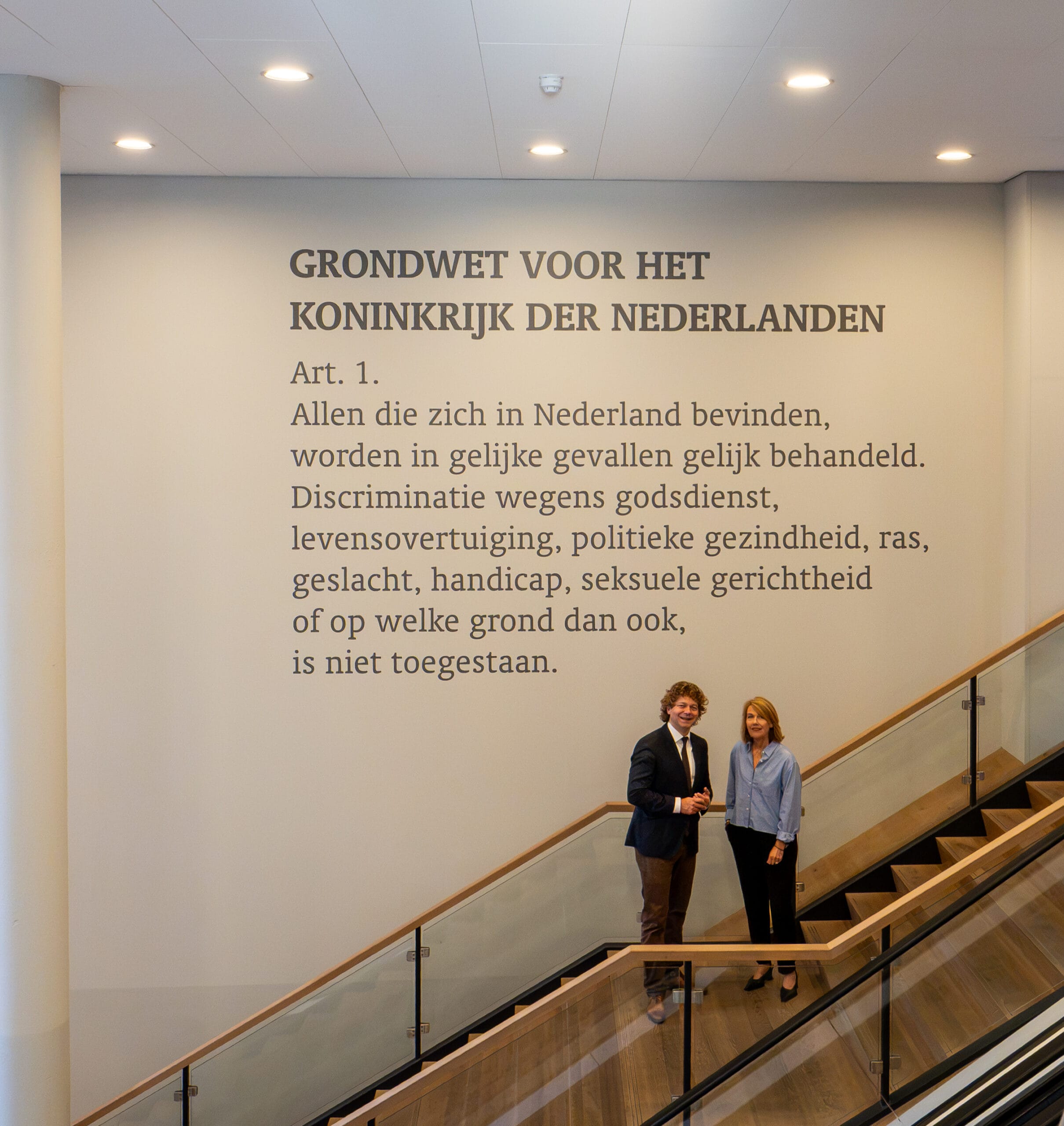
The members of The Economic Board Regio Arnhem Nijmegen form part of a powerful triple helix collaboration between entrepreneurs, public authorities and educational institutions. They meet every two months to work towards a vibrant and sustainable region.
The meeting took place at the end of March at Alliander in Arnhem, a venue that symbolises one of the greatest challenges and opportunities of our time: the energy transition.
Energy transition under pressure: cooperation is necessary
Alliander manages energy networks and plays a key role in ensuring a reliable and sustainable energy supply. During the meeting, it became clear just how urgent the task is. The energy transition is creating unprecedented challenges such as grid congestion (the electricity grid is at full capacity), explosive growth in electricity demand and a shortage of technicians. Due to the rapid shift towards sustainability, economic growth, digitalisation and the housing construction challenge, demand for electricity is peaking. Gelderland is now coloured dark red on the grid congestion map. This directly affects economic development and housing construction.
The situation is urgent: only through close cooperation between public authorities, educational institutions, grid operators and the business community can the electricity grid be made future-proof and climate targets be achieved.
Talent plan Energy
Renate Bouwman, Labour Market Strategist at The Economic Board, presented the Energy Talent Plan to the Board. After all, the energy transition requires not only technological innovation but also a sufficient number of well-trained people. The Arnhem-Nijmegen region has approximately 1.7 times as many people employed in the energy sector as the national average – and demand is growing. It is expected that around 15,000 new jobs will be created over the next ten years, including those needed to replace retiring staff.
To meet this challenge, The Economic Board is developing a regional talent plan in collaboration with organisations including Connectr and SEECE. This plan identifies existing initiatives, brings together resources and focuses on training, upskilling and attracting talent. From highly qualified energy innovators to practically trained fitters and installers: the entire supply chain is needed. The Board sees this plan as an important step towards establishing the Lifeport Region as the place to work, learn and innovate in the energy sector – and has provided valuable points for consideration for its further development.
Clusters Health & High Tech
Bas Doets, programme manager at Briskr, outlined the ambition to further strengthen the regional ecosystem for Health & High Tech. The Arnhem-Nijmegen region is already a leading innovation hub, with strong clusters in digital health, neurotechnology, drug development and semiconductors. Briskr connects start-ups, scale-ups, companies and research institutions, and accelerates innovations that contribute to societal transitions and future-proof healthcare.
These clusters align seamlessly with both the national and European economic agendas, and touch on themes such as food, AI, digitalisation and sustainability. By investing jointly in these ecosystems, we are not only strengthening the regional economy but also broad prosperity in the region.
The Board members discussed the role of The Economic Board in driving and supporting this cluster development. The shared realisation was that by continuing to invest in strategic collaboration as a triple helix, we strengthen Lifeport’s international position and build a region that is ready for the future.