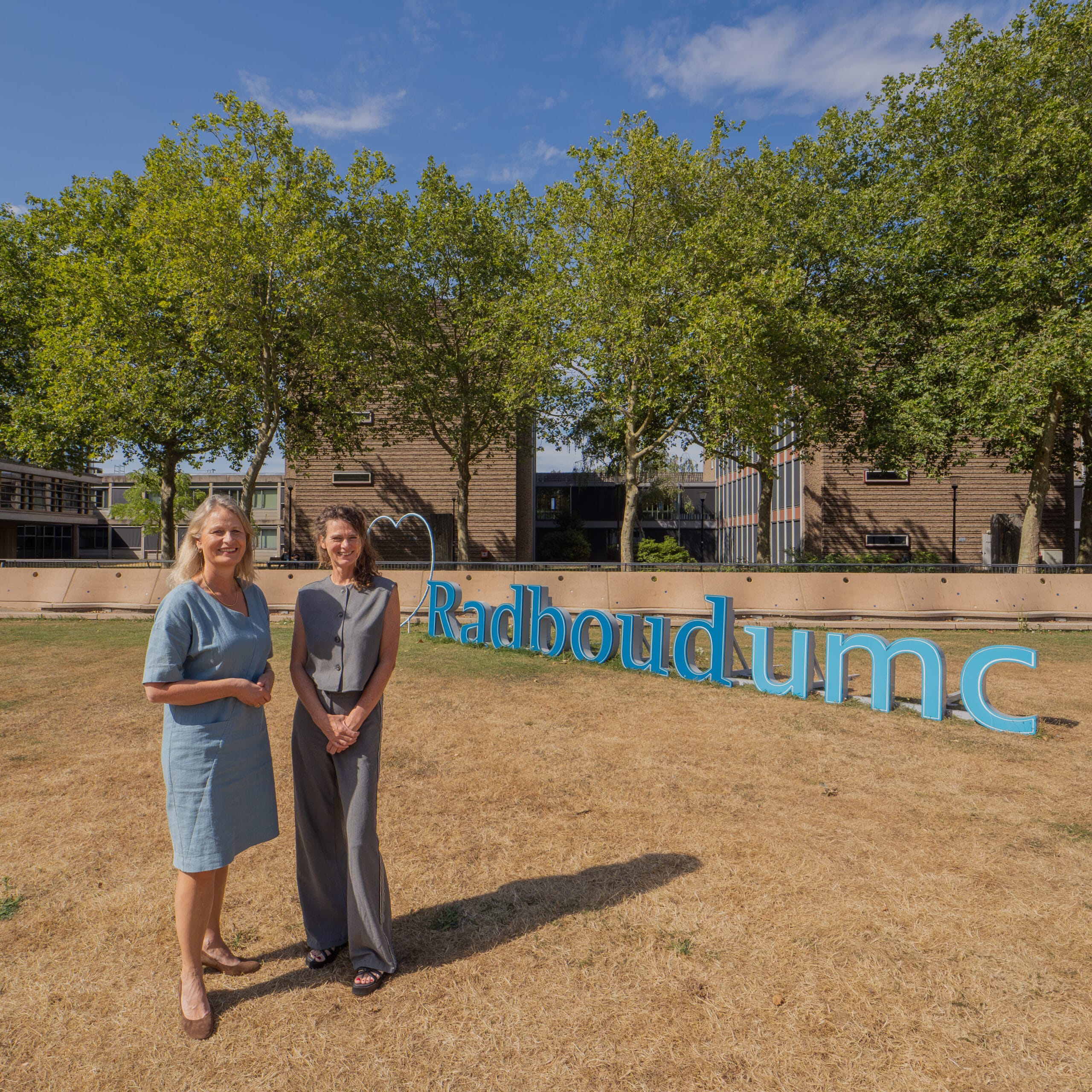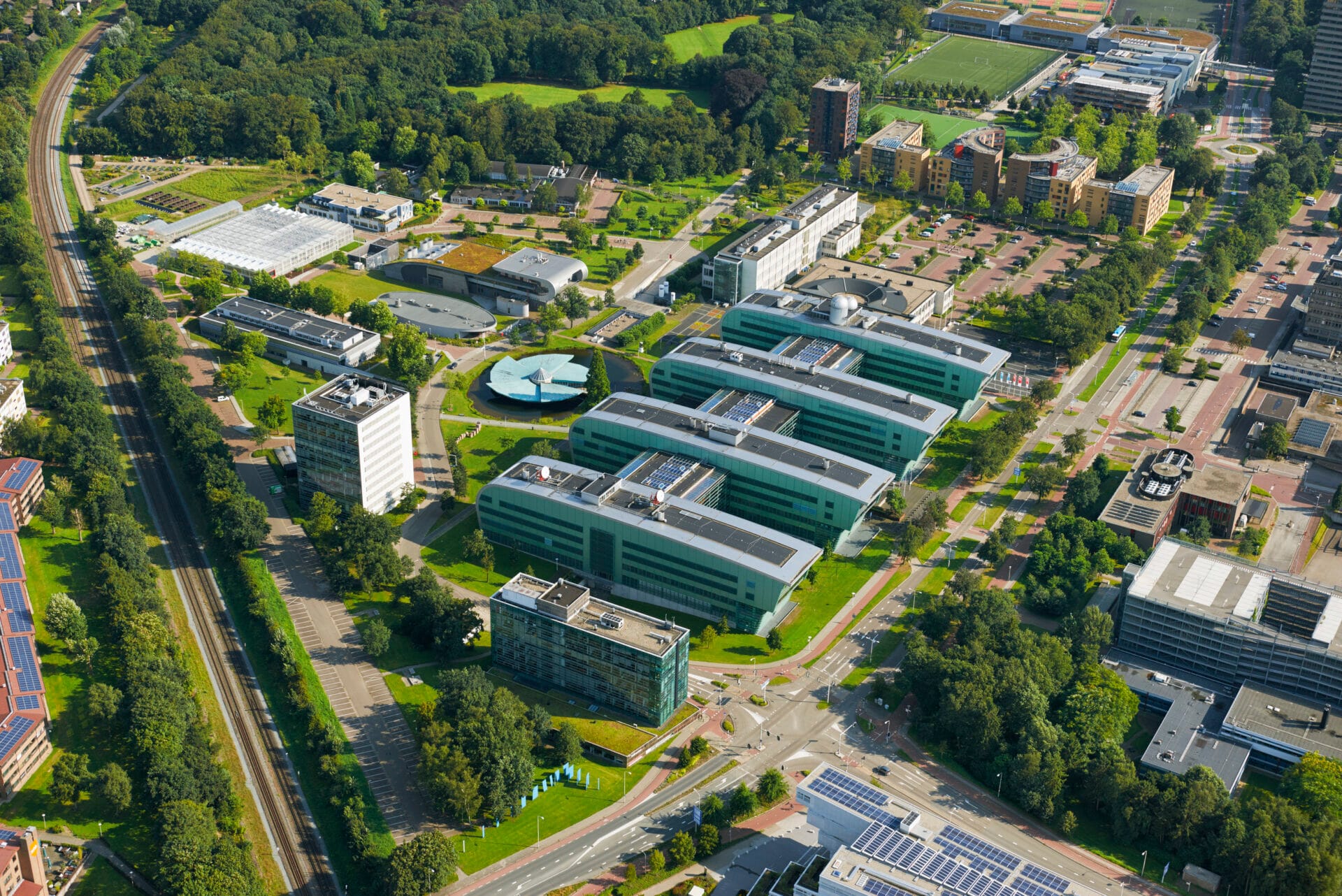
Bernard van Gastel is a senior lecturer in Sustainable Digitalisation at the Institute for Computing and Information Sciences (ICIS) at Radboud University. There, as Sustainability Coordinator, he set up the Software Energy Lab. He also works at the National Education Laboratory for AI (NOLAI). We spoke to him about sustainability in ICT.
Digitalisation and artificial intelligence (AI) are becoming increasingly intertwined with our daily lives. This raises the question: what does this actually cost in terms of energy? Van Gastel is concerned about the sustainability of this digital revolution. “We have no control over digitalisation,” he says. “It has almost become an end in itself.”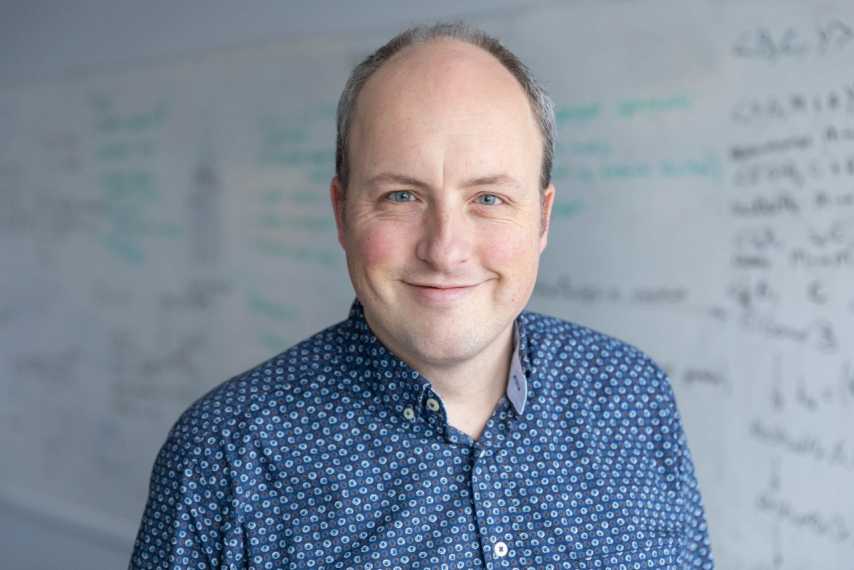
The hidden costs of AI
If you ask Google how much electricity a ChatGPT command uses, the answer is: the same as leaving a light on for three minutes. But the reality is more complex. “Generating a thousand responses costs about one watt-hour. That’s not too bad, you might say. But it depends heavily on the chips it runs on,” explains Van Gastel.
AI chips such as TPUs and NPUs use energy more efficiently, but larger models require specialised hardware costing tens of thousands of euros. “A Google search uses a hundred times less energy than an AI query,” explains Van Gastel. “But you might have to search ten times to get a good answer.”
AI as an energy eater
Energy costs start as early as training AI models. "You actually fetch the whole internet, store it, filter it, and then train the model. That takes a lot of power." And that's just the beginning. The infrastructure needed to run AI - data centres and data networks,- already consumes more than 8% of total electricity consumption worldwide. "And that is increasing by 30-40 per cent a year," Van Gastel warns. "Because of AI, there is much more investment and faster expansion."
Targeted use of digitisation
According to Van Gastel, the problem is not only technology, but also the way we deal with it. "Digitalisation is a means, not an end. But now it is often used to digitise poorly running processes. That is exactly what you should not do. Because a poorly running process often means that a lot of customisation is needed, because it contains many deviations. So you should mainly invest in well-running processes that take a relatively long time, but are all very standardised. You can digitise those. And then you can make your efficiency gains at limited extra emissions."
AI in education
Van Gastel also works one day a week at the National Education Laboratory for AI (NOLAI), which is based at Radboud University. There, they are trying a different approach. “We’re conducting experiments there to see whether AI really does lead to better learning outcomes or happier pupils. And only if the results are measurably positive will we take it further.”
Within NOLAI, too, there is growing attention being paid to the energy impact of AI. “We’ve taken on a PhD student to investigate this,” says Van Gastel. “Up until now, we’ve been using small, specialised models that consume very little power. But now schools also want to make use of ChatGPT. And that changes the picture.”
The question now is: can we predict in advance how much energy a nationwide roll-out of an AI application would cost? “Perhaps that’s not realistic if every pupil needs a 300-watt graphics card to do their homework.”
New technologies, new challenges
Van Gastel sees promising developments in photonics and neuromorphic computing, technologies that can be much more energy-efficient. But integrating them into existing systems is tricky. “The problem is that it always has to be integrated into the existing technological environment. And then it very quickly becomes very complicated. The oldest software cannot run on every new type of device you add. It has to be programmed in a completely different way. On top of that, we come from an era where everything ran on a single generic chip. Now we’re moving towards specialised chips, but that also means software has to be rewritten.”
He is also concerned about our dependence on foreign chip manufacturers. “We are vulnerable on the international stage.”
Software as energy saver
At the Software Energy Lab, Van Gastel is investigating how software influences the energy consumption of computers. “Software determines whether a computer can go into sleep mode. That can make the difference between 1 watt and 150 watts.” He advocates for better software that makes more efficient use of existing hardware.
“Incidentally, most hardware is underutilised. On average, organisations use only 14 per cent of their reserved capacity, so there is also significant potential for improvement there.”
Purchasing green software
Van Gastel is also working on national initiatives to help public authorities procure software sustainably. “We’re drawing up standards for model contracts, so that software must automatically be sustainable as well.” He oversees tendering processes and assesses bids for sustainability. “That’s valuable, because it allows me to see what’s going wrong in the market and to adapt my teaching and research accordingly.”
A recent success is the sustainable tender for DigiD, the Dutch government’s largest ICT product. “That has now been procured sustainably. And we’re sharing that information with other government organisations.”
Education and cooperation
Van Gastel sees education as the key to change. “We have introduced two new modules in which sustainability is a quality criterion for software.” In the bachelor’s programme, sustainability is considered broadly – environmental, social and economic. In the master’s programme, the focus is on environmental impacts.
Collaboration is essential. “We work with companies such as Tweede Golf, which develop privacy-friendly and sustainable software. And with regional partners such as HAN University of Applied Sciences and ROC. In this way, we ensure that knowledge remains in the region and that students are better prepared for the workplace.”
A call for awareness
Van Gastel concludes with a clear message: “ICT is a means to an end, not an end in itself. We need to use it in a more targeted way and align it better with demand. Only then can we achieve truly sustainable digitalisation.”
To help people think about making ICT more sustainable, Van Gastel has drawn up an overview of the factors that need to be considered.