You’ve probably seen them on a building site or at a festival: mobile generators. They make quite a lot of noise and spew out diesel fumes. A thorn in the side of the Bleumer brothers from Arnhem. They came up with a more environmentally friendly alternative: solar-powered generators.
The story of how Volta Energy came to be sounds like a boyhood dream: tinkering away with your brother in your parents’ shed. With an environmentally conscious mother (a teacher of ‘People and Nature’) and a technically minded father (head of technical services and later a technology teacher), you’re bound to gravitate towards the energy transition. Even at primary school, your class presentations were already about biofuel and solar energy.
Wind farm
After completing the Technasium, brother Luc chose to study electrical engineering and Roel chose mechanical engineering at HAN University of Applied Sciences.
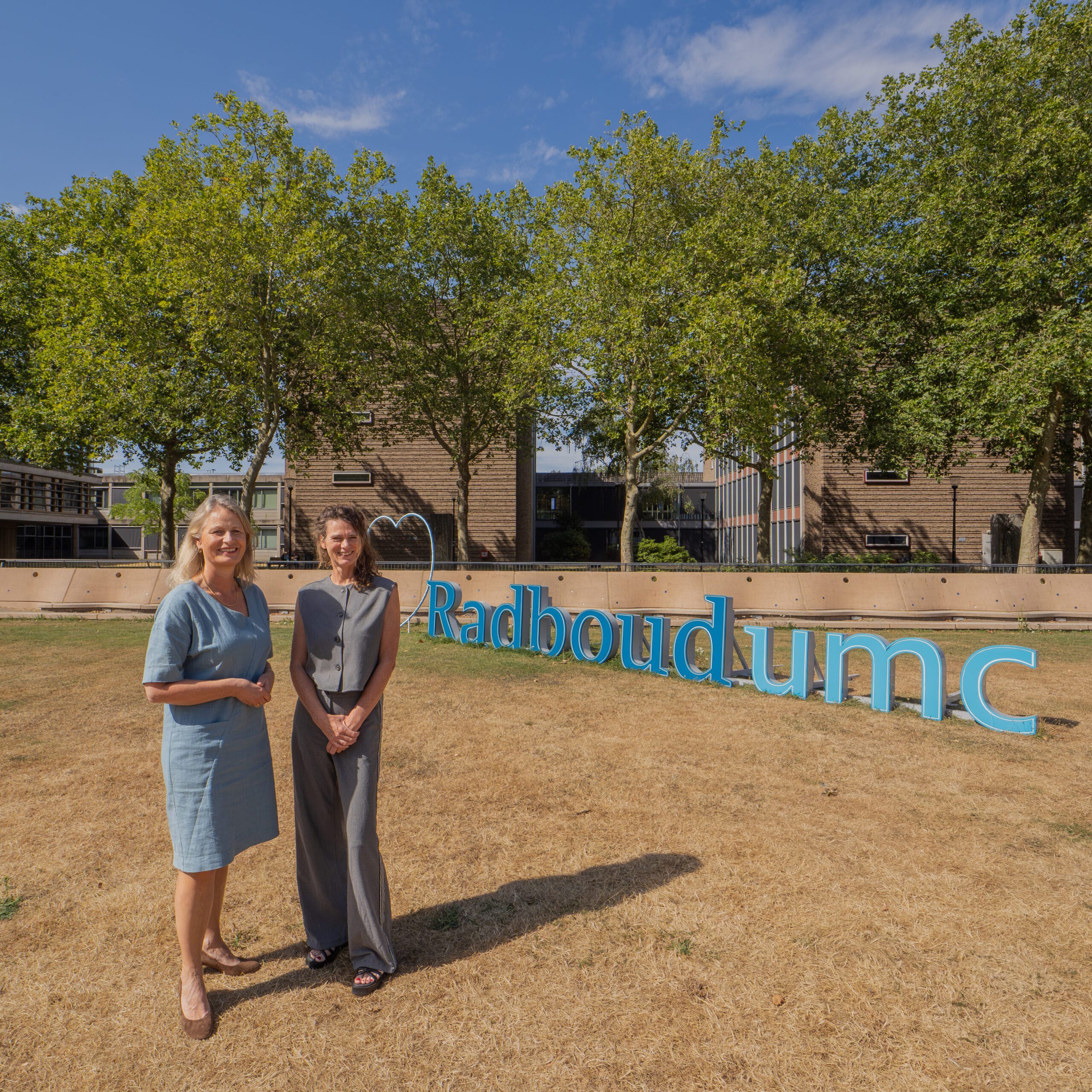
Roel (on the right in the photo): “In my second year of study, I was driving past a building site where one of those dirty, polluting diesel generators was rumbling away. Late at night, it was still rumbling, and that’s when the seed was planted in our minds. Purely by chance, at the end of that same week, I bumped into a wind turbine consultant. They used to hire a petrol or diesel generator to provide power during open days at their wind farms. Just imagine: wind energy experts still using fossil fuels! To cut a long story short: they were immediately interested in our idea of solar-powered generators; they invited us to come and have a chat.”
Prototype
Pretty special: a serious company like Green Trust that was so open to the ideas of two young students. Roel: "Even better: because we were not yet an official company ourselves, we were allowed to implement our ideas at their expense. We ordered all the necessary materials at their billing address and had them delivered to our home. This eventually led to the first prototype of a solar-powered generator, which Green Trust actually took to the road for open days and events. I am eternally grateful to Jeroen and Klaas for their trust."
Entrepreneurship minor
Meanwhile, the brothers’ studies were also demanding their attention. Roel: “In 2016, I took a minor in entrepreneurship at HAN University of Applied Sciences. They really helped me a great deal with drawing up a business plan. But I also learnt the importance of networking. As a technical person, you’re often not exactly an extrovert, but you do have to get out there to find out whether the market is ready for your product.
After the minor, we still had half a year left to complete our degree. Fortunately, my brother Luc and I were allowed to do that within our own company. Through various connections, we came into contact with Arnhem City Council. They wanted to use our generators to make events in the city more sustainable.”
Biofuel back-up
It was high time to give the tinkering with the ‘solar trailer’ in their parents’ shed a more formal structure. On 1 January 2017, Volta Energy was born. “Wherever there’s no mains socket – such as in a field or on a building site – that’s where we can supply power. Sustainable energy for mobile locations,” says Roel Bleumer.
The first proper commissions came in via the municipality of Arnhem. Roel: “Sometime in 2018, we developed a larger prototype that used a biofuel backup system. After all, it’s not on to be without power when the sun isn’t shining. The biodiesel generator switches on automatically when needed. That way, work can continue uninterrupted even on overcast days or at night.”
Fuel cells
Sustainable generators fitted with solar panels, batteries and biofuel account for just five per cent of the total market. Ninety-five per cent still rely on conventional diesel generators and hybrid diesel/battery generators. Roel: “An internal combustion engine like the one we use in our hybrid system is already about three times cleaner than a conventional diesel generator. Because it operates much more efficiently and, in combination with biofuel, we reduceCO₂ emissions by 90 per cent.
Our latest major innovation is that we no longer use an internal combustion engine, but so-called fuel cells. A fuel cell has no moving parts and is therefore even more energy-efficient. These environmentally friendly fuel cells are not only better for the environment than old diesel generators, but also require less maintenance, are silent, nitrogen-free and cause no odour nuisance.”
Better, cleaner planet
The first prototypes with methanol fuel cells have already been leased out. The client doesn’t notice any difference at all, but is now operating in a much more sustainable way. Unfortunately, most clients are primarily interested in lower costs rather than cleaner and more sustainable solutions. Roel: “Yes, I do find that quite difficult at times. If you really want to make headway, the early innovatorsalone aren’t enough. The general public doesn’t always share our idealism for a better, cleaner planet.
With Volta Energy, we want to do our bit for the energy transition. And with 40 colleagues now, you can really make an impact. Lots of techies are really nice people, so it feels like a great, ambitious team that’s also keen to commit to what we consider important. That creates a huge sense of connection.”
International and completelyCO2-neutral organisation
And the future? “In about three years’ time, we will have grown from 300 to 2,000 systems. We’d like to be active throughout Europe. Ninety per cent of our generators are currently in the Netherlands, plus a number in Belgium. Last year we had a project in Italy and at the moment there are a number of systems in Hungary. Germany is now becoming a bit more of a focus country.
We also hope to become a completelycarbon-neutral organisation. Unfortunately, the cars that tow our trailers still run on petrol or diesel, and although our production site runs on green electricity, it doesn’t yet use electricity we’ve generated ourselves.”
So is that tinkering in the shed really a thing of the past now? Roel, laughing: “Not at all – as it happens, I recently converted my own car so it can run on ethanol. Fortunately, there are still plenty of Saturdays and evenings left.”
The technical operation of the biomethanol fuel cells in the solar generators in diagram

- Sustainable raw materials: plant residues, other waste, or biomethane from water treatment plants form the basis.
- Methanol production: plant residues and biomethane are converted into methanol.
- Energy generation: the methanol fuel cell converts methanol intoCO2, water and electricity.
- Uninterrupted energy supply: users can always obtain electricity from the system, even in bad weather and in winter.
- Solar power: solar panels generate usable power directly or store it in batteries.
- Energy storage: batteries
Photo: © Jan Ruland van den Brink