Van Hall Larenstein University of Applied Sciences recently won the SustainaBul for the fourth time, an award presented by students to sustainable higher education institutions. This provided an opportunity to speak with Jan van Iersel, the Chair of the Executive Board. He explains how the university has been working for years to focus its teaching and research on transitions towards a sustainable world.
"In this, we already have a long history. So for us it's not: we wíll be sustainable. No, we really are."
Four transitions
Three years ago, the university of applied sciences drew up a new institutional plan, incorporating extensive input from the professional field, as well as from students and staff. From this input, it became clear that Van Hall Larenstein’s ‘core business’ revolves around four urgently needed transitions. These are the transitions relating to biodiversity, sustainable agriculture, water and climate.
Van Iersel: “And all our teaching and research is focused on those four areas. So everything can be linked to one or more of these transitions. Should we focus solely on subject-specific knowledge, or is something else needed – something new? After all, we do not yet know what these transitions will bring. This calls for professionals who will look at the problems currently facing the world in a completely different, new way.”
Transition makers
How, for example, should we approach the major challenges facing rural areas? There is enormous pressure on nature, biodiversity, water, quality of life and the economy.
Iersel continues: “You have no choice but to take an integrated approach, and that inevitably leads to systemic change. And system change is very complicated to manage effectively. How do you successfully reconcile conflicting interests? That’s where transition-makers come in. We want to incorporate that into our education. That’s a new element.”
In addition to the specialism students choose – such as land and water management or forest and nature conservation, where they learn a great deal about the subject matter – this new approach means that, from the very first year, the curriculum also focuses on working collaboratively with other disciplines to tackle real-world issues. 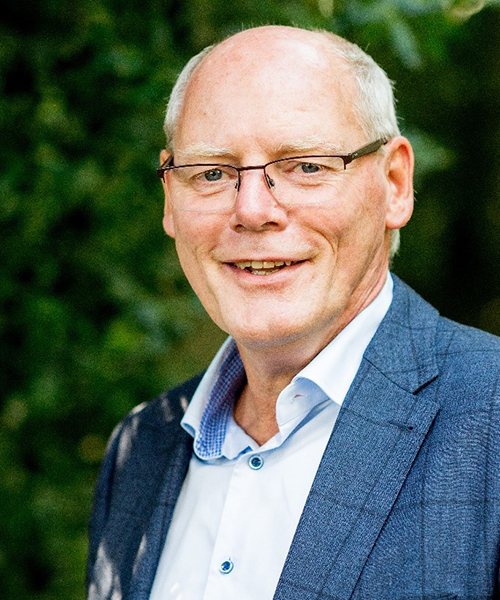
Education and research in transition
These kinds of cross-disciplinary collaborations require a completely different approach to organising education. There is no single path to sustainability. It is complex.
“For example, farmers in the livestock sector and those involved in forestry and nature conservation have different interests. Students in these fields are brought together at an early stage to jointly examine the approach in a particular area. That leads to solutions being found in a different way.
We consider this exchange between the various disciplines to be important. After all, that is what the students will also have to do later in their careers. The green-blue universities of applied sciences really have something to offer in this regard. And I think we’ve already come quite a long way with this way of thinking.”
Furthermore, transition-oriented education involves integrating research much more closely into teaching. That research, too, is entirely focused on the four transitions. The knowledge gained is applied directly in teaching, and an increasing number of students are becoming involved in research.
"Thus, everything we do can be linked to one of the four transitions. There is a very clear line in it and that gives direction and clarity. It also makes it easier for students to find their way."
Change and communication
"A characteristic of system transition is that it is complex. In one transition, for example of the rural area, very many interests come together. It takes expertise to bring all those interests together properly and get them out together in a new way. We therefore also have a lectureship that focuses purely on change and communication. You also need to know, how do you change together? How do you bring those different people together? How do you give them a voice? How do you make people and organisations feel involved? That they want to change with you?"
Regulation
Van Hall Larenstein regularly works with professionals from the field who explain how they want to make their businesses more sustainable and the obstacles they face in doing so. These often involve regulations.
“And that’s why it’s so valuable to have a good relationship with the provincial authorities, local councils, local government bodies and central government. Then you can discuss those regulations when the need arises. That way, you also teach students how to do this. Government bodies can play a significant and positive role in the various transitions. We regularly have students doing work placements at LVVN (formerly LNV) or with other government bodies, or who go on to become policymakers themselves.”
Lifelong development
Van Iersel mentions another important aspect of transition-oriented education: "Next year, we will be fully engaged in Lifelong Learning, LLO. To us, it is part of transition-oriented education. Because it also allows you to upskill people who are already working and gives them tools to look at their work in a different way and to contribute to the transitions. It's also something that the LVVN ministry wants from us."
Educational concept under development
The new educational concept around the four transitions is still being developed and is currently being shaped. It is a huge puzzle; education and research in a large knowledge institution are not simply designed differently. There are already programmes that work this way, but in academic year 25/26 the first batch will really start.
"It is exciting, fun, sometimes quite difficult of course, but something we believe in. It is a logical step, because the field of work is also asking for it."