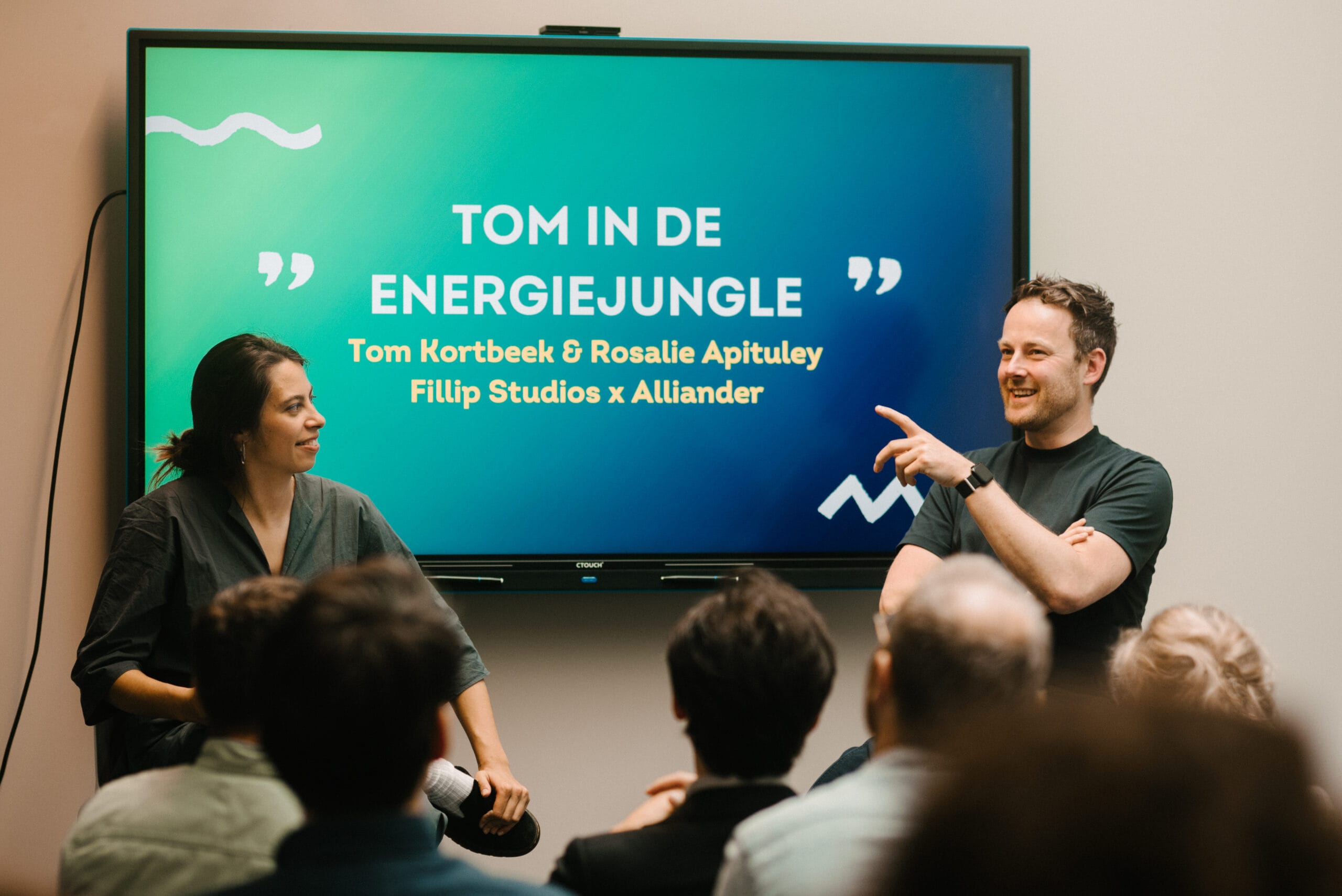
Interview with Jochem Garthoff and Marieke Butterhoff
When it comes to the role of hydrogen within the energy transition, there are plenty of smart thinkers in Gelderland who bring parties together and advise companies. Two of them are Jochem Garthoff (energy transition programme manager) and Marieke Butterhoff (value creator, system innovator and civic entrepreneur). Eva van Otterlo asked them about hydrogen developments in our region.
Text: Eva van Otterlo
Both are intrinsically motivated. Jochem discovered the Indian in himself during a week in the Swedish countryside. He slept in a tent and lived minimally: "We should be frugal with what is there, use only what we need and leave the rest alone so the earth can recover." Marieke says she used to "pick up ice papers so they would not end up in nature. Social commitment is in my blood."
Its own take on the energy transition
 Jochem sees the energy transition as “one of the biggest challenges of the circular economy, but once we’ve achieved that, we’re not there yet. There will be major shifts alongside the existing migration challenges. For example, the demand for rare metals will grow, simply because they are used in the innovations for our green energy system. The equipment needed to produce hydrogen, for instance, requires scarce metals such as palladium and iridium. We have no mines here in Europe; these are mainly found in Africa, and the Chinese have had their eye on this for some time.” Marieke has been using the energy transition – for more than two decades now – as a catalyst for thinking differently. “In my search for solutions, I encounter a great deal of positive energy and drive. We want to pass on the Earth to future generations; everyone’s contribution matters. This offers huge opportunities for entrepreneurs. Initiatives are needed; there is still a great deal to be developed. People are keen to get involved, but often don’t know how. The Economic Board and kiEMT provide support in connecting and accelerating progress; Connectr is the place to go for specific applications and testing them. Collaboration, innovation and knowledge-sharing are key.”
What is happening in our region?
 Marieke: "In the Netherlands, the energy mix consists of 20% electricity and 80% gas. This ratio will reverse almost completely in the next 10 to 15 years. Soon, the mix will consist of 70% electricity and 30% heat and gas (largely hydrogen, natural gas will disappear)." We generate most of that electricity with solar and wind, hydrogen still plays a small role in it now but that is certainly going to change. Jochem: "We are in an intermediate phase and in the East of the Netherlands we are mainly working on Research & Development, think of improving storage technology, production of electrolyzers and fuel cells. Investing, developing, testing, searching further, rethinking, collaborating, that's what we are doing. There is much new, much to be invented."
Smart Energy Hub
To innovate, make production processes greener or create a hydrogen economy, steps are needed; it doesn't happen overnight. Marieke is working with the companies of TPN West to make them more sustainable. There will be a Smart Energy Hub, where they smartly coordinate energy demand and supply and store energy. 'Do you have too much heat? We're short!' Delivering back to the grid is not always possible, helping each other is then an option. "Hydrogen will play a role in that, for storing generated energy or as a fuel for the shipping and transport sector. I add value in that process by bringing parties together and realising projects together. For example, we are thinking of a joint electrolyzer to produce hydrogen with sustainably generated energy. Hydrogen, which transport operators then use to transport heavy freight."
Het wonder van waterstof

Zet een waterstofmonster onder druk dan wordt het gas vloeibaar. Als je de druk
vergroot tot een duizelingwekkende 2 miljoen atmosfeer -bijna net zo hoog als in
de aardkern- dan gebeurt het. De heldere waterstofdruppel wordt eerst donker en
ondoorzichtig en dan ontstaat een glanzend vloeibaar metaal.

Vloeibaar waterstofmetaal vormt het grootste deel van het binnenste van grote
gasplaneten, dus de zilverkleurige druppel kan ons veel leren over bijvoorbeeld
Jupiter en Saturnus. Maar het is ook een grote stap naar het creëren van vast
waterstofmetaal, wat volgens de natuurkundigen een waar wondermateriaal moet zijn.
Hydrogen production
Will we see the application of hydrogen in our daily lives? "Not for the time being", according to Jochem, "there is not enough green hydrogen in this world yet, it is not naturally available but has to be made by electrochemical reaction. This hydrogen production is gaining momentum. We have started down the road of efficiency and large scale but it is still long. Thinking ahead, of course, we should put hydrogen production in large parks in the Sahara. There, there is always sunshine for solar power. Locally, it creates jobs and perhaps that area will become the green lungs of the world."
Can we heat ourselves with hydrogen, cook on hydrogen?
"I don't see cooking happening so soon, that can just be done electrically," says Jochem, "but heating old buildings in historic city centres could eventually be done with hydrogen. You could determine this situationally. Hydrogen has many applications, for instance as an energy buffer where sun and wind cannot be stored. When you think of long-distance heavy transport, you think of professional logistics, shipping or, for example, earthmoving at construction sites." Marieke adds: "Hydrogen does have very good use in industry, less so in households. Large companies like Tata Steel and DSM will have to take the lead, after which gas-intensive industry in our region will automatically follow. Think of the brick factories along the Waal river, large bakeries or at inland shipping companies. In a few years' time, hydrogen will be an integral part of our energy mix."
Achtergrondinfo
The Economic Board is een triplehelix-samenwerking tussen overheid, kennis-
instellingen en bedrijfsleven in de regio Arnhem – Nijmegen, met Wageningen.
Als innovatiemotor stimuleren en verbinden wij bedrijvigheid en innovaties in
de topsectoren Food, Health en Energy en de cross-overs daartussen. Wij
communiceren over het bijzondere potentieel van de regio en verbinden partijen
met elkaar.

Marieke Butterhoff (opgeleid tot milieukundige en planoloog, UU) Civic
Entrepreneur Energy bij The Economic Board en kwartiermaker Smart Energy Hub
TPN-West

Jochem Garthoff (Agricultural University Wageningen, Engineer's degree, Waste
Water Treatment) Programmamanager Energietransitie bij Kiemt en lid Kernteam
Energy Innovation Connectr

Kijk ook eens bij Connectr, Kiemt en TPN West