The Simulation Crew in Nijmegen is not a traditional tech company. It is a place where education, care and technology come together, also literally, because, according to director Edward Bosma, it simply works better "if you can just walk across the street" to talk to partners. Since moving from an old building in Nijmegen city centre to the campus environment (Campus Heyendaal), the company feels more part of an ecosystem.
From TU Delft to virtual patients
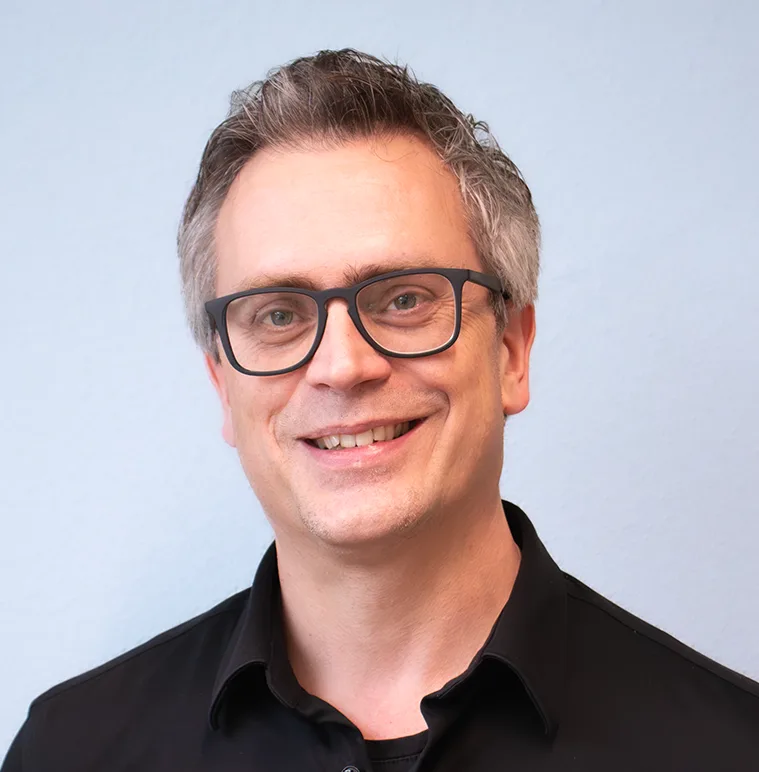
Bosma's route to this work began with Industrial Design at TU Delft.
"A study at the interface of people and technology. I focused mainly on human-computer interaction, ergonomics and systems."
After his studies, he worked at Océ (now Canon) in Venlo, in a huge R&D environment where more than a thousand engineers worked. It was a great learning experience, but also a place where you were "one of thirteen hundred". Bosma longed for more space for strategy, content and innovation.
A move to a smaller company – founded by the future business partner with whom he launched The Simulation Crew in 2017 – introduced him to ‘learning by doing’ technology. “Back then, we were creating simulations for all sorts of things: from air traffic controllers to order pickers. No VR yet, but we did have the idea that the best way to learn skills is by practising them in a safe simulation.”
The power of VR and soft skills
When Bosma set a new course with his business partner in 2020, it became clear: they no longer wanted to be a custom-made factory, but to develop their own products. And above all: harness the combination of VR, soft skills and healthcare.
"VR is the superlative of immersion," he says enthusiastically. In a VR environment, there is complete focus, no distractions and strong engagement with the situation, exactly what you need when training communication skills. Because unlike knowledge, you don't learn soft skills from a book. You have to practice them.
And that is exactly what The Simulation Crew makes possible:
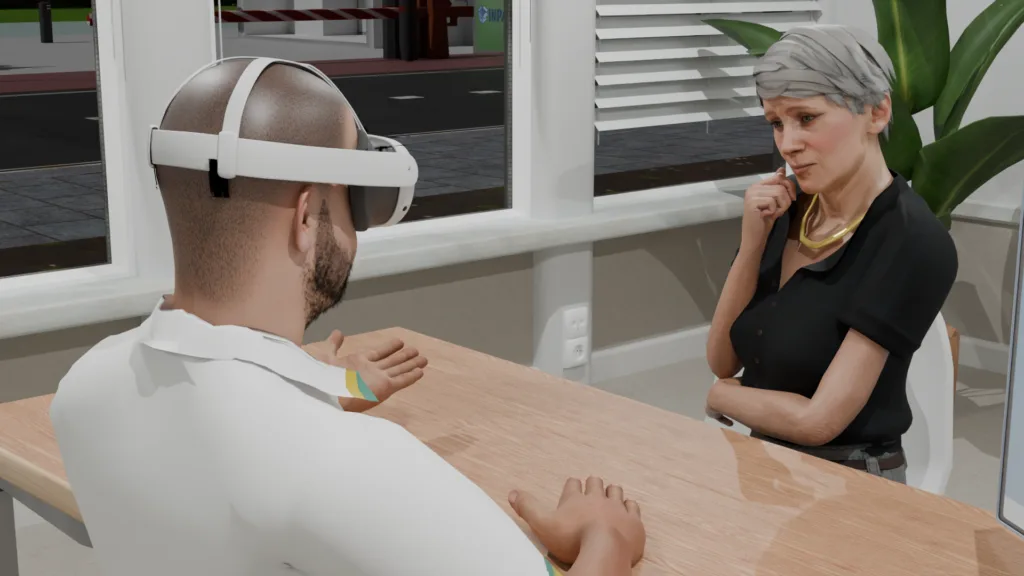
- You are in a virtual room.
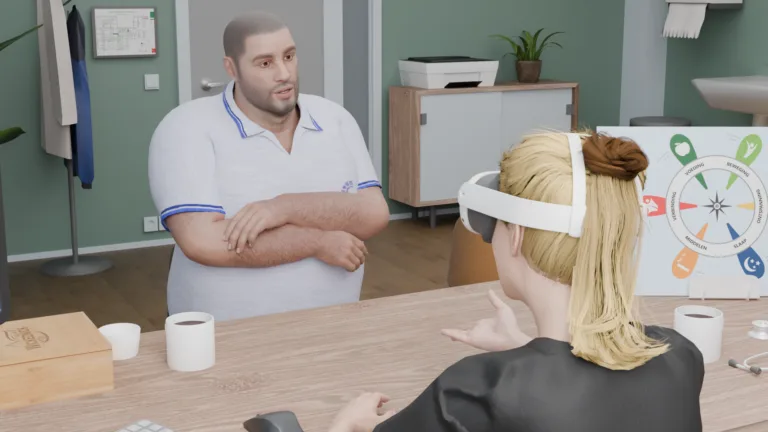
- In front of you is an avatar: a patient, client, student or employee.
- You have a real conversation, with natural emotion and non-verbal behaviour.
- The avatar responds based on your words, tone and intention.
In this, the magic is under the bonnet: AI analyses what you say and generates an appropriate response. Not randomly, the language model is guided by clear instructions, based on learning objectives and communication rules formulated by experts. Bosma is clear: "We don't leave assessment to AI. That goes wrong. The AI provides natural conversations, but we come up with the content frameworks."
Motivational interviewing: international potential
One of their most popular training courses is in motivational interviewing. This conversation technique is used worldwide in healthcare, coaching, education and behaviour change. "It's about autonomy, exploring, finding motivation together," Bosma explains.
The training was developed together with a range of knowledge partners: Radboudumc, the Hogeschool van Amsterdam, the HAN and various lectorates. In expert panels, they bring together practical experience, scientific knowledge and didactics.
"That collaboration is essential," says Bosma. "We don't have all the expertise in-house. But by developing intensively together, we make products that are right in terms of content and work didactically."
Take home VR glasses
The Simulation Crew now works with some ten universities of applied sciences, several ROCs and a growing group of healthcare institutions.
A practical example comes from the HAN: there, every student in the health and welfare courses is given VR glasses to take home.
"Just like a smartphone, our app is on it," Bosma explains. Students practise patient interviews at home, get immediate feedback and track their development via a Learning Analytics dashboard. Teachers remain involved, but differently: coaching fewer role-plays, more coaching on reflection.
According to Bosma, the difference with traditional role-playing is huge:
- No class watching.
- No expensive actors.
- No contrived situations.
- Do unlimited repetition, in a safe setting.
And perhaps more importantly, it is scalable. "Investing once in hardware and a subscription, after that you can practice indefinitely."
New development: a virtual coach
The next step taken by The Simulation Crew is the addition of a virtual coach.
After a conversation with a patient, a coach avatar will soon appear and discuss your feedback with you. No more dry text, but the opportunity for the student to ask questions:
- Why was this not an open question?
- How could I have responded more empathetically?
- Can you cite an example from the conversation?
"That coach knows exactly what you said," Bosma says proudly. "That makes the learning process much deeper."
Small team, big vision
With a team of eight people, Bosma deals with everything: strategy, design, technology and concept development. "That's what I like best: thinking along with the content and building."
What makes The Simulation Crew unique
- Realistic VR conversation simulations that train soft skills
- Conscious deployment of AI; where it adds value, with an eye for limitations, privacy and safety.
- Cooperation with knowledge institutes for content quality
- Focus on healthcare and education, but more broadly applicable
- Scalable, effective, safe and motivating
If you ask Bosma, the company is only at the beginning. "This works for students, for healthcare professionals, for anyone who communicates. So basically for everyone."
And that is exactly the strength of The Simulation Crew: using technology where it adds something, not for the sake of the technology itself, but to help people learn better.