It is not widely known, but the Arnhem-Nijmegen region is the second-largest semiconductor region in the Netherlands. It plays a leading role on the global stage.
An example? Not a single car in the world leaves the factory without chips from Nijmegen.
To raise the profile of this sector and discuss its future, Lifeport is organising the Lifeport Semicon Event26 on 27 January 2026 at the Goffert Stadium in Nijmegen.
In addition, Lifeport has launched a plan through which it hopes to attract 2,500 talented individuals initially, rising to a total of 6,000 in the coming years.
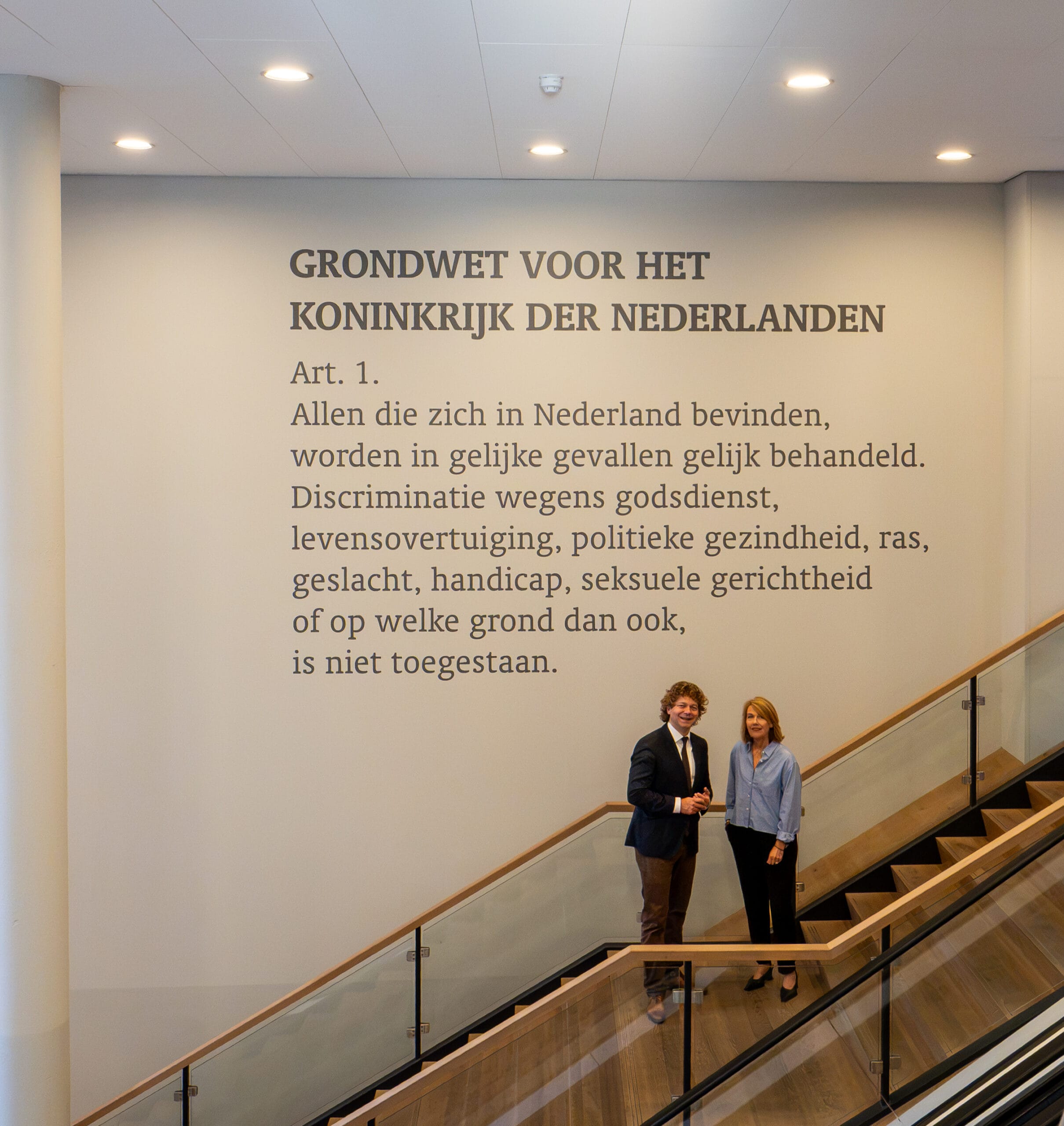
We discuss these and other matters with Alexandra van Huffelen (Chair of the Executive Board of Radboud University and Chair of The Economic Board of the Arnhem-Nijmegen Region), Doeco Terpstra (Director of NXP Semiconductors Netherlands), Rob Verhofstad (Chair of the Executive Board of HAN University of Applied Sciences) and Peter van Mulkom (Chair of the Executive Board of ROC Nijmegen).
The Arnhem-Nijmegen region is set to receive a significant boost in the development of technical talent for the semiconductor industry. The government has recently allocated €2 million for the implementation of the Lifeport Semicon Talent Plan, as the first step towards a total budget of €6 million for the region. With this investment, Lifeport is taking a significant step towards training, attracting and retaining talent for the semiconductor cluster.
Triple helix: business, education and government
The talent plan was developed in close collaboration between businesses, knowledge institutions and public authorities, explains Van Huffelen. “It focuses on innovative education, practical learning experiences through Challenge-Based Learning, and strengthening the regional ecosystem to not only train talent but also retain it in the region.”
The plan focuses not only on new talent, but also provides for further training and reskilling to offer opportunities to career changers and people who are distanced from the labour market.
Close cooperation
Verhofstad emphasises that the talent plan explicitly does not create a client-supplier relationship between educational institutions and the business community. “We look at the challenges we face and how we can solve them together with stakeholders across the board. We have to do this together, because it won’t work if everyone acts on their own.”
Van Mulkom adds: “The business community needs the people we train, but we, as an educational institution, also need the knowledge and experience from the business community to be able to offer relevant courses. Together, we are creating a hybrid learning environment from which we all benefit.”
Drawing on his perspective from the business side, Terpstra adds: “The semiconductor sector is often thought to employ only academics, but forty per cent of staff have practical training. We therefore need talent from across the entire spectrum of education: from vocational education (MBO) and higher professional education (HBO) to university education (WO).”
It must be international
It will still be a considerable challenge to attract a total of 6,000 talented individuals (young people as well as those undergoing further training or retraining) by 2030, but Van Huffelen, Terpstra, Verhofstad and Van Mulkom are convinced that it is achievable. They do, however, point out that this is only possible if one adopts an international perspective.
Van Huffelen: “At the university, we ensure that our degree programmes are as internationally oriented as possible. But we also count as a major player on the global stage when it comes to research. And we have to, because the talent plan can only succeed if we also target international students. To achieve this, the cuts to education funding and the restrictions on international students must be reversed. If that doesn’t happen, it will be very difficult.”
Terpstra also recognises that this is an international issue in his day-to-day work. “I employ people of 65 different nationalities at NXP. And given the labour shortage, it wouldn’t be possible any other way. If you abandon that international focus, you’ll be undermining the very foundation of the talent plan’s success.”
Semicon Event
One way for new talent to get to know the semiconductor sector in this region is the Lifeport Semicon Event on 27 January 2026 at the Goffert Stadium in Nijmegen. A major event where the whole region showcases itself. And not just to new talent, but also to regional and (inter)national partners, stakeholders and colleagues.
Van Mulkom: “With this event, we are highlighting the rapid developments in the semiconductor industry and offering a platform to discover the latest applications, meet partners in the fields of manufacturing and R&D, and exchange knowledge on scaling up skills and innovation in Europe.”
The region on the map
Topics covered include chip design and production, equipment and talent development; all links in the value chain come together in one place.
Terpstra: “All parties in the Arnhem-Nijmegen region involved in the semiconductor sector are taking part. And there are quite a few of them. For example, there are dozens of larger and smaller companies that contribute in one way or another to the chips produced in this region. They are all taking part in the Lifeport Semicon Event.”
These dozens of companies employ a total of seven to eight thousand staff and have an annual turnover of around €3 billion. Verhofstad: “We’re a major player in this region. And with this national event, we want to raise our profile even further. We’re putting the region on the map and showing that we can be proud of what we’re achieving here.”
Strengthen and expand
The attention this event generates for the region is also intended to strengthen and expand the semiconductor sector, explains Van Huffelen. “It’s great to showcase what we have, but we want to go a step further. In the areas of packaging, smarter chips and integration into robotics and AI, for example. In this way, we’re not only boosting the sector but also giving a boost to employment in the Arnhem-Nijmegen region. And that’s where the talent plan comes into play.”
Van Mulkom: “In this way, it all ties together and, together, we strengthen the region in general and the semiconductor sector in particular.”
More information
Lifeport Semicon Talent Plan
Lifeport Semicon Event on 27 January 2026 at the Goffert Stadium