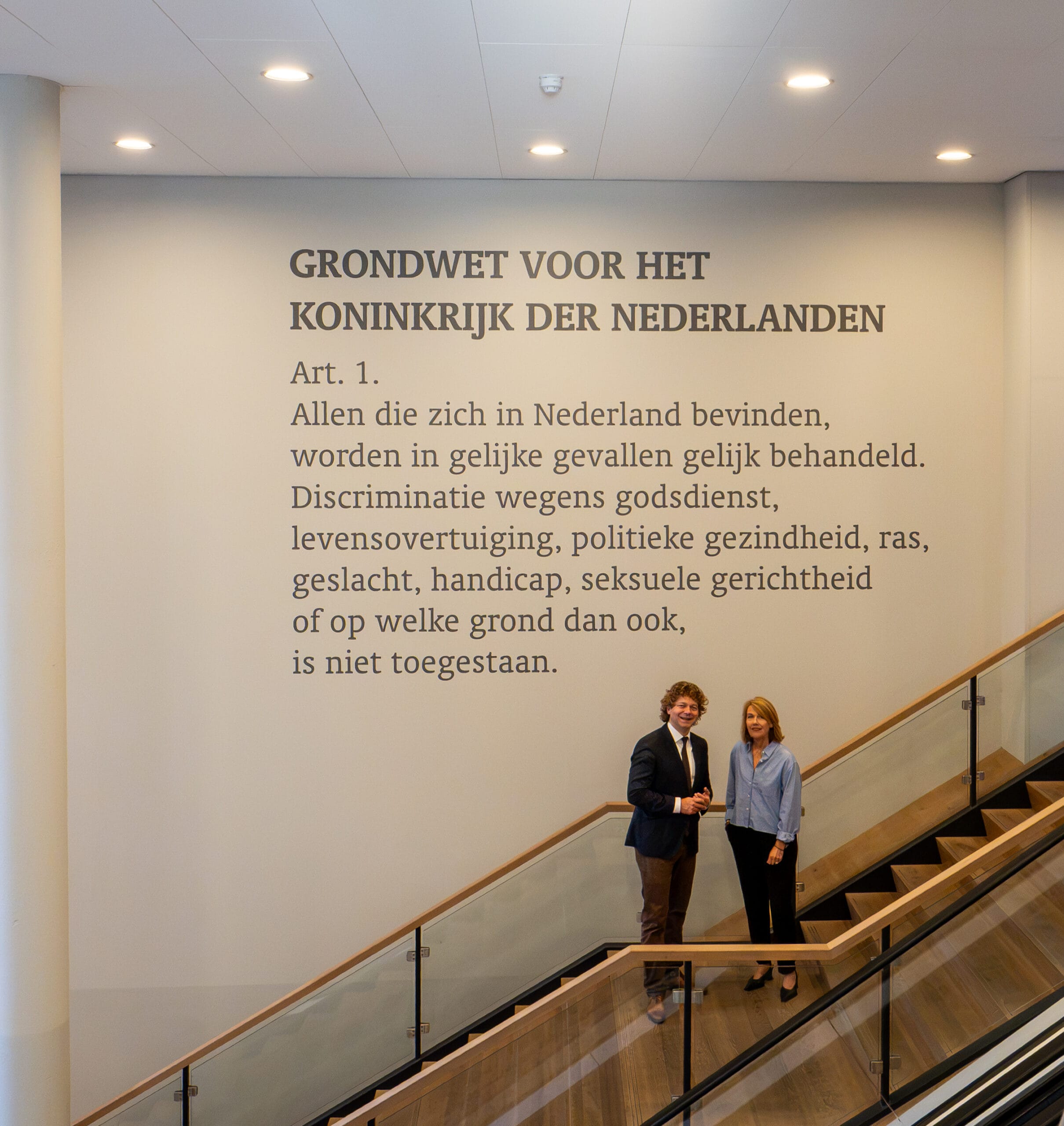
Merijn Neeleman looks back with satisfaction on a large-scale survey that five hundred students from Radboud University and HAN conducted at more than a hundred companies in the Lifeport region. "We really sent them out," he says, "not only to collect data, but also to connect entrepreneurs with young talent and fresh ideas."
SME
The project, part of Liveport@’s Young Innovators programme, centres on small and medium-sized enterprises. “That’s what we’re here for,” emphasises Neeleman. “The students distributed questionnaires, conducted interviews and compiled everything into a professional digital platform that we set up in collaboration with Radboud. The results are anonymous, but incredibly valuable.”
The Innovation Monitor offers entrepreneurs a broader picture of where they stand. “They gain insight into the state of innovation in the region and can factor this into their own priorities. That’s important, because SMEs are facing a lot of challenges, such as AI, labour market shortages and geopolitical tensions. They often have to reinvent themselves.”
Hans and Ans
The results show a clear dichotomy. "You have a group that is really innovative and progressive, with a focus on ecological and social impact. And you have the more conservative companies, often larger or older, who see innovation as a necessary evil." To ensure anonymity, the companies were divided into personas: Hans and Ans.
Distribution
The range of participating companies has been carefully selected. “We have included the entire Lifeport region, with a focus on SMEs. Around 90 per cent of the companies fall into this category. The rest are larger enterprises, which we have deliberately included.”
The questions were framed around six research areas: Circular Economy & Energy, Food & Health, Digital & AI, as well as three cross-cutting themes: innovative capacity, talent retention and regional collaboration.
Circular, Energy, Food, Health, Digital and AI. “These are the areas we are focusing on as an organisation. And across all of these, we are working on innovation capacity, talent retention and collaboration.”
First results
What stands out? “Many companies are already quite innovative, but perceive themselves as less innovative than they actually are. Retaining talent is achieved mainly through development opportunities and employee benefits, rather than through pay rises. Continuing professional development is important.”
Collaboration within the region is going well. “Many companies are actively seeking regional partners. However, collaboration with educational institutions is lagging behind. An internship is fine, but a long-term project with students? That is still rarely utilised.”
Awareness of the broader role of businesses in the region is strikingly high. “Many entrepreneurs have an explicit vision on sustainability. Half have even set this out in writing, although it is not always shared externally. And circular economy initiatives? A quarter of the businesses have taken concrete steps in this area.”
The survey is more than just a snapshot. “This was actually a baseline measurement. We’re already working on the next round. By asking the same questions every year, you gain insight into trends and changes. It’s becoming an increasingly powerful tool.”
Basis for decisions
Participating companies receive a report. “This enables them to make smarter decisions. They can see how the region is developing and where they stand themselves. For us as a foundation, this forms the basis for our policy-making. Together with partners such as The Economic Board, GMR and the Province of Gelderland, we determine where to focus our efforts.”
Neeleman concludes: “By repeating this research annually, we are building knowledge, insight and impact. And that is exactly what Lifeport needs.”
Interested?
Register here with your company to take part in Young Innovators Edition 2