The Lifeport region is at the forefront when it comes to Smart Energy Hubs. But what exactly are they? And why are they needed? Marieke Butterhoff and Tycho Tomassen from The Economic Board explain.
If you ask people what they think a Smart Energy Hub is, you’ll get a variety of answers. Tycho Tomassen, a strategist for the energy cluster at The Economic Board, is well aware of this. “You can approach it very much from a technical design perspective. But if you ask me what a Smart Energy Hub is, I’d say: a way of becoming self-sufficient in energy by managing energy flows intelligently. That could apply to an industrial estate, but also to a residential area or a complex of buildings.”
Electrons and molecules
Marieke Butterhoff, who is also a strategist at The Economic Board and process manager of the Smart Energy Hub TPN-West in Nijmegen, offers a similar definition. “It’s about using energy smartly and collectively. You balance supply and demand within the overall energy picture. This is often directly linked to grid congestion.
In Gelderland, both TenneT’s national grid and Liander’s regional grid are at full capacity. By collaborating with businesses, you can explore whether you can utilise capacity more intelligently, as not everyone experiences a peak at the same time.
But Smart Energy Hubs aren’t just about electricity. They also contribute to the natural gas transition by utilising, for example, heat or hydrogen in production processes. ‘It’s about electrons and molecules,’ as I always say.”
“There are several reasons for wanting to be self-sufficient,” says Tomassen. “Collectively, we’re using more and more energy. If we can generate that locally and keep it there by sharing it amongst ourselves, everything remains more affordable and we have greater control over energy flows. If we start using lots of Smart Energy Hubs in the Netherlands, we’ll also be less vulnerable to external cyber-attacks. Then, rather than an entire region being brought to a standstill, as is the case at present, the impact will be much smaller. To achieve this, we need to look carefully at all sorts of storage methods, not just batteries. Hydrogen has great potential when it comes to storing energy. I expect it to be a major game-changer for Smart Energy Hubs.”
Region leads the way
Tomassen and Butterhoff often work together on behalf of The Economic Board. “We are primarily a driving force,” says Tomassen. “We try to accelerate progress among businesses, research institutions and public authorities. We also lobby in The Hague and Brussels, so that we can ultimately mobilise more people and resources to help the economy and accelerate the energy transition. There is a great deal involved in Smart Energy Hubs in financial, technical, legal and procedural terms. This means that, through The Economic Board, we have a wide-ranging role.”
Butterhoff emphasises the importance of research institutions: “The energy transition in the broadest sense requires a great many people. That’s why degree programmes are so important. At TPN-West, we receive a great deal of support from students at HAN University of Applied Sciences, and the lecturers are involved as long-term researchers. The direct line of communication that the Economic Board has with the knowledge institutions, as well as with other stakeholders and the Connectr innovation cluster, is extremely valuable.”
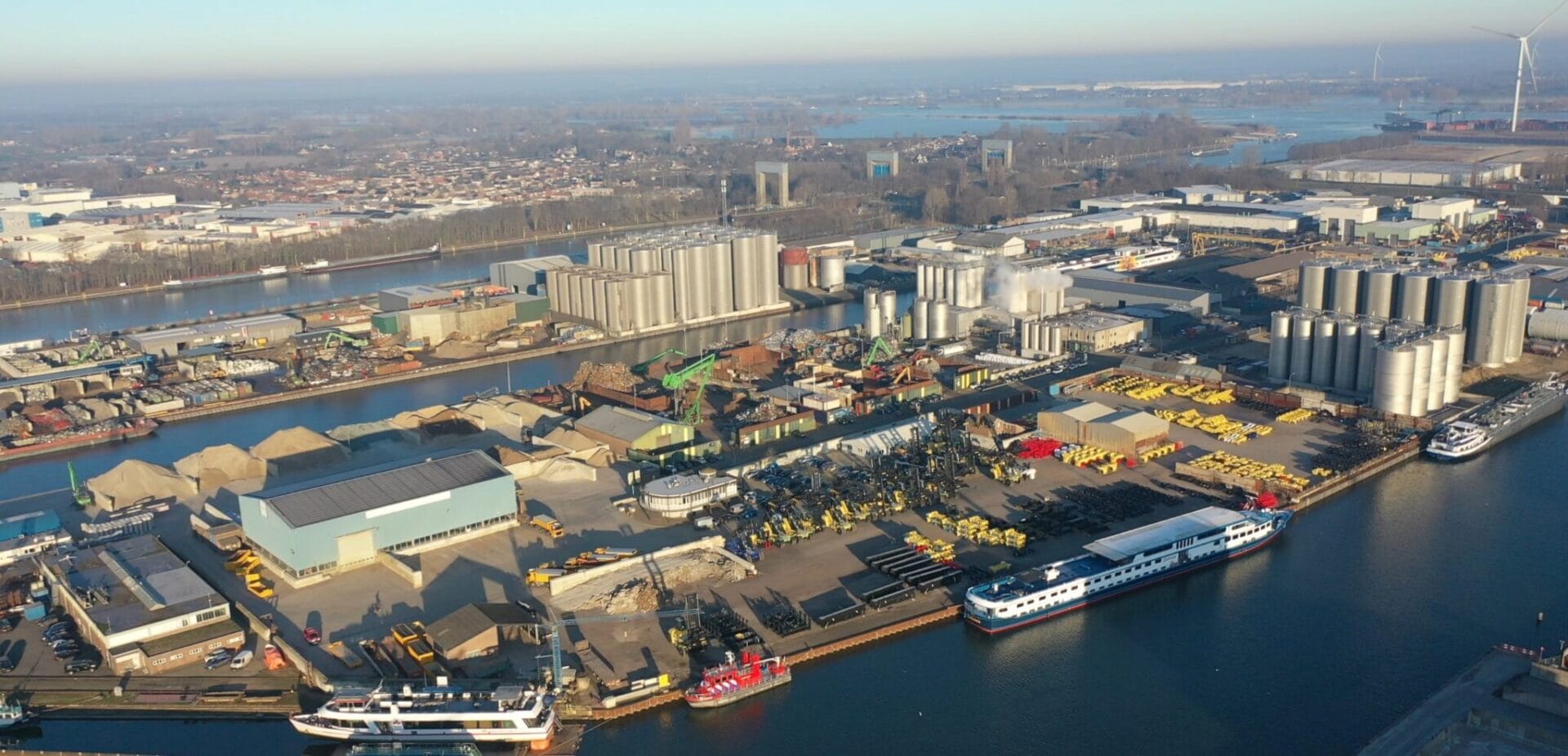
They both believe the region is leading the way nationally when it comes to Smart Energy Hubs. Butterhoff: “A living lab has been set up in the eastern Netherlands, encompassing ten Smart Energy Hubs. Six of these are in Gelderland, three of which are in the Arnhem-Nijmegen region: TPN-West, InnoFase and Brickvalley (a network of brickworks along the Waal and the Rhine, ed.). Exciting developments are also taking place at other business parks, such as De Aam in Elst and IJsseloord in Arnhem. In addition, we are working on a Smart Energy Hub at the ARN waste-to-energy plant in Weurt, where we are trying to harness and store solar and wind energy, but where we also aim to start producing hydrogen.”
Train in motion
Tomassen sees great potential in Smart Energy Hubs, but also recognises that the journey is a challenging one. “Many companies still take a fairly traditional view of energy: they sign a contract with an energy supplier for a few years to ensure a reliable power supply. From there, the journey towards a Smart Energy Hub is quite long and complex. But the benefits are becoming increasingly clear. Sometimes it’s also a necessity, because companies are unable to expand their connection to the electricity grid, or in some cases are unable to secure a connection at all.”
Butterhoff also knows that there is still a lot to be done. “For TenneT and Liander, the changes to the grid’s configuration are quite challenging. Furthermore, the legislation is not geared towards a return to local energy companies. Together with various other parties, we are encouraging the government to amend the legislation. Supplying heat to businesses is also a whole new ball game, requiring different types of contracts and adapted production processes. The whole development calls for a great deal of courage and substantial investment from entrepreneurs. There is no ready-made plan. We’re currently reinventing the wheel together.”
In her view, a Smart Energy Hub is no magic wand: it is not always the best solution. “Every situation requires a fresh assessment. When can you solve something yourself, and when should you set up a large collective? It certainly won’t work on every industrial estate.” But she is certain that more and more Smart Energy Hubs will emerge, and Tomassen agrees: “This electric train has definitely been set in motion, and it’s not going to stop now.”