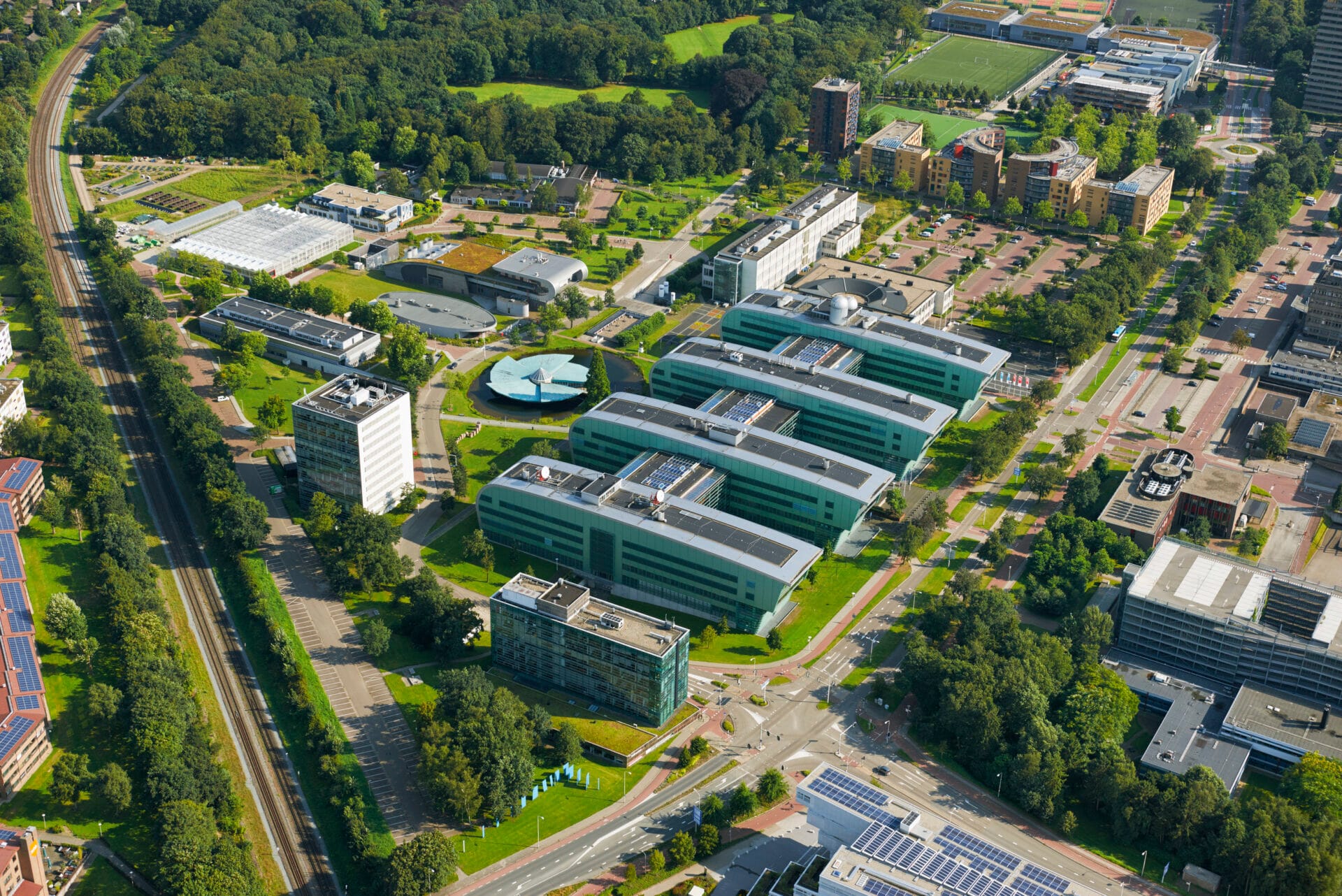
In a laboratory on the Heyendaal Campus in Nijmegen, a passionate team is working on a major mission: to prevent cancer through early detection, and to fundamentally improve the treatment of cancer and other diseases.
William Leenders, a former associate professor at Radboudumc, and Marco de Boer, a biotech entrepreneur, are the founders of Predica Diagnostics. Their technology does not analyse DNA, as is usually the case, but RNA, and that makes a world of difference.

From academy to practice
William Leenders spent many years conducting cancer research at Radboudumc. He became fascinated by personalised medicine, but also recognised its limitations. “Many patients do not respond to therapy, and that has everything to do with the diagnostic approach,” he explains. “DNA analyses, which are now carried out routinely, provide information about genetic mutations, but say nothing about gene activity. RNA, on the other hand, tells us exactly which genes are switched on or off, whilst also providing information about mutations.”
In 2017, Leenders developed a robust RNA test based on Next Generation Sequencing. As this technique proved to be highly promising for patient care, he decided to set up Predica Diagnostics in 2019 together with Marco de Boer.
A powerful technology
Marco de Boer, a molecular biologist with a PhD, already had experience in setting up biotech companies. After losing a loved one to cancer, the move to Predica was a natural one. “William was looking for someone with business experience, and I wanted to do something that would make a difference,” he says. As managing director, he handles the business side of things, whilst Leenders focuses on the science.
Predica’s technology is based on RNA analysis using Next Generation Sequencing. Whereas DNA analyses detect mutations, RNA looks at gene activity. “That is crucial,” explains De Boer. “Take cervical cancer, for example, which is caused by the HPV virus. Many women are infected with HPV, but only a small proportion are actually at risk. Our test can analyse a smear sample to determine which HPV virus is present and active, and whether cancer genes are active. This enables us to predict much more accurately who is at risk.”
Focus on women's health
Although the technology has a wide range of applications – from brain tumours to lung cancer – Predica has made a conscious decision to narrow its focus. “We are currently focusing on women’s health,” says Leenders. “For example, we are also looking at the microbiome in women, which has a general impact on health, as well as endometriosis and, of course, cervical cancer. There is a huge unmet need in this area.”
That choice is partly practical: smear tests are relatively easy to obtain as clinical material. But it is also strategic. “Until recently, little research was being carried out specifically for women,” says De Boer. “Many medical innovations were aimed at men. Now there is greater focus on women’s health, and we want to contribute to that.”
Cervical cancer is one of the most common forms of cancer among women worldwide. “There is already a great deal of convincing evidence that cervical cancer can be prevented through HPV vaccination, but this only works for girls who have never had an HPV infection. Moreover, with the current low vaccination rate of 60 per cent, screening will remain crucial in the coming decades,” said Leenders.
Smarter screening, fewer unnecessary referrals
The current screening method is not efficient. It begins with a test for the presence of HPV in a vaginal self-swab that a woman can take at home, or in a smear test taken by her GP. If HPV is detected, the smear is examined under a microscope (the PAP test). If that examination reveals abnormal cells, a gynaecologist will carry out a further examination. “The inaccuracy of the PAP test leads to many unnecessary referrals,” says De Boer. “Our test can determine directly from the first sample whether there is HPV activity and whether or not cancer is developing. That makes the process much more efficient.”
For this reason, the European Union has recently recommended phasing out the PAP test. “That underlines the need for better tests,” says Leenders. “Our technology falls squarely into that category.”
User-friendly, scalable and cost-effective
A key advantage of the technology is its scalability. “We can analyse up to 4,000 smears at once,” says De Boer. “That makes the test cost-effective.” Furthermore, Predica has developed its own software and algorithms, meaning that the analysis and reporting are largely automated. “You no longer need bioinformaticians. That makes it accessible to laboratories.”
The technology also incorporates elements of artificial intelligence (AI), which help to interpret the complex data. “It may sound complicated and expensive,” says Leenders, “but we’ve actually simplified it and made it affordable.”
Collaborations and international interest
Predica works closely with Radboudumc, where the technology was developed and patented. The patents are held by Radboudumc, and Predica has the exclusive worldwide rights. “We have agreed that we may use those patents to develop products. And in return, we will pay a portion of the proceeds back in the future when we sell products,” says De Boer
“And we have a close working relationship with oncologists and gynaecologists there. They are our early adopters.”
Interest is also growing internationally. Sequencer manufacturer MGI found the technology so promising that they have installed a device at Predica. “That enables us to carry out sequencing ourselves,” says De Boer.
In addition, Predica is in talks with companies wishing to licence the technology for other applications. “We launched our first product last year,” says De Boer. “Labs are already using it, and that inspires confidence. We’re now looking for partners to help us grow further.”
Strong ecosystem in Nijmegen
The Arnhem-Nijmegen region offers fertile ground for innovation. Predica received funding from OostNL and growth vouchers through Briskr, among others. "That really helped us take steps," says De Boer.
A technology with a future
Predica Diagnostics is at the beginning of a promising journey. With an innovative RNA technology, a clear focus on women's health and a strong scientific base, the company has everything it needs to improve diagnostics of cancer and other diseases. "We know our technology works," says Leenders. "Now it's time to make that impact in the clinic as well."