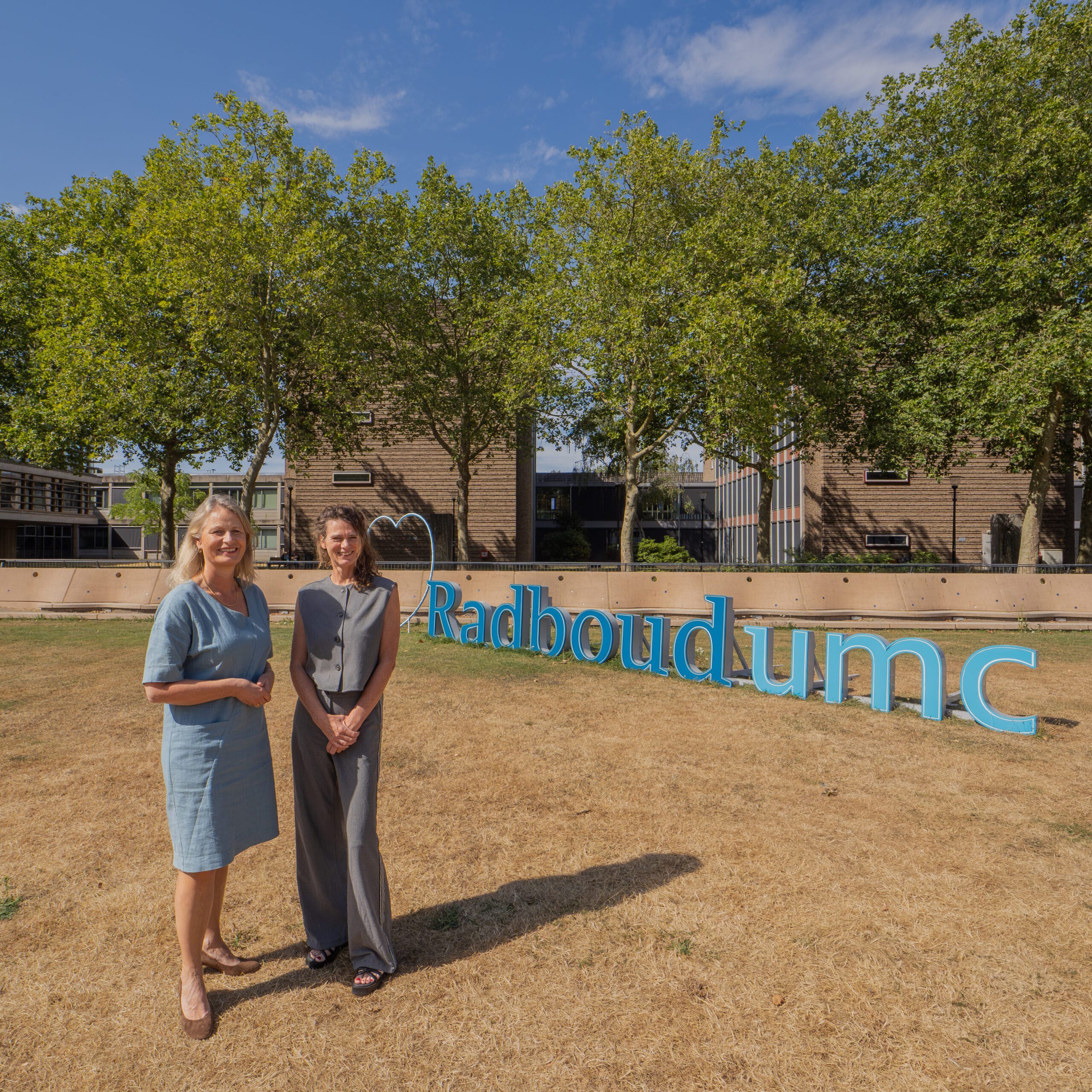
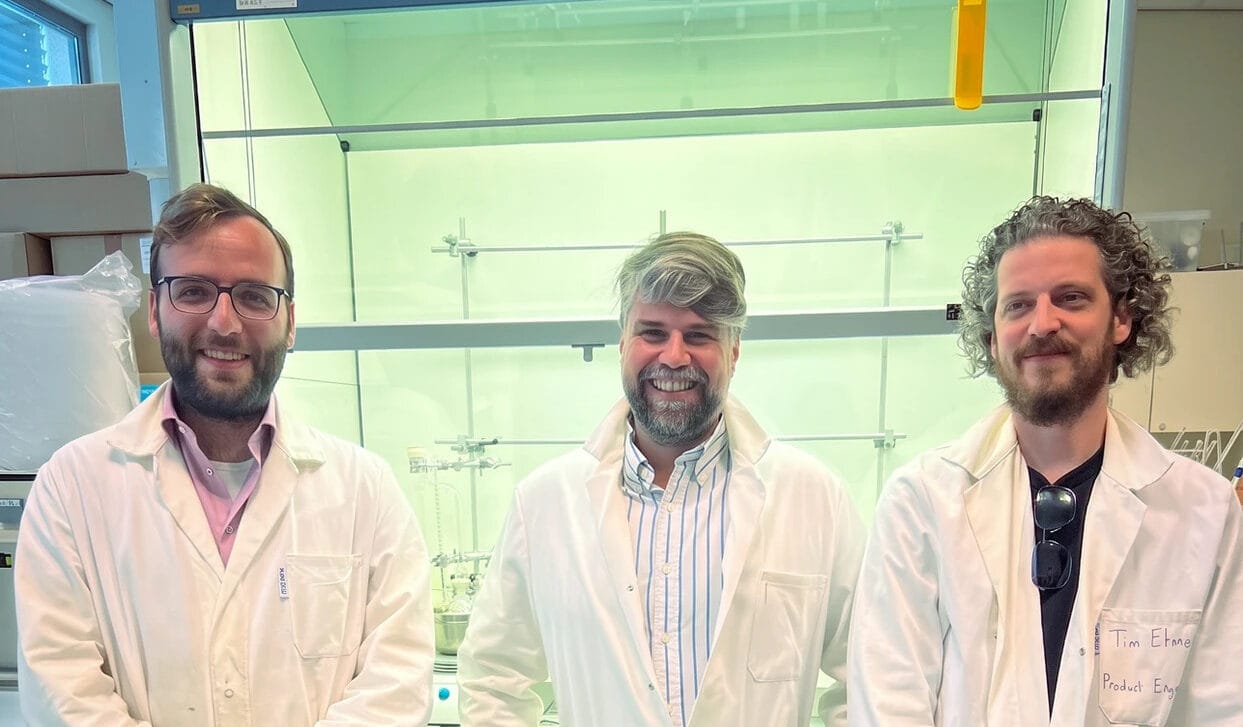
Within the Arnhem-Nijmegen Green Metropolitan Region (GMR), public and private sector partners are collaborating on the Regional Deal project ‘Future-Proof Construction’. This is being carried out through the Conceptual Circular Construction (CCB) programme and the Circular Civil Engineering (GWW). Robert Mullink, CCB programme manager, and Paul Groenen, Circular GWW project leader, explain.
Robert Mullink is a macro-economist by training, has been involved in sustainable construction for many years and joined the GMR two and a half years ago; he now heads the CCB division. “We are building more in factories, which means we use fewer raw materials and can build more quickly. This helps to reduce CO₂ emissions.”
Paul Groenen studied garden and landscape design at Van Hall Larenstein in Velp. At the GMR, he works on Circular Civil Engineering. “As well as all the new-build projects, we’re also involved in the renovation of existing roads, sewers, squares, parks and streets. Together with a few colleagues, we’re helping our 17 local authorities to carry out these projects in a more circular way and use fewer raw materials.”
What is Future-proof Building?
The region is growing rapidly and faces a severe housing shortage. Mullink explains: “The challenge is to build 40 to 60 thousand homes in the region by 2030, and this must be done in a future-proof way.” This must be done quickly, affordably and on a large scale. The construction sector uses a lot of raw materials, generates a lot of waste and produces significant CO₂ emissions.
“That is why we want to build not only quickly and affordably, but also sustainably. We call this Future-Proof Building. The main challenge here is to ensure that private and public sector parties are on the same page and work together in the face of changing legislation and regulations,” according to Mullink.
Future-proof Construction therefore means reduced consumption of primary raw materials, less waste and lower CO₂ emissions. This is achieved by developing and applying clear and consistent policies to all major construction projects in the region.
This process is based on transparent collaboration between all parties in the built environment. It involves improving construction processes, dealing with new regulations and funding, and striving for streamlined objectives.
Furthermore, this approach contributes to improved health, climate adaptation, biodiversity and the reduction of raw material scarcity.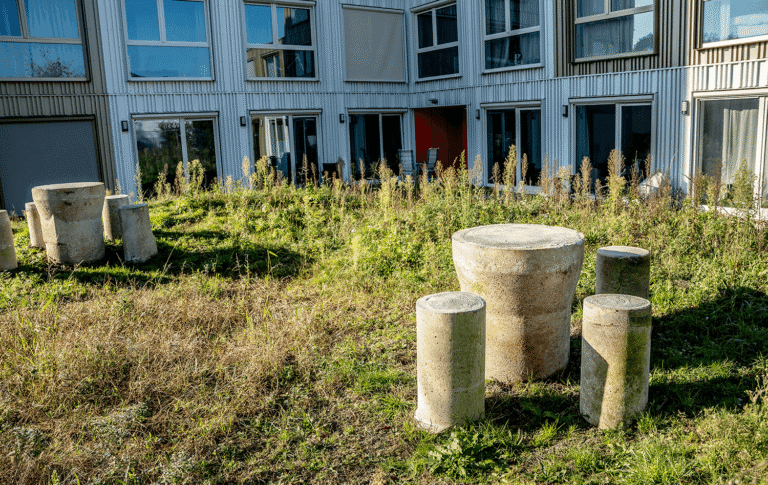
An example: NDW21
An interesting example of Future-Proof Building is the NDW21 project in Nijmegen, on Nieuwe Dukenburgseweg. What was interesting here was not only the assessment against regulations, but also the entire process leading up to it, including the tendering process via Nijmegen-based cooperatives, the role played by the local council, and the construction parties involved: De Meeuw-VDL for the building works and Heijmans for the public spaces.
Groenen: “The tender for the public space was an interesting process, as it was based on aspirations. Normally, you draw up a plan – for example, a three-metre-wide path is required, with 12 benches, a footpath, a small pond and three lampposts.
In this case, Nijmegen City Council issued a call for tenders that was much more open; there were requirements, of course, but they were looking for a contractor who could bring this site to life, who could devise and implement a public space in the most sustainable way possible. It was less about technical requirements and money and more about sustainability ambitions. That is certainly a unique approach to tendering. Heijmans came out on top.”
Heijmans used only recycled materials, the majority of which came from the local area itself. The nearby Nijmegen council depot was visited regularly to see if there were any usable materials for the project. That requires a different approach to design: not first creating a ready-made design and then looking for the materials. It’s the other way round. Sometimes materials happen to be left over or become available, and the question then is how they can be used. The company also made use of Duspot, a sort of marketplace for second-hand materials.
“So, for example, we ended up with benches from the municipality of Arnhem that had been ordered incorrectly and had never been used. They were just sitting in a depot somewhere, waiting to probably end up in the crusher. Well, you don’t get the bench you’d ideally want or what the designer would have come up with. But it’s a perfectly good bench that works very well.
For the road surfacing, Heijmans used a closed soil balance, meaning that no soil needed to be brought in or taken away.”
Output of the Regio Deal project
In 2023, the housing sector’s score for circularity and conceptual construction was still less than 10 per cent. A key outcome of this project is to raise this score to at least 30 per cent by 2027 and at least 50 per cent by 2030, without compromising the progress of the housing construction programme. The GMR monitors these percentages using what is known as a ‘circular impact ladder’.
Between 2024 and 2027, circular commissioning will become the norm in residential and non-residential construction and the civil engineering sector. Groenen: “Ultimately, this also delivers social benefits. The new regulations ensure that we no longer simply ask how much something costs, but also how much CO₂ emissions are saved and how much it contributes to health and well-being.”
Want to know more about Future-Proof Construction? Visit Future-Proof Construction