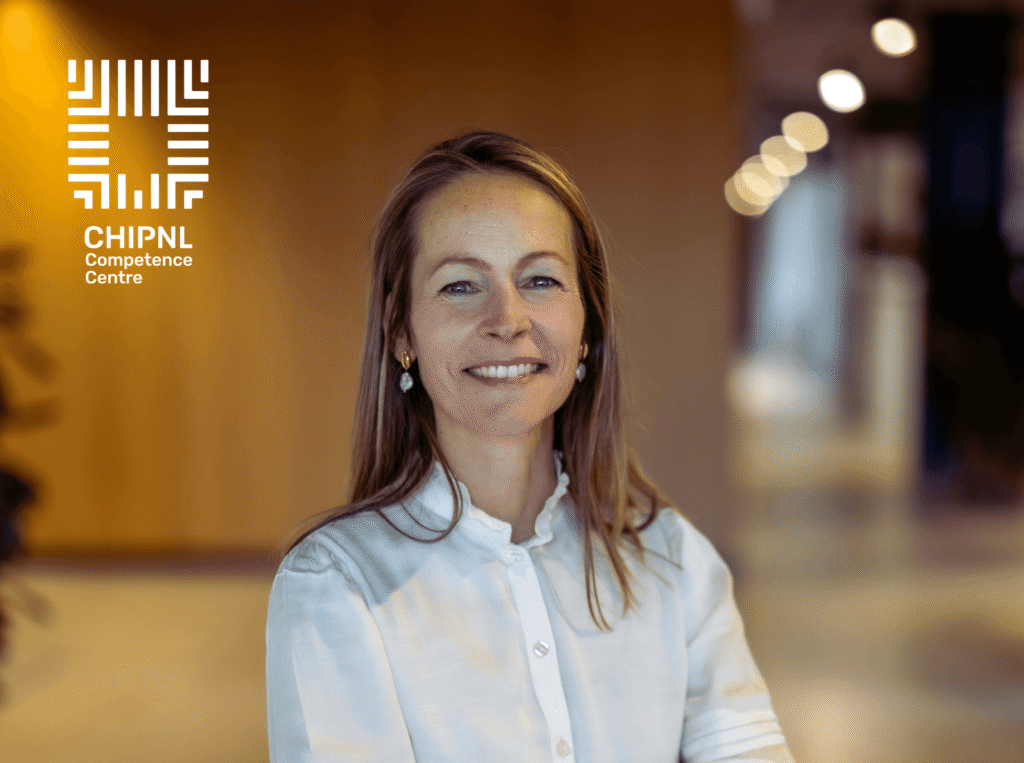
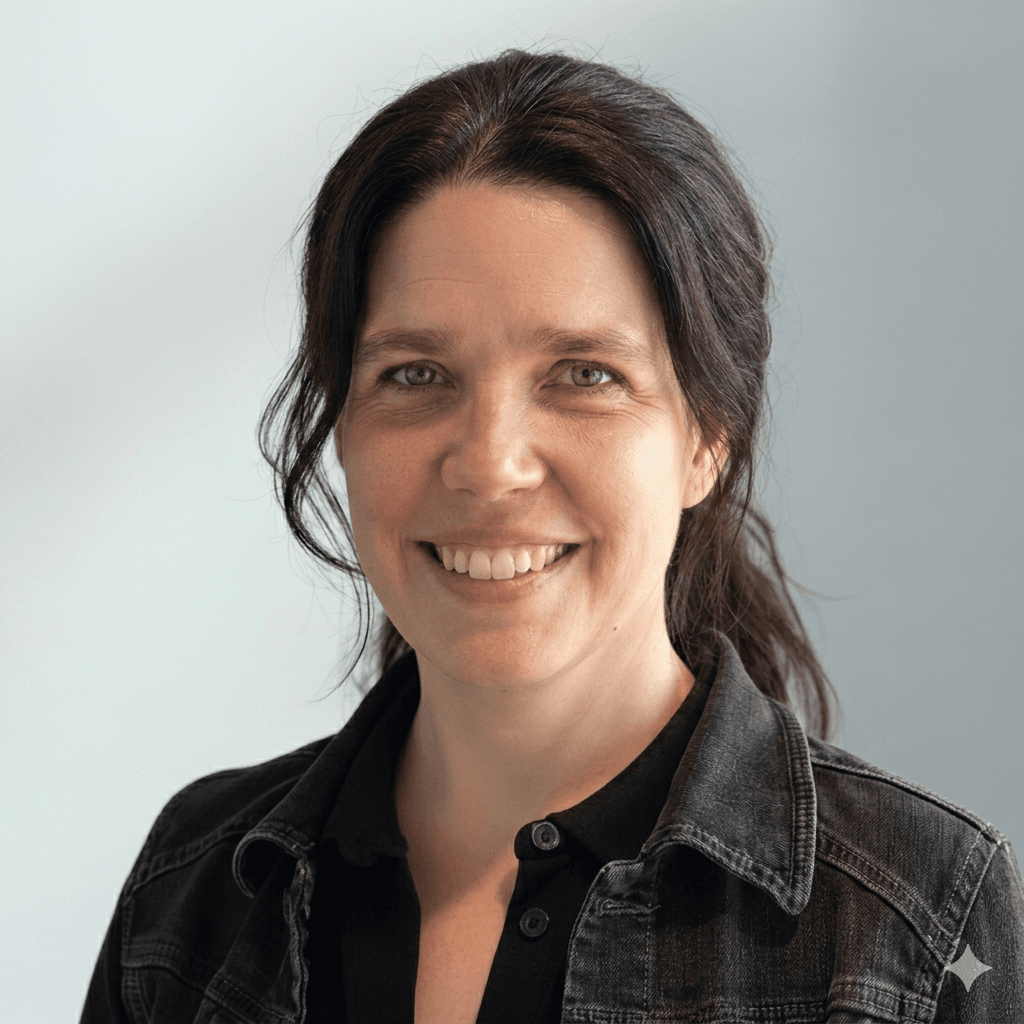
With Klaar Vernaillen, The Economic Board brings in a programme manager for the Lifeport Semicon Talent Plan, who knows how to seamlessly connect education, the labour market and innovation. She grew up in Belgium, in the middle of a real education family. "I am doubly burdened," she laughs. "On both sides, education blood flows through my veins." One grandfather was a school inspector, the other founded a study and career centre and even secretly mentored young people during the war. It is clear: Ready is made for the world of learning and development.
From Belgian classrooms to Nijmegen
Klaar was trained as a teacher of Dutch, German and geography. She stood in front of the classroom for a year, teaching from vmbo to mbo and vwo bridge classes. An Erasmus exchange brought her to Nijmegen ... and she stayed. "Like many exchange students, I stuck around," she says. "Nijmegen immediately felt like home."
Study choice, information and education development
After working in travel for a while, an old dream, Klaar started at Radboud University, first as a secretary, then soon at the study choice and career centre. She counselled study-goers, conducted psychological tests and helped study-goers and professionals find their way.
She later became an educator, visiting numerous secondary schools to advise parents and students on study and training routes. As a student advisor at the Faculty of Arts, she discovered her passion: helping students think outside standard paths. "You take Dutch so you become a teacher, that is often the narrative. But so much more can be done."
An example that will always stay with her: a student who wanted to go to Ghana to support computer education at a primary school. Klaar helped her build a unique minor from different disciplines. "That was SO valuable. But it was nowhere. You couldn't make such a wonderful pathway formally visible anywhere."
And that is exactly what eventually led her to Lifelong Development.
The click: LLO, microcredentials and edubadges
Within Radboud University, Klaar explored how LLO could take shape. When microcredentials emerged, small recognised educational modules, she immediately saw opportunities. "Finally you can make visible what someone has really done and learned. That fits so well with people shaping their own path."
When Nijmegen did not and Wageningen did enter the first phase of the national pilot, Klaar transferred to Wageningen Academy. There, she worked on microcredentials, edubbadges (digital, tamper-proof certificates) and helped transform the educational offering towards more outside-in: developing what business needs, not just what the university wants to offer.
Beethoven: working from the demand of companies
That way of thinking fits perfectly with its new role within Beethoven, the national programme to strengthen the Dutch semicon sector. The government made millions available to grow four semicon regions, crucial for the future of the chip industry in the Netherlands.
In the Arnhem-Nijmegen region, this led to an initial investment of 2 million euros in talent development, with a possible extension in later phases. That money descended on the region's educational institutions. And that's where Klaar's work begins.
Building talent for the chip industry
Within The Economic Board, Klaar is responsible for the implementation of the Lifeport Semicon Talent Plan, part of Beethoven. Together with project leaders from ROC Nijmegen, the HAN and Radboud University, she ensures that promising projects are implemented and further developed.
What it does concretely?
- Coordinating all semicon focused education projects.
- Connecting education and business so that training courses better match what companies need.
- Make an inventory of which training courses and activities already exist and how they can be made more visible or scaled up.
- Finding hidden semicon talent, for example by directing professionals to the sector via further or retraining.
- Participate in a national working group investigating where training needs and shortages lie within the entire semicon sector, also looking at the region
Why Lifeport?
"I would never be able to ground myself in Amsterdam or Groningen," she says. "Here it is softer, friendlier. You have urbanity as well as nature. It's innovative without being massive."
This regional heartbeat fits seamlessly with the Lifeport idea: the triple helix, in which government, education and business build the future together.
"What I like so much," says Klaar, "is that as a Lifeport organisation you are at the centre of society. You can connect parties and really change things. That suits me and this region."
Questions?
Klaar: "If companies are looking for specific talents, I like to hear about it. Then we can include that in the demand articulation and in our plan. Together, we will make the sector stronger."
Klaar Vernaillen, k.vernaillen@theeconomicboard.com