In mid-April 2023, the Province of Gelderland, The Economic Board and the Arnhem-Nijmegen Green Metropolitan Region signed the Arnhem-Nijmegen Region Human Capital Agreement with entrepreneurs and knowledge institutions.
The aim: to jointly tackle staff shortages in the Healthcare and Welfare, Technology and Energy sectors. This article focuses on the Healthcare and Welfare sector.
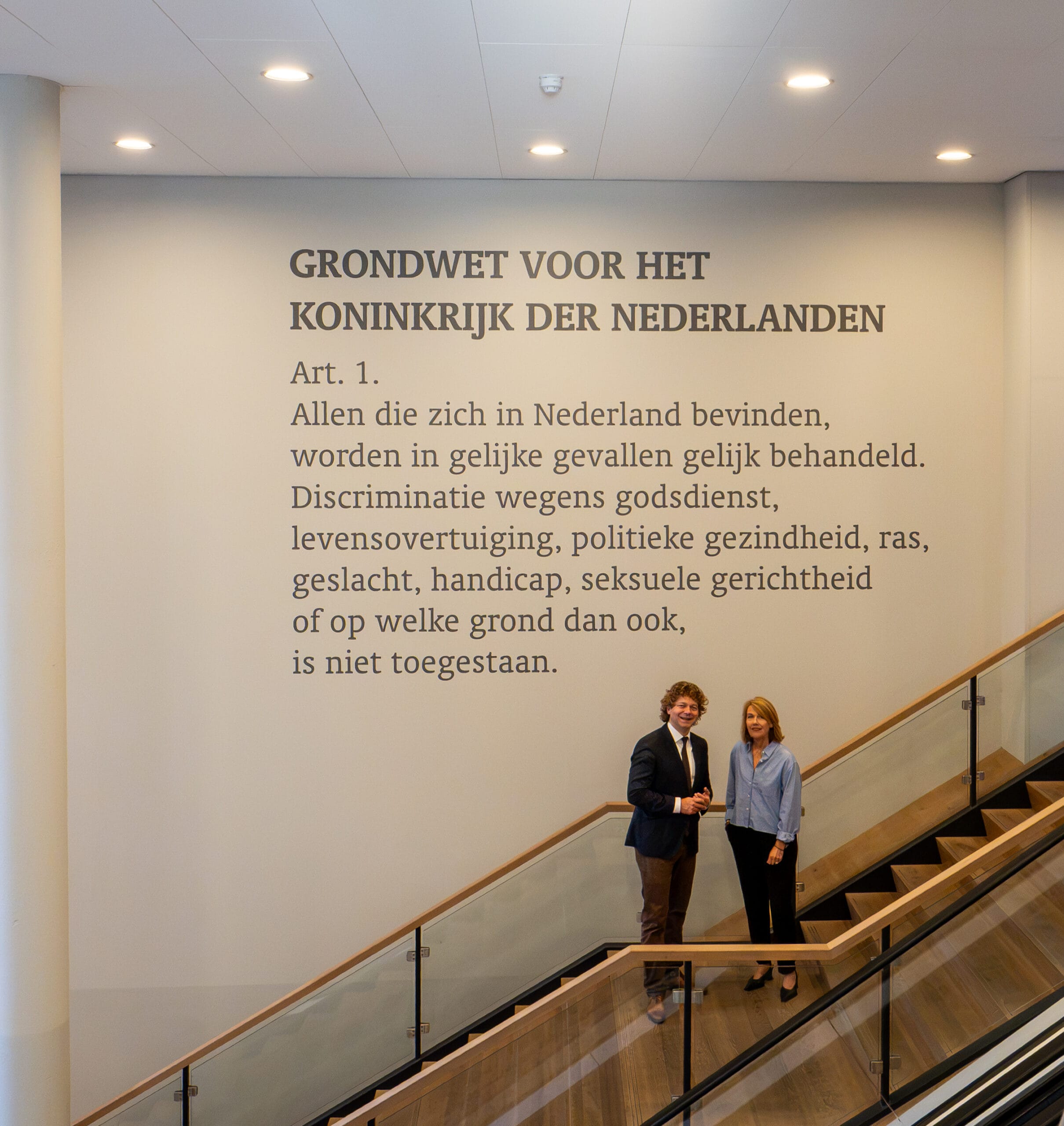
Bertine Lahuis, Chair of the Board at Radboudumc and a member of The Economic Board, Pascalle Nijenhuis, Director-General of the Healthcare and Welfare Employers’ Association (WZW), and Peter van Mulkom, Chair of the Board of ROC Nijmegen and member of The Economic Board, engage in a discussion. They highlight projects that their organisations have set up or are promoting.
 Bertine Lahuis, Peter van Mulkom, Pascalle Nijenhuis
Trend
In the Arnhem-Nijmegen region, staff shortages in the care and welfare sector are not yet acute, but there is a growing shortage. In the third quarter of 2022, 54,900 professionals in the healthcare and social care sector were working in the Arnhem-Nijmegen region in frontline roles, i.e. providing direct care to patients and clients. Of this group, 25 per cent are aged 55 or over. From the fourth quarter of 2021 up to and including the third quarter of 2022, approximately 6,570 new people entered the sector whilst 6,050 professionals left. Fewer people leaving than joining – that sounds positive, but almost 55 per cent of those leaving are under 35 years of age. Even more worrying: around a third of all healthcare professionals leave the sector within two years. It is therefore vital to train, attract and retain good staff. “Employers and training providers are aware of the issues. We are tackling the problems as best we can within our means,” Lahuis begins. “Perhaps not optimally in terms of scale and coherence, but we are finding our way through collaboration. Mind you, healthcare and welfare is a fantastic sector, with numerous wonderful professions and enormous social relevance. This isn’t just about healthcare professionals, but also about people in all the supporting disciplines, because we can’t do without them. How do we recruit and motivate young people, those returning to work and career changers to choose a job in our organisations?”
Flexibility
“By taking a different approach to factors such as autonomy, the need for security, professional autonomy and opportunities for development, we can be and remain an attractive employer as a sector and as a region,” says Neijenhuis. “Establishing forms of regional (collective) employment, in which employers and educational partners in our region actively collaborate, can contribute to this. Giving employees the opportunity to work for several organisations simultaneously or consecutively under a single employment contract. With the security of a long-term contract and the flexibility to remain in control of their own careers and continue to develop their talents. It also offers employers opportunities to work together to make better use of their human capital, harness talent and retain professionals.” Neijenhuis cites
De Werkgeverij and
Regionaal Werkgeverschap Gelderse Vallei as examples of this, schemes in which employees can voluntarily sign up. “In a pilot project run by De Werkgeverij, work is now even underway to develop a modular, permanent employment contract that allows you to work for multiple employers.” ROC Nijmegen is also designing courses and programmes with flexibility in mind. “The demands of the labour market go beyond the boundaries along which standard courses are organised,” says Van Mulkom. “We are addressing this with more personalised learning pathways, built up from modules. This creates a broader and more interesting mix of courses for students, as well as better job prospects. We also apply this approach to adult education.”
Skills
It is a more skills-based approach, focused on the ability to carry out tasks. Lahuis, Neijenhuis and Van Mulkom see this as a key development in addressing staff shortages. “A focus on skills offers greater flexibility for both employees and employers. Moreover, it breaks away from the stifling emphasis on obtaining a qualification as a ticket to the labour market,” says Lahuis. “There are so many people with talent, knowledge and expertise who do not hold a qualification. We must nurture and support them, ensuring they still end up in the right place.”Neijenhuis: “A skills-based approach prevents mismatches and contributes to sustainable employability in the labour market. Developing a skills passport makes the movement of people easier and helps them find a workplace that suits their qualities and interests more quickly.”Van Mulkom nods: “Tailored training and a corresponding skills passport also prevent students from dropping out during their studies. It gives the student greater insight into their talents, interests and progress, but also provides the employer with such insight.”“Providing the best possible insight into talents, knowledge and skills promotes a better match in the labour market. As Rijn IJssel and ROC Nijmegen, we facilitate this process through ‘Move to Match’. This initiative focuses on the training needs of employers, employees and people who are currently not in employment. This ranges from short courses aimed at developing skills to complete, tailor-made training programmes.” “Collaboration amongst training providers is the way forward,” says Lahuis. “In our region, all healthcare institutions work together to provide the necessary training places. Among other things, Radboudumc works closely with Rijnstate Hospital in Arnhem. We have a joint agenda focusing on patient care, education and research. Key aspects of this include the labour market, training, sustainability, research and digital transformation.”
Technology
Digitalisation and the use of technological tools are key aspects of working differently and flexibly. Healthcare and social care are, and will remain, people-centred, but the targeted use of technology helps, according to Lahuis, Nijenhuis and Van Mulkom.”Radboudumc and Rijnstate aim to build the healthcare of the future using AI, 3D and other digital possibilities. For instance, Rijnstate is well advanced in home monitoring, whilst Radboudumc has extensive experience with continuous monitoring in the clinic. This offers opportunities for further development. “We are also involving our networks in this collaboration and inviting other parties to join new initiatives,” explains Lahuis. Van Mulkom cites the Tech@doptie Practoraat as an example. “This practoraat was established through collaboration between the education sector, the government and healthcare and welfare institutions in the Arnhem-Nijmegen region. Here, lecturer-researchers from ROC Nijmegen and Rijn IJssel mentor students studying healthcare, welfare, ICT and engineering, as well as healthcare staff. They practise using new products and devise new technical applications. Healthcare staff are introduced to new technology and learn how to apply it in their daily work. In this way, professionals – both current and future – develop their skills, and a mindset emerges in which the use of technological aids is taken for granted.”Talent development, social relevance, flexible working conditions and good pay: these are the key factors needed to encourage more people to choose a career in healthcare and social care, or to decide to remain in the sector.It is a sector with an enormous variety of job opportunities and, as such, offers excellent career prospects. There are an increasing number of widely supported initiatives aimed at achieving this and thereby tackling the anticipated labour shortage. The desire and the will to work together are there. The Human Capital Agreement gives this movement an extra boost.


 Bertine Lahuis, Peter van Mulkom, Pascalle Nijenhuis