
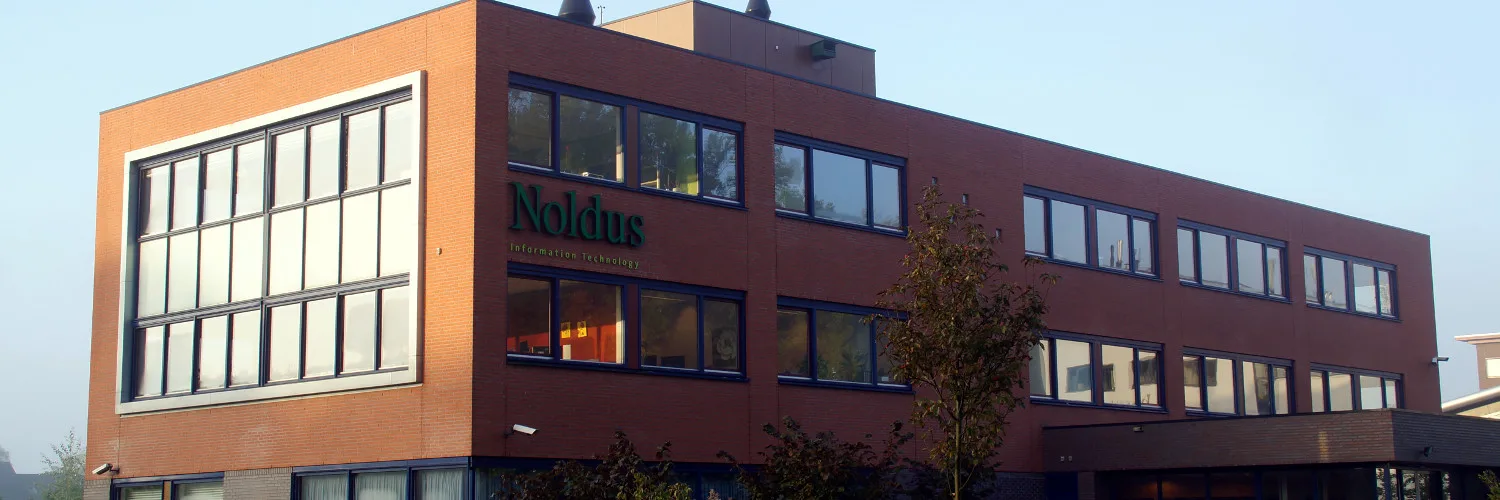
Noldus IT
Noldus IT develops and supplies measurement and analysis systems for behavioural research worldwide. "In doing so, we make an important contribution to relevant themes that improve the quality of life of humans and animals," says founder Lucas Noldus. During his PhD research, he laid the foundation for the current portfolio with the development of the first computer programme.
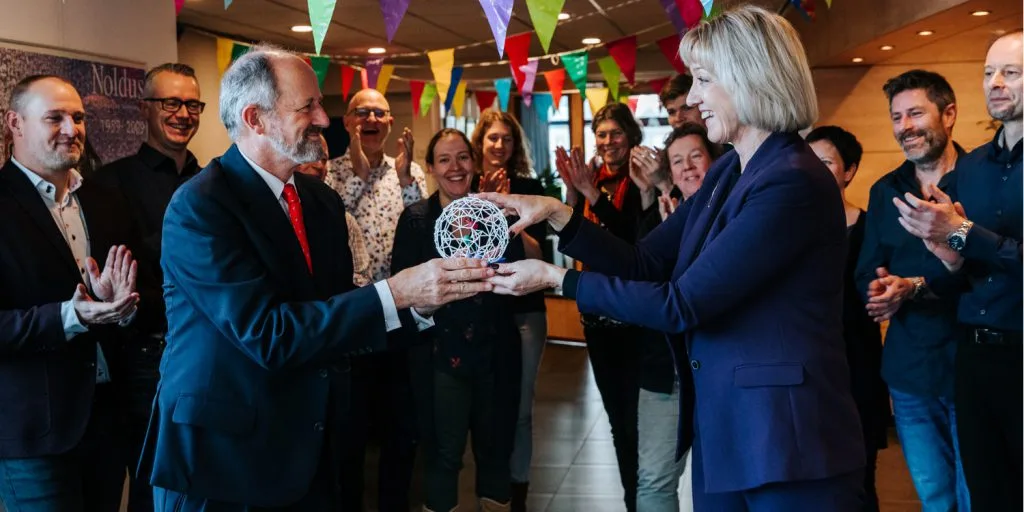
The company was nominated by partner i3B, cluster organisation of ICT companies and knowledge institutes dealing with Brain, Body and Behavior.

 Nieuwe Kanaal 5, 6709 PA Wageningen
 info@noldus.nl
 +31 0317 473 300
Human and animal life
Noldus IT is involved in research to find new drugs, promote healthy food choices and diagnose developmental disorders more objectively. The company also supports research in which a living environment can be designed in which people can remain happy and independent for as long as possible.
"We are also working on the farm of the future. A recent example is a pigsty we helped develop where a tracking system with sensors ensures that pigs root for food and defecate and urinate in a different place. This increases animal welfare, productivity, meat flavour and reduces nitrogen emissions." With another initiative, Noldus is helping to minimise the use of laboratory animals. By making measurement systems increasingly intelligent, observing animals in their natural environment and finding a valid animal model.
Advanced software and hardware
For universities, government institutions and large companies such as Boeing, Nestlé and Aegon, Noldus translates research questions into solutions. Advanced software and hardware is developed to set up complete observation and usability labs. "Each research requires its own approach. To put our customer at the centre of this, personal contact is paramount. That contact is also important to train customers in the use of the systems so that they can carry out the research independently. And if they do not have this knowledge in-house, Noldus Consulting can advise and support clients in this regard."
Bridging the cultural barrier
Noldus works mostly internationally, such as in the United States and China. The company tries to bridge the cultural barrier this entails by staffing its offices with locals. Although most of its clients move abroad, the company has deliberately chosen to stay with its headquarters in Wageningen. "We are wedded to this place. We also work a lot with regional partners such as Wageningen University & Research, members of Foodvalley, as well as Radboud University."
Noldus has invested in this location by making its head office completely sustainable. As a result, the company was named the most energy-efficient company in all of Wageningen. "All lighting has been replaced with LED lighting, the roof is full of solar panels, a sustainable climate system has been purchased and the company grounds have been turned into a park-like garden. We have also joined the Wageningen Werkt Duurzaam foundation to work jointly on sustainable mobility."
Off the beaten track
Because Noldus always wants to develop unique products and services, it encourages its employees to come up with new ideas and go off the beaten track. Everyone is allowed to spend five per cent of their time on non-task-related activities, such as reading, browsing, experimenting and self-study. Ideas are posted on the Noldus Idea Database. All colleagues worldwide can access it and give their vote. The proposals with the most points are picked up for process improvement or idea development.
Another initiative to stimulate innovation is the monthly Innovation Fair. "Developers present their prototype here, from green to very mature. The beauty of this is that they can show their design to customers and vendors at an early stage and receive feedback before we go to market."
User-friendly digital society
A major challenge for Noldus is to scale up techniques developed for scientific research. Think of making pig sensor technology suitable for farming practice. This requires making the equipment more robust, compact and cheaper. This further development also applies to techniques that analyse human behaviour.
"We are becoming increasingly dependent on digital interfaces. For example, there are hardly any bank shops anymore. At thousands of banks and insurance companies around the world, a lot of work still needs to be done to make digital applications more user-friendly. Our research resources can be of great help in this regard. That is why we invite these and other organisations to take a look at our usability labs and come and do a trial free of charge."