

Food and Cognition
The Food and Cognition project was initiated by highly renowned research institutions. This project is an inspiring example of how crossovers between sectors, in this case Food and Health, lead to new insights and connections. The institutions involved in the project already enjoy international acclaim. The project works closely with the regional business community. The benefits of this cooperation are numerous for both business and knowledge institutions.
This allows the business community to benefit from the international reputation and knowledge of research institutes such as the Donders Institute. In turn, the knowledge institutions can use the practical experience of the business community. Let this project be an example and inspiration for regional institutions to cooperate more multidisciplinary.
Programme coordinator Esther Aarts therefore received the Pearl Award for the Food and Cognition research programme from then The Economic Board director Sigrid Helbig on 10 January.
 Kapittelweg 29 6525 EN Nijmegen
 info@donders.ru.nl
 +31 024 361 0877
About Pearl Food and Cognition
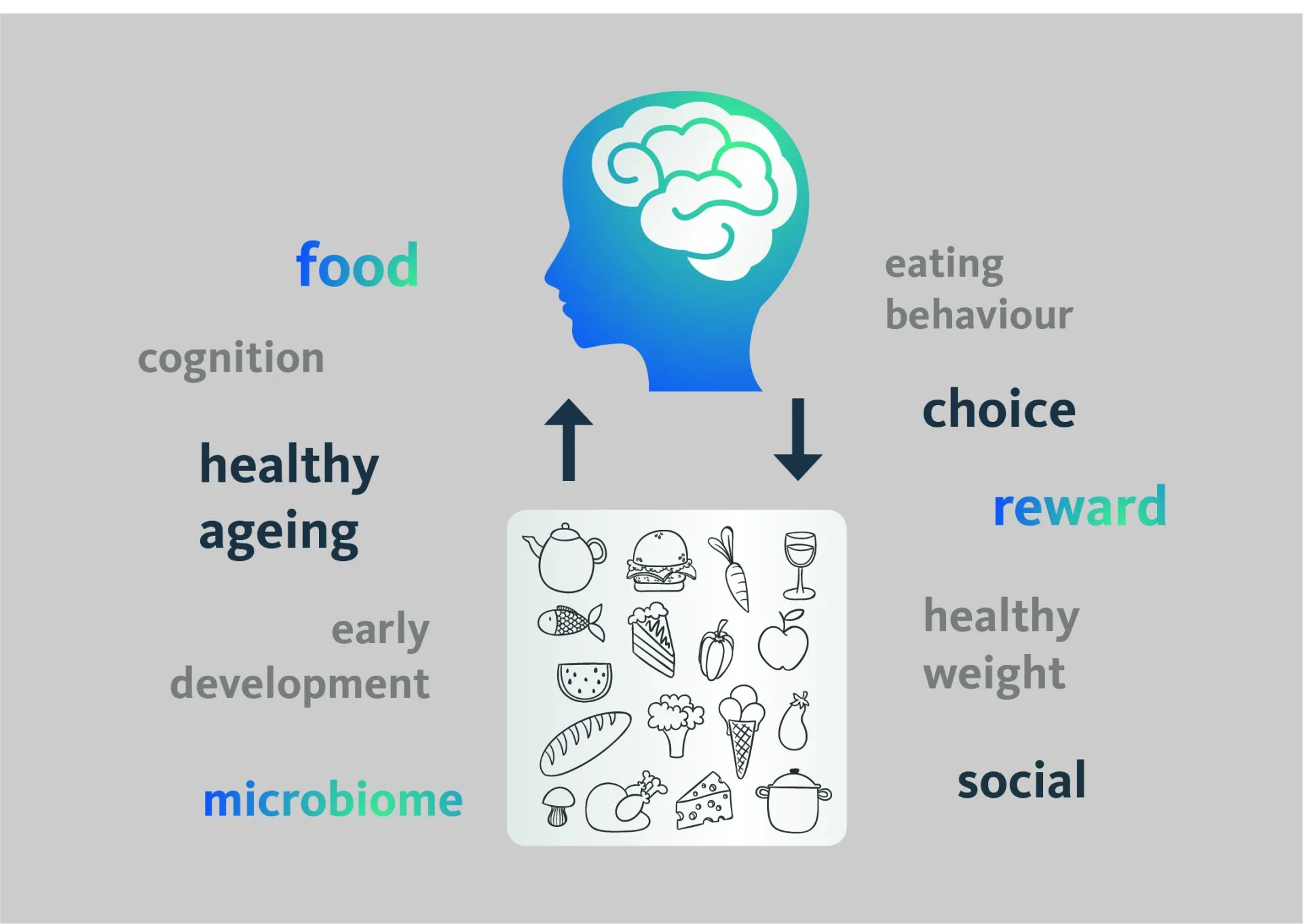
Within the Food and Cognition programme, scientists from Radboud University, Radboudumc, Donders Institute, Max Planck Institute and Wageningen University & Research, and companies investigate how food affects our brain. Conversely, the influence of our brains on the choices we make for healthy versus unhealthy food is being investigated. The benefits of this collaboration are numerous for both regional businesses and knowledge institutions.
It can be done
The The idea for this research programme originated as early as 2009 and has been part of the Healthy Brain programme. “We couldn’t have done this on our own,” says Esther Aarts, content coordinator for Food and Cognition. "In Nijmegen, we are good at cognition. But to study the influence of food and drink on our brains, we also need knowledge of nutrition. They are very good at that at Wageningen University." Professor Kees de Graaf, who researches the influence of senses on eating behaviour at WUR, is enthusiastic about the relationship that has developed between the universities. "Although the culture differs between the campuses, the collaboration with top people in the field of cognition offers a lot of inspiration and new possibilities. As a result, you get "the best of both worlds”. For example, it helps us to interconnectivity “to understand the different areas of our brain, enabling us to better encourage healthy eating habits.” The research programme now spans the entire campus of these two universities and beyond. “International partners of the institutes are also being involved,” says Esther Aarts.
Pioneering
The cooperation between the RU and WUR was recently laid down in a declaration of intent and is taking increasingly concrete forms. The two universities, together with other Dutch universities and industry, have submitted a crossover proposal to NWO to conduct research on the influence of nutrition (and lifestyle) on cognitive decline during the ageing process. "Together, we want to address socially relevant problems, not only when it comes to this topic, but also with regard to obesity, brain development and depression." Everyone will provide their own expertise within that research. For example, the RU measures people's brain functionalities as they age, the WUR knows a lot about the influence of nutrition on the ageing process, and the University of Twente is investigating how we can use e-health to ensure that elderly people stick to a dietary pattern. "It remains to be seen whether we will be allowed to do that, but it is already groundbreaking that we are working together," he says.
Agenda-setting in the region
Also unique is the collaboration with companies in the region, such as with SMEs and larger industrial parties. "As universities, we pull together with industry and social parties. Although we are not limited to Gelderland and Overijssel, the agenda does come from this region." The importance of this collaboration is seen. A grant has been awarded to the programme by the European Regional Development Fund (ERDF) to further develop regional cooperation. This will allow the programme to start agenda-setting and further develop business cases with industry in 2019. The business cases do not focus on increasing commercial success. "This is pre-competitive research and is relevant to the whole industry. Questions addressed include, for example, how to identify the right target group and how to determine which food is good for this group." Companies that participate will have first access to the results. "Eventually, of course, these will become public so that everyone can use them for their own healthy food product or lifestyle advice."