The adventure of Orikami began in a student room in Nijmegen; the company has since become a pioneer in developing algorithms to interpret data that patients often collect themselves at home.
Bram den Teuling, co-founder, studied biophysics at the intersection of neuroscience and AI. He talks about this remarkable company, which is still based in the centre of Nijmegen.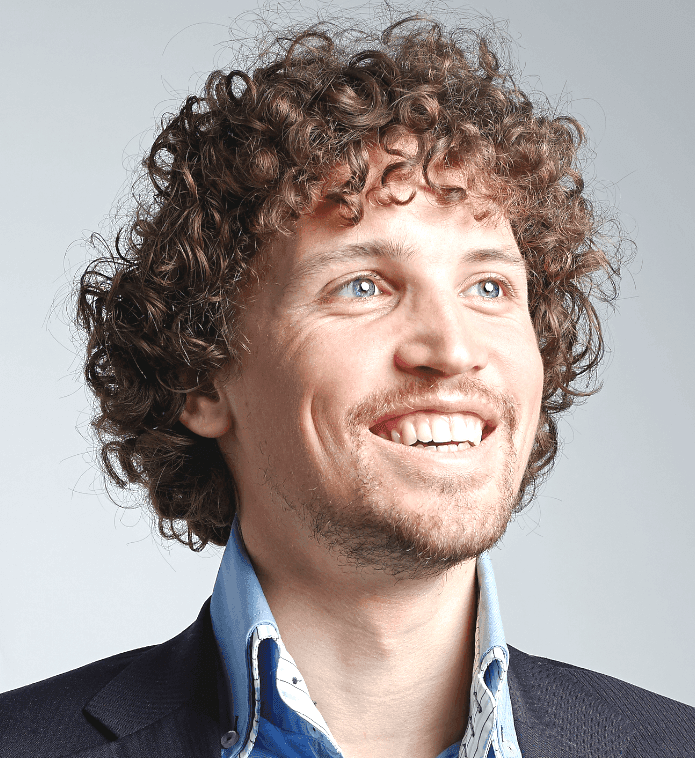
A continuous picture of your health
What began as a broadly focused data technology company has grown into a specialist in personalising care pathways and facilitating medical research from home.
“We create solutions that enable you to make better treatment decisions using data and smart technology,” explains Den Teuling. “All sorts of information, from questionnaires and walking tests to EEGs, can serve as interesting digital biomarkers for us. The most important thing is that we can link them to (treatment) action.”
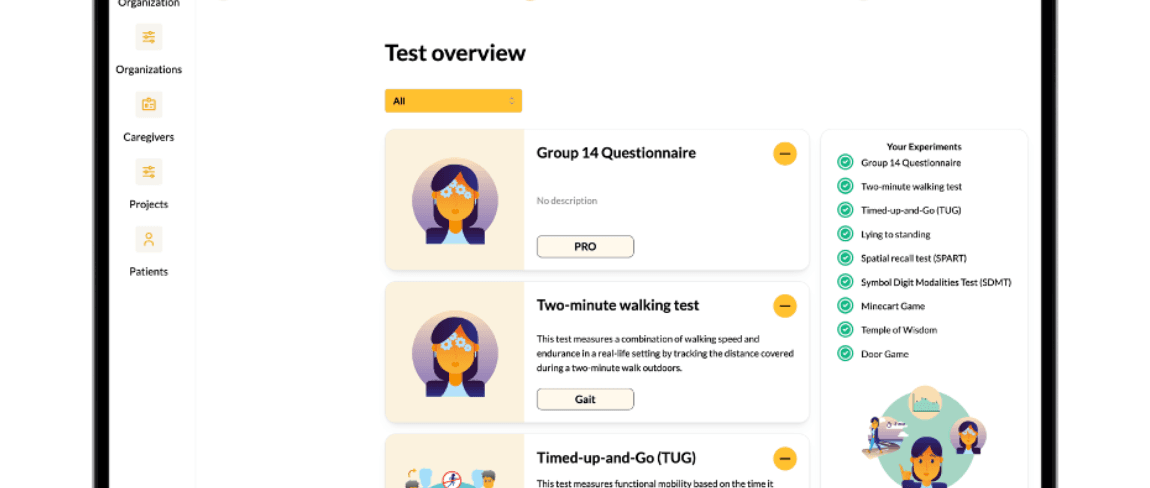
MS Sherpa is now on the market – an app that enables people with multiple sclerosis to monitor themselves at home through cognitive tests, walking tests and questionnaires. Instead of just one annual consultation with a neurologist, it provides a continuous picture of their health. “Doctors used to say: ‘A patient says they’re getting worse, but I can’t prove it.’ With MS Sherpa, that’s possible, and it leads to better and faster decisions on medication.”
Certification as key to reliability
MS Sherpa was eventually spun off and sold, allowing Orikami to focus on broader applications. “We wanted to work on a generic basis, but it took much longer than expected to bring Sherpa to market,” says Bram. “Ten years on, things are only really starting to take off.”
In recent years, regulations have changed drastically. From the introduction of the GDPR and MDR to the AI Act and stricter cybersecurity requirements. “That makes it complex, but also necessary,” says Bram. “You don’t want to make decisions based on algorithms that aren’t reliable.”
Orikami distinguishes itself, amongst other things, through its certifications in the areas of quality and information security, enabling it to bring medical algorithms to market more quickly. “Obtaining the right certifications for this technology takes years, but it makes us unique. There are only a handful of organisations worldwide that can and do this.”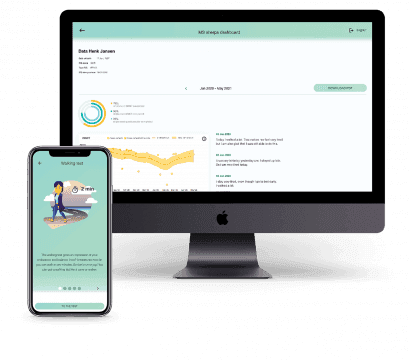
Software platform
This experience led to the development of a software platform called Krane, which enables new digital biomarkers and medical algorithms to be built and used more quickly and efficiently. “We believe that in five to ten years’ time, algorithms will play a central role in healthcare. People will be monitored at home and will only go to hospital when it is really necessary.”
Orikami is currently working on applications in oncology, focusing on the question of whether older patients can still cope with intensive treatments. There are also projects relating to depression, ADHD and a bed sensor for pressure ulcer detection.
Three customer groups
Orikami's platform serves three types of customers:
- Research organisations such as TNO, which conducts all its medical research via the platform. Krane is particularly relevant for modern research involving data from multiple sources, where algorithms and feedback form part of an intervention or digital biomarker.
- Medical device companies such as HeartEye, which uses Krane as a secure cloud and has its heart rhythm data analysed via the platform.
- Hospitals and clinics: where brilliant algorithms are often developed, but a partner is needed for certification and implementation.
“Hospitals are not equipped to certify software as a medical device,” explains Bram. “We provide that intermediate layer: secure, certified and scalable.”
Scalable and user-friendly
As well as reliability, scalability is a key advantage. “Building a product that can be used by a hundred thousand people is much cheaper than hiring extra staff,” says Bram.
User-friendliness is also a key priority. “We develop our products in collaboration with patients, including older people. We’ve found that most of them are digitally literate enough. Of course, there are also people who struggle with it, but we spot that straight away, so we can remove them from the system in good time.”
In collaboration with Radboudumc, a study is even underway involving elderly people in care homes. “Average age: 86. And yet many people were able to use it perfectly well.”
A platform with a future
What makes Orikami unique is that it not only supplies technology, but also has the experience to actually put that technology into practice. “We know where the pain points lie, how to get something reimbursed, how to keep refining an algorithm, how to carry out maintenance and provide service. It’s not a matter of putting something online once; it’s an ongoing process.”
Over the course of its many years of development, Orikami has therefore laid a solid foundation, built a scalable platform and established a clear vision for the future of healthcare. The company is now ready to grow further.
“We’re now rolling out our platform more widely and selecting our partnerships strategically,” concludes Bram. “We’re seeing that more and more organisations want to work with us to make healthcare smarter, more personalised and more efficient.”
Nijmegen as home base
Orikami is based in Nijmegen. “It’s a lovely city to work in, with plenty of talent,” says Bram. “In the past, people with AI expertise would move to the Randstad, but we offered an alternative here. We still receive lots of unsolicited applications from people who’d like to stay in the region.”
Local institutions such as Radboudumc, HAN University of Applied Sciences, ROC and initiatives such as Briskr and Health Valley form a useful ecosystem. “We’ve taken on interns, attended and run workshops. And MS Sherpa is now based at the Novio Tech Campus.”