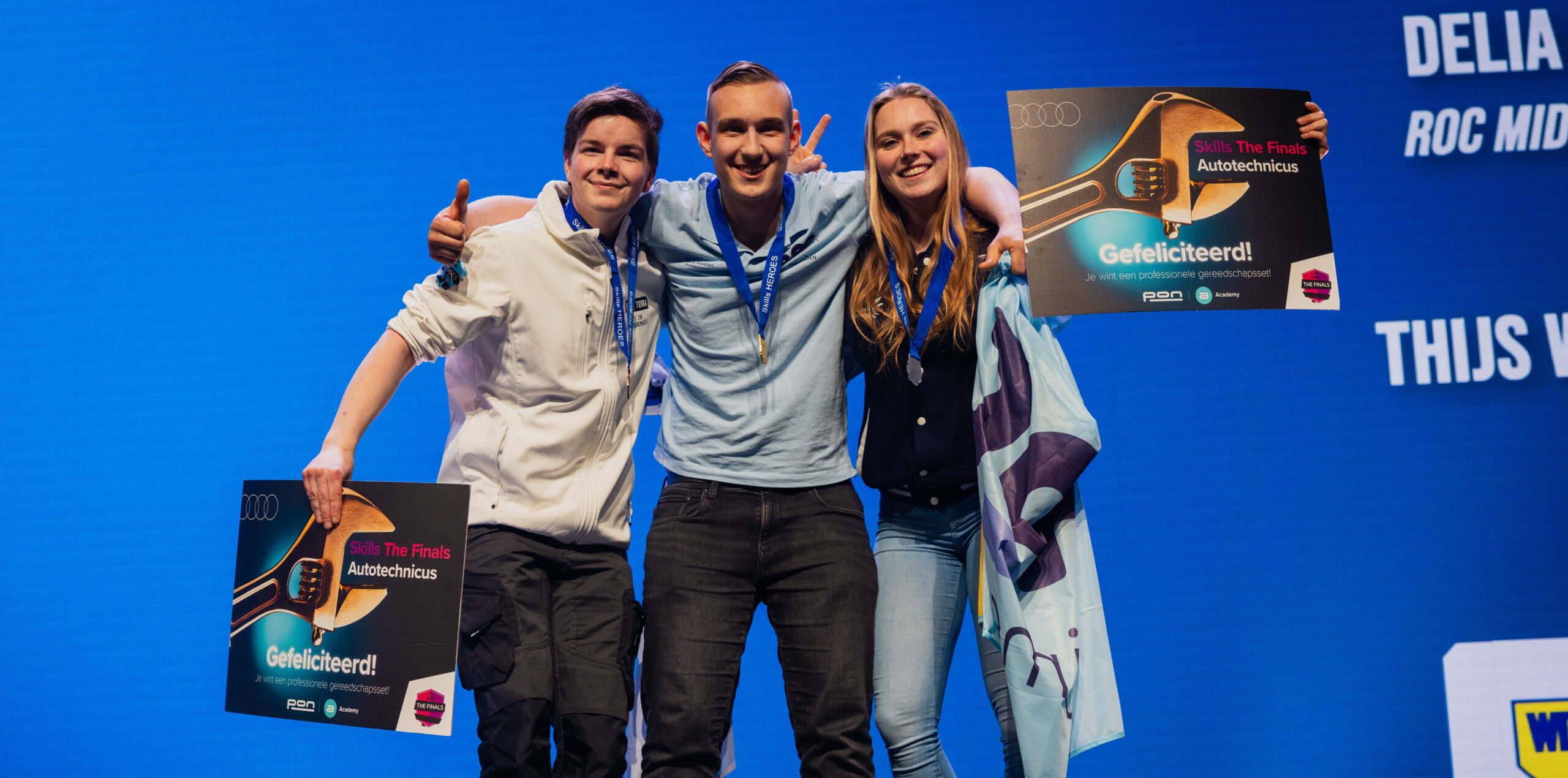
Cars are becoming increasingly smart and, as a result, more complex. Faults are not always easy to pinpoint. It is precisely when a fault is difficult to diagnose that the real work begins for the Automotive Engineering student at ROC Nijmegen. This approach took Nick Joosten to the WorldSkills competition in Shanghai this autumn, where he is representing Team Netherlands.
Sometimes a car has already been to several garages. Mechanics have inspected the car, replaced parts and read out fault codes. The car? It still does exactly as it pleases. That’s when the best part of Nick Joosten’s (20) job really begins. Where others see a dashboard full of warning lights, he sees a puzzle waiting to be solved. Not by guessing, but by thinking logically, taking measurements and making connections. It is precisely this challenge that made him a two-time Dutch champion in Automotive Technology.
Every fault tells a story
It came as no surprise that Nick chose a career in engineering. His father worked with large machines, so engineering was never far away at home. Yet Nick soon discovered that he preferred working on passenger cars. It wasn’t the mechanical tinkering itself, but rather the process of identifying the cause of complex faults that appealed to him most.
“When several engineers can’t pinpoint a fault and I eventually manage to do so, it really gives me a sense of satisfaction,” he says. Faults that occur only occasionally, in particular, require patience, specialist knowledge and a keen eye for detail. For Nick, that is precisely what makes the job so rewarding.
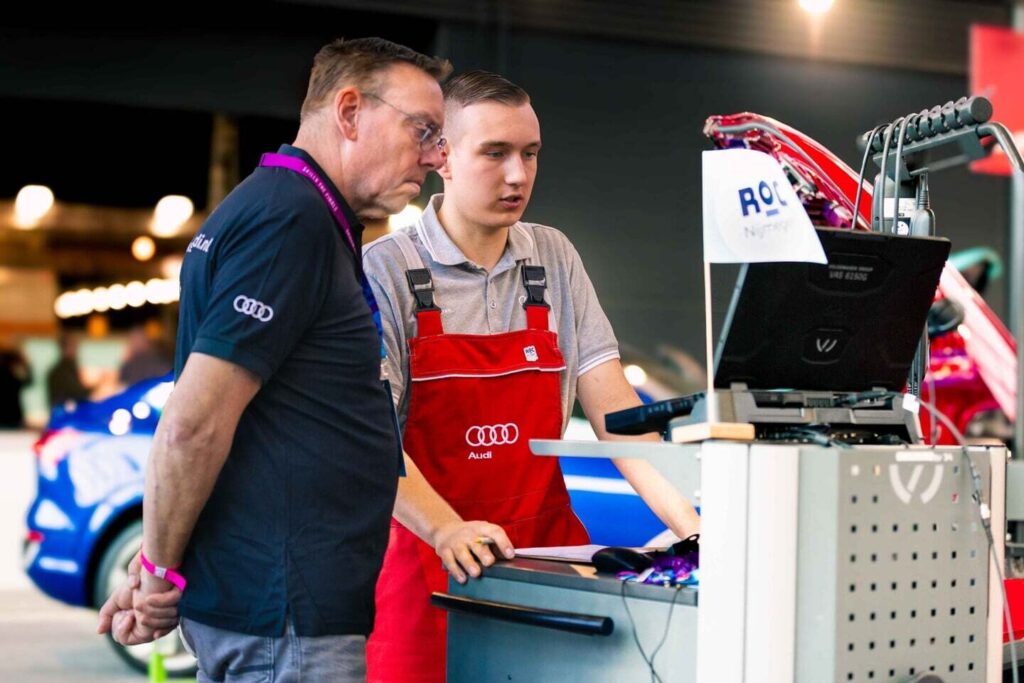
Nick Joosten
Photo credit: ROC Nijmegen
The car is becoming a computer on wheels
Anyone who thinks an automotive technician mainly spends their time under the bonnet with a spanner is mistaken. These days, you’re just as likely to find a laptop next to the car. Sensors, software, high-voltage systems and digital diagnostics are increasingly shaping the nature of the work. For Nick, this isn’t a distant prospect, but everyday reality. Modern cars are essentially driving computers – they just happen to have four wheels as well.
That is precisely why Nick continues to develop his skills. Whilst preparing for WorldSkills, he is being mentored by Rob Janssen. As well as training at companies, he also attends courses both at home and abroad. For example, in Shenzhen, he worked alongside participants from sixteen countries on projects in the fields of mechanics, electronics and high-voltage technology. “Actually, you have to ask yourself: what don’t you need to learn anymore?” he says with a laugh. “There’s so much new technology emerging. If you stand still, you’ll soon fall behind.”
Calm beats speed
As well as technical expertise, WorldSkills is also about coping with pressure. Nick learnt this during previous international competitions. He now receives mental coaching from WorldSkills Team NL to help him stay calm even under time pressure.
“When I get stressed, I sometimes overthink things,” he says. By drawing up clear step-by-step plans in advance and focusing entirely on his own task, he keeps a cool head. His goal for Shanghai is therefore both realistic and ambitious: to win a Medal of Excellence, the international recognition for outstanding craftsmanship.

Team NL is on its way to Shanghai
Photo credit: The Creators Hub – Sanne Marcellis – WorldSkills Netherlands
Technology that drives the region forward
Nick dreams of setting up his own diagnostics company in a few years’ time. A logical next step for someone who loves nothing more than solving the most complex technical puzzles.
This ambition is in line with developments in the Lifeport Arnhem-Nijmegen region. Tomorrow’s mobility requires skilled workers who do not merely replace parts, but who understand complex electrical and digital systems. From smart vehicles to the energy transition: technology is evolving at breakneck speed, and companies need professionals who continue to learn and adapt to new innovations.
Nick demonstrates what this looks like. Curious, eager to learn and always looking for the root cause of a problem. In doing so, he not only represents the Netherlands at WorldSkills, but also a new generation of technicians who are indispensable to the region’s future. Or, as Nick puts it himself: “You never really stop learning.”
Lifeport Human Capital Agreement
Nick’s story illustrates what the Lifeport Human Capital Agreement stands for. Under this agreement, educational institutions and entrepreneurs work together to produce well-trained professionals capable of meeting the challenges of tomorrow. By identifying talent early on, challenging young people and forging close links between education and the business community, a region is created where people can develop and businesses can continue to innovate.
Further information on the Lifeport Human Capital Agreement can be found at: Human Capital Agreement.