Plans for Smart Energy Hubs are emerging in more and more business parks. The Lifeport region wants to lead the way in this, which is why there are several pilots. Entrepreneurs participating in them see it as part of the solution to the problem of grid congestion. Remco Rutgers of AVR and Niels Straub of Duynie also see more benefits than obstacles.
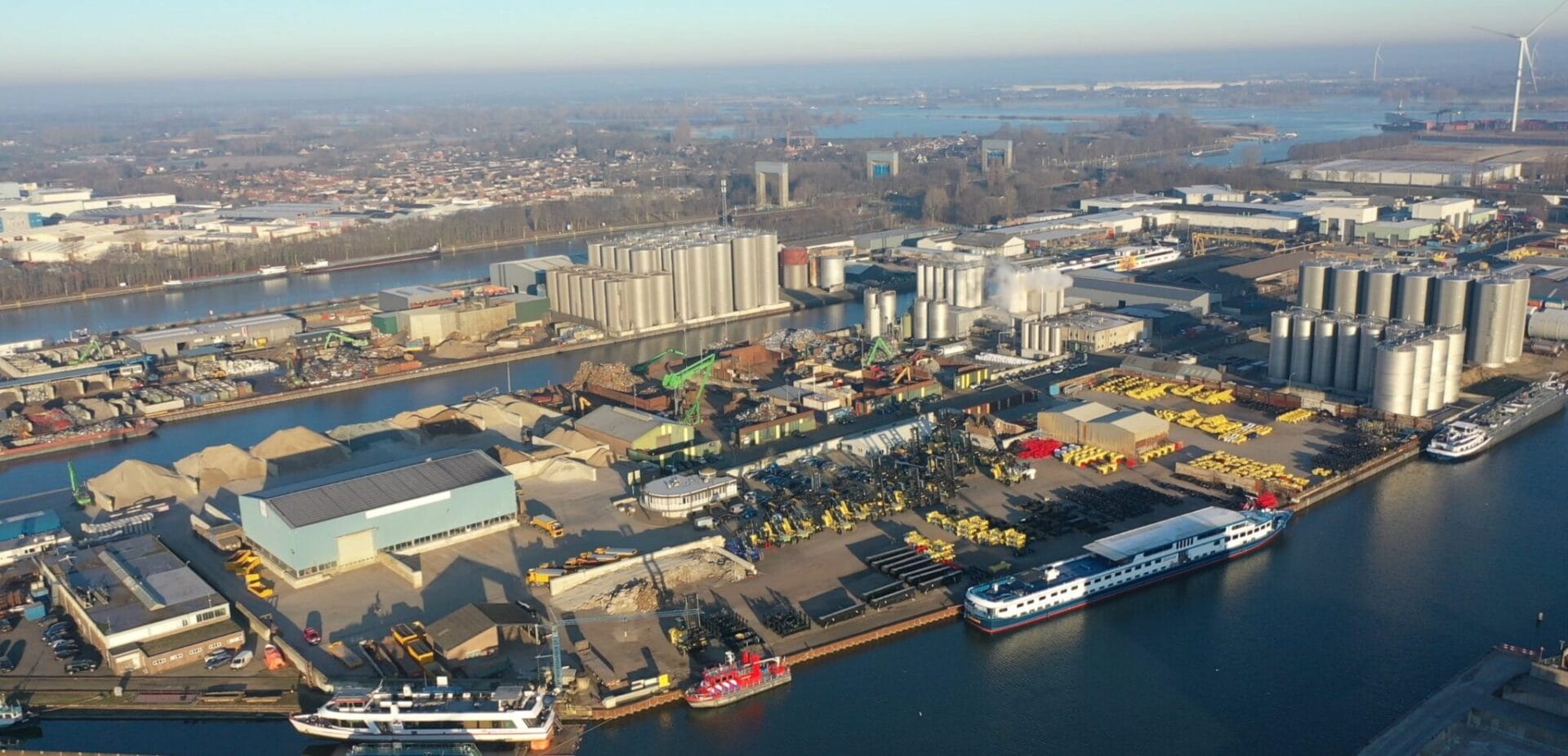
Put simply, Smart Energy Hubs are partnerships designed to coordinate the production and use of energy at a local level. Work is well under way to establish these at several business parks, such as the InnoFase synergy park in Duiven. In February 2023, 17 parties signed a letter of intent for a pilot project.
During a previous interview, Mayor Hieltjes of Duiven explained the added value of a Smart Energy Hub at InnoFase. “InnoFase generates energy locally using solar panels and wind turbines. You want to use that energy locally as much as possible, so as not to place a burden on the national high-voltage grid. Such collaboration ensures much greater efficiency. You could even say it’s essential, because companies looking to grow are now often reaching the limits of the electricity grid.” But there’s quite a lot involved, he added: “If you’re collaborating within a Smart Energy Hub, you have to be transparent about when you need energy. That requires legally binding agreements.”
Grid congestion brings businesses together
One of the companies at InnoFase is waste processing firm AVR. Remco Rutgers is the site manager at this location, which has been in operation for almost 50 years. “Sustainability is very important to us,” he says. “For example, we built an LCO₂ plant to capture CO₂, and at InnoFase we supply steam and electricity to the recycling company 4PET. We’re always looking for ways to improve and want to be top of the class.”
A Smart Energy Hub fits perfectly into that ambitious picture. But actually it is just a necessity, says Rutgers. "Grid congestion is an issue that binds many entrepreneurs. Several companies want to expand and need more electricity, but cannot get it. The arrival of new solar parks is slowed down because they cannot be connected to the grid either. We ourselves need extra power at certain times, but that too is very difficult now."

Remco Rutgers
Greater certainty
“We have jointly examined the combined consumption of the businesses and their future plans,” says Rutgers regarding the current status of the Smart Energy Hub. “That assessment is now almost complete. After that, a co-operative – yet to be formed – will look at the bottlenecks and how they can be resolved. This could be done, for example, by creating our own buffer capacity within the network or by coordinating consumption amongst the co-operative’s members.”
But it is not a certainty that everything will come around, he says. "Ultimately, there has to be a joint group contract and that is quite exciting. Based on that, companies will decide whether to get in or not. As an individual company, you might lose something, but you also get something in return. That has to be in proportion to each other. I hope we come out of it together, because it gives us more security towards the future. Moreover, we are happy to contribute to developing something that will benefit the environment."
Working with neighbours
It is not only in Duiven that work is underway on a Smart Energy Hub. At TPN-West, on the outskirts of Nijmegen, 15 parties signed a letter of intent in April 2024. One of them is Duynie, an international company that adds value to co-products from the food industry by using them for various applications: food, feed, pet food, technical and energy.
Niels Straub is Supply Chain Manager and branch manager of the site at TPN-West. "We have strict targets for CO2 emissions," he points out. "As a result, we are in transition as a company and have a strong demand for electricity. But that is hardly available."
So grid congestion is also a challenge for Duynie. Straub: "We ourselves are now almost full in terms of capacity. We don't start up the machines at the same time to avoid peak load. Nor can we opt for several electric trucks, for instance, because the load on our own grid would then become too great. That while the neighbour might have power left over, but we are not allowed to use it. We would like to become more sustainable, but this is holding us back. If you can cooperate with your neighbours in this, it can be very interesting."

Niels Straub
All pulling in the same direction
“Collaboration is possible through a Smart Energy Hub, but at TPN-West we’re also looking into setting up a district heating network,” he adds. “I think it’s a great challenge to see whether we can achieve more together than we can alone. We are currently working on the articles of association and the other legal aspects for the Smart Energy Hub.”
He believes in its potential. "The entrepreneurs involved definitely have their noses in the same direction. We are aware that something has to be done. Congestion is holding back many entrepreneurs in their ambitions. So why not start working together, even if you sometimes have to put your self-interest aside a little to do so?"