With the following initiatives, we connect talents and companies, challenges and solutions, learning and innovation, education and career - to build together on the future of semicon in the Lifeport Region Arnhem Nijmegen. With this, we are taking steps towards realising the objectives of the Lifeport Semicon Talent Plan: training over 6,000 talents for the semicon sector.
ROC Nijmegen kicks off challenge-based learning in Lifeport
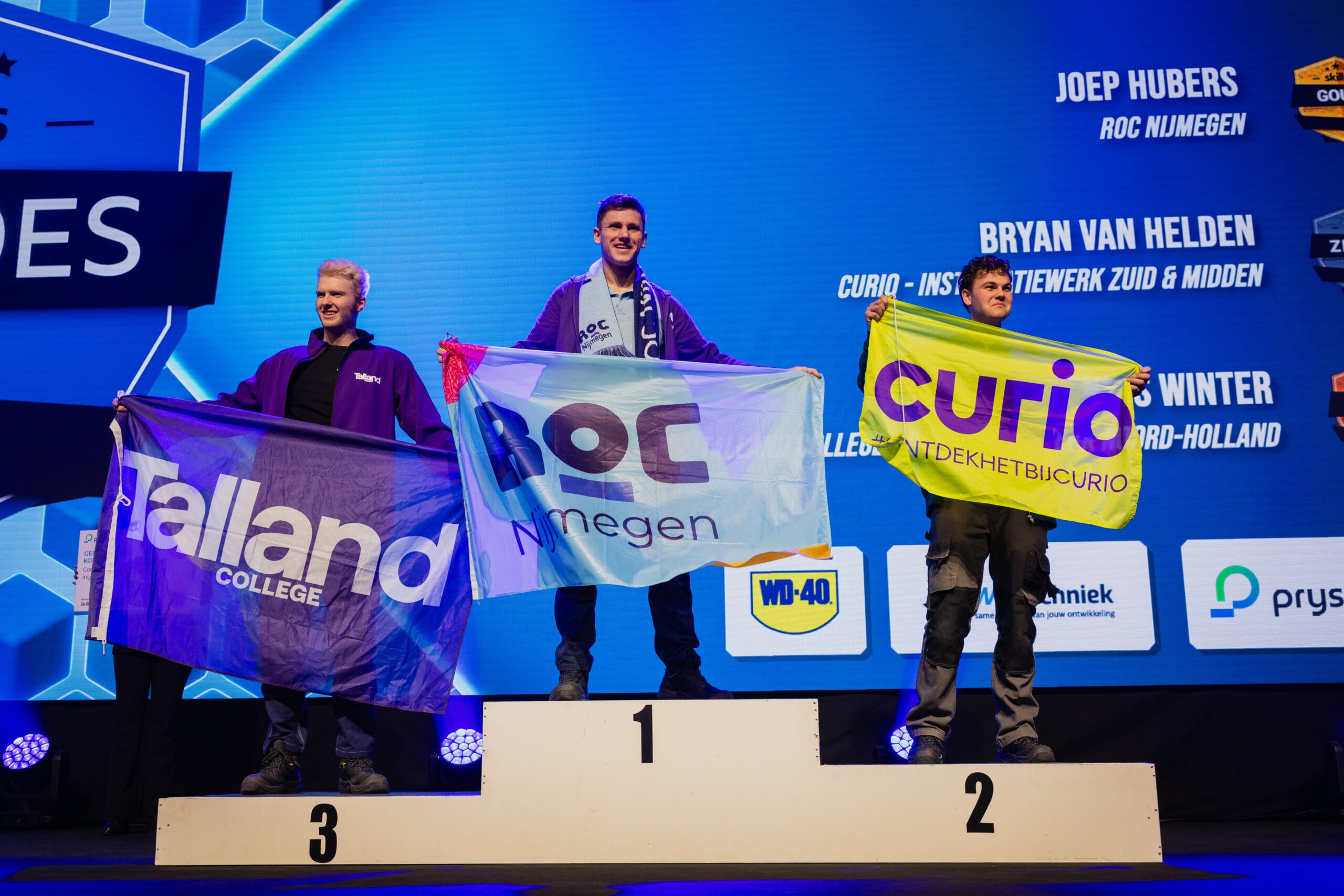
In the week of 25 August, we began the first company visits and Challenge-Based Learning sessions as part of the Lifeport Semicon Talent Programme. Over 100 first-year engineering students from ROC Nijmegen – studying Engineering, Mechatronics and Construction – visited the Noviotech Campus during their induction week. Here, the students were introduced to the world of the chip industry. They also visited NXP Semiconductors, Nexperia and ITEC, where they worked with experts to explore the challenges of today and tomorrow.
ITEC challenges HAN students: AI-driven process optimisation in the Semicon
On Tuesday 2 September, the project pitches for the HAN minor in Embedded Vision and Machine Learning took place. This was an excellent opportunity for semiconductor companies in the Lifeport region to introduce students to pressing issues facing the chip industry.
ITEC manufactures machines for the semiconductor industry. This high-speed, advanced ‘pick and place’ equipment can align 20 chips the size of a grain of sand per second, check them for defects such as cracks, and place them into the packaging strip. The machines are equipped with numerous cameras that ensure precise positioning and quality control. At present, machine operators still have to set many parameters manually. Will the HAN students succeed in using machine vision to automatically adjust the optimal settings and improve the inspection process via an AI algorithm?
NXP Semiconductors is also setting the students a challenge. A team of HAN students is building a self-driving car that recognises obstacles and completes the NXP Cup course as quickly as possible. Last year, the HAN students reached the final and finished tenth out of more than two hundred teams. Will they manage to improve on that result this year?
Solar parks, wheelchairs and pruning robots - Radboud University students give technology a smart twist
On Monday 8 September, students on the Computer Science programme at Radboud University took part in Challenge-Based Learning as part of their ‘New Devices Lab’ module. To this end, OnePlanet OpenEd, as part of the Lifeport Semicon consortium, organised a series of pitches.
Various companies presented their challenging problems at the intersection of chip technology and other sectors such as healthcare, agriculture and energy. Examples include a safe smart wheelchair that can be easily operated by people with tremors, a smart mirror for providing health data feedback, a bird detection system for floating solar parks, and a positioning system for the shears of an autonomous pruning robot. The students now have 16 weeks to work in pairs to develop a new device that offers a suitable solution to these challenges.