
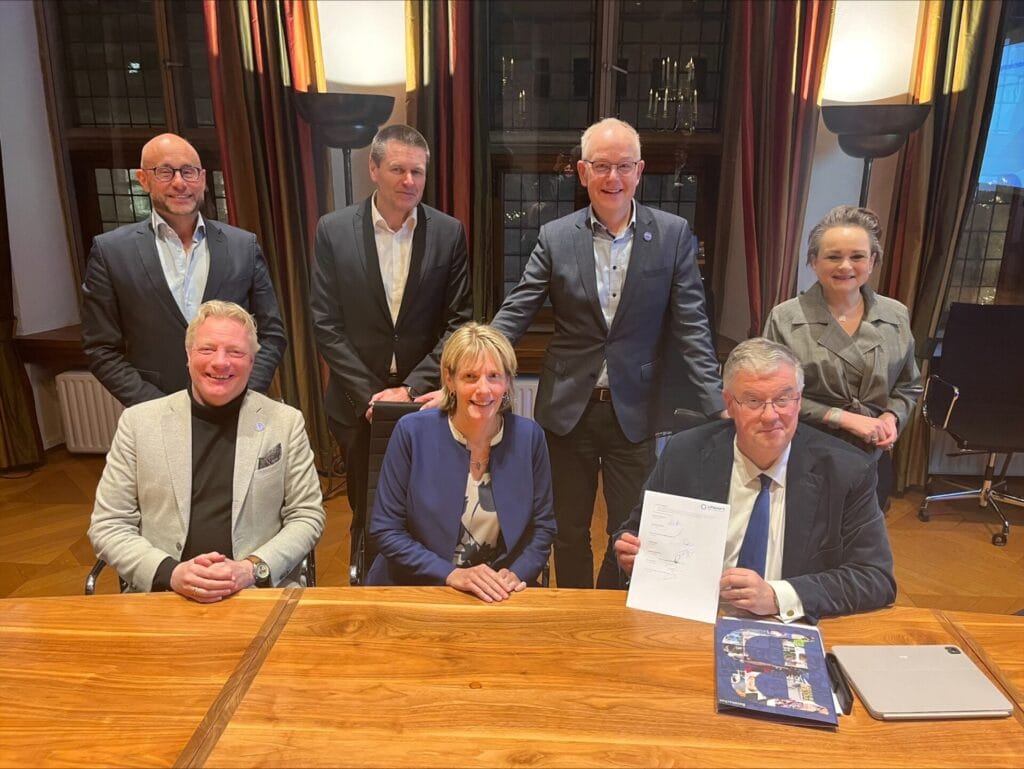
The Regiegroep Lifeport Semicon presents a joint investment agenda towards 2034 to structurally double the Dutch chip sector's development, research, production and test capacity in semiconductors. The agenda represents an ambition of around €1.1 billion in public and private investments in the coming years.
The Gelderland region is home to the only large wafer factory (production of chip plates) in the Benelux. Together with the available knowledge on chip production, research, packaging technology and machines, this forms a complete chain. This makes Lifeport Semicon one of the few places in Northwest Europe where chips are not only designed, but actually made.
According to the initiators, this is essential to keep the Netherlands economically and strategically competitive in a market in which hundreds of billions of euros are invested worldwide. With this investment, the ambition is to more than double the turnover in the Lifeport region to 8 billion.
To actually realise this economic growth and strategic position, the partners focus on a number of crucial pillars:
- Preservation and future-proofing of 8-inch wafer production
- Realisation of an Advanced Chip Packaging Pilot Line
- Scaling up of production capacity
- Strengthening technical talent
- Securing energy and space infrastructure
National positioning
Hubert Bruls, mayor of Nijmegen and chairman of the Lifeport Semicon Regiegroep:
"We are not talking about a regional project here, but a national economic position. If the Netherlands takes strategic autonomy seriously, that includes production capacity. In our region, chips are actually made. With this investment agenda, we are laying down a joint ambition towards 2034."
Competitive position under pressure
The global semiconductor industry is the scene of substantial state investments. The United States and Asian countries are spending billions to bring back production. Germany and France are also investing heavily in new fabs (fabrication facilities).
Economic impact
The plan envisages a doubling of the cluster by 2034, growth of high-quality employment, strengthening private R&D investments and increasing export value and regional added value.
The total investment requirement of €1.1 billion consists of a combination of private investment, national resources and European co-financing. According to the initiators, every euro of public investment generates a multiple of private investment and the cluster strengthens the wider high-tech ecosystem in the eastern Netherlands.
Innovation knowledge institutions
Based on this ambition, we also work to strengthen talent, which grows along with it.
Alexandra van Huffelen, chair of the Radboud University Executive Board: "From the knowledge sector of MBO, HBO and university, we support this initiative and contribute in the development of highly energy-efficient chips, of systems that strengthen our digital sovereignty and enhance the development of values-driven AI."
Call to The Hague and Brussels
Lifeport Semicon calls on the government to explicitly position the region within national programmes such as the National Technology Strategy and future European Chips Act initiatives.
Doeco Terpstra, managing director NXP and director of The Economic Board: "The Lifeport region has a unique coherent semicon ecosystem that is of great value for the technological autonomy of the Netherlands. If we want to strengthen our position within the European value chain, we need to invest now in the infrastructure, knowledge and innovation power that will make this ecosystem future-proof. Lifeport Semicon is a strategic pillar on which the Netherlands can build economically and technologically."
Balancing ambition and reality
The Regiegroep stresses that the €1.1 billion is an investment agenda consisting of private investment, European funds and possible national contributions. Concrete funding decisions and forms of cooperation will be examined for each project in the coming years. With this agenda, Lifeport Semicon aims to position itself explicitly within national programmes such as the National Technology Strategy and future European Chips Act initiatives.
Bruls: "The world is not waiting. If the Netherlands wants to continue playing a role in semiconductors, we need to set direction now. This agenda is an invitation to The Hague and Brussels to strengthen that position together."