The Lifeport region is traditionally good at green hydrogen. Patrick Cnubben agrees. The Limburger who lives and works in Groningen is considered a hydrogen advocate from the very beginning. On the eve of European Hydrogen Week, we discussed with him what 'the strength of the region' is and what challenges exist.
"There is definitely something going on with the climate," argues Patrick Cnubben. "You can't afford to do nothing. Green hydrogen is certainly not the only solution, you also have to work on other solutions: from wind turbines and solar farms on land and sea to green gas. But hydrogen certainly plays a big role. In doing so, you have to realise that you are now taking the first steps of a long journey. Everything starts with a plan."
Pooling interests
Such plans are emerging in more and more places. To reduce its energy dependence on gas and oil from countries such as Russia, the EU is focusing, amongst other things, on green hydrogen. “By 2030, the EU aims to produce ten million tonnes of renewable hydrogen itself and import a further ten million tonnes,” says Cnubben. Production is the biggest challenge. To this end, ‘Hydrogen Valleys’ are now being established across Europe. Cnubben: “These are regional ecosystems where the entire hydrogen value chain is represented. So the production, storage, transport and redistribution of hydrogen, plus its applications in industry, the built environment and mobility. These are innovation projects, designed to test and learn from them.”
Cnubben was a driving force behind the creation of Europe’s first Hydrogen Valley in the northern Netherlands. Through his own consultancy firm, Hydrogen Architects, he is now helping Oost NL, The Economic Board, the Stedendriehoek Strategic Board and the Twente Board to set up a Hydrogen Valley in the eastern Netherlands. It is to be named Hy East Valley. “It offers many advantages, as it allows you to pool resources. Together, Gelderland and Overijssel not only cover a very large area, but are also situated in a very strategic location. Energy flows such as natural gas and electricity travel from north to south in the Netherlands, whilst logistics flows go from west to east. The eastern Netherlands is situated right at that crossroads. Furthermore, it has North Rhine-Westphalia as a major neighbour, where there is a great need for hydrogen. “If we work together effectively, there is enormous potential in the production, transport and consumption of hydrogen, in technology development and implementation, in the maintenance of installations, as well as in the education and training of sufficiently skilled personnel, from tradespeople to academics.”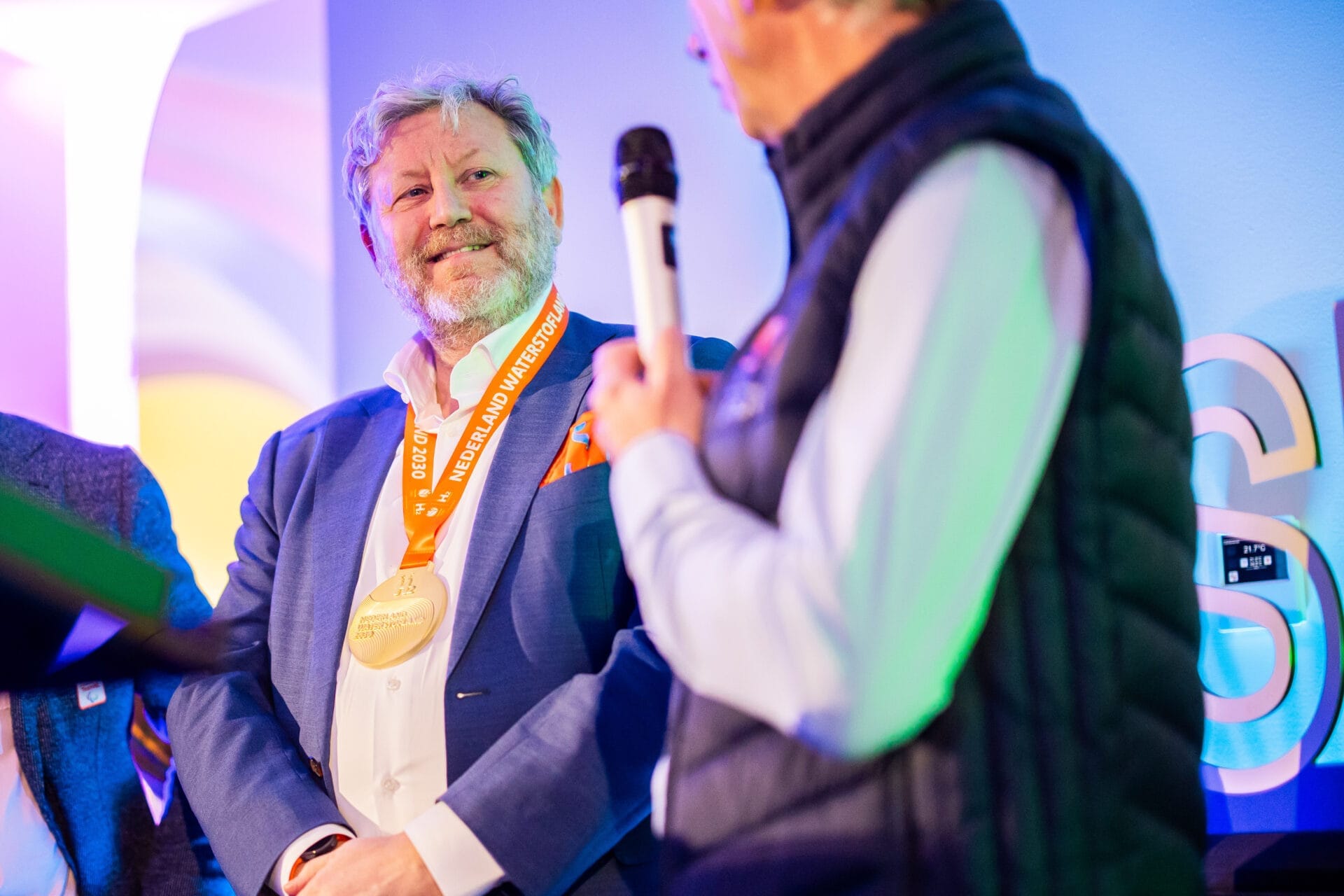
Great prospects
An important step for the Hydrogen Valley is drawing up a ‘business plan’. This will be submitted to the EU in April 2025 with the aim of securing funding. But there is still much more to be done. “It is primarily a matter of linking existing projects, which are often still somewhat insular, with one another. Applications in industry, the built environment and mobility are also very important. A great deal of exciting work is already taking place in this region in these areas, including at the various brick and paper factories. With other interesting industries such as food and high-tech, and the presence of IPKW, the region has great potential.”
It is important for the Arnhem/Nijmegen region and the rest of the eastern Netherlands to have a branch of Gasunie's large hydrogen network, which is under development. Cnubben: "That hydrogen backbone will be a kind of ring line through the Netherlands, connecting the big industrial clusters first. It runs through Gelderland and Overijssel, but no branch to local and regional industry is in the picture yet. It would be ideal to soon be able to feed hydrogen in and of course take it off from that network." An intensive lobbying effort is underway for this, with various parties working together. "I am convinced that this branch line will come, but the only question is when."
Becoming a recognised player
Earlier this year, Cnubben took part in an exploratory mission to Morocco organised by The Economic Board. “You can’t produce all the hydrogen yourself; you’ll also have to import some.” Morocco has ambitious plans for development. “There are various ways to get that hydrogen here.”
"Entrepreneurs in the Arnhem-Nijmegen region are doing very well in the field of green hydrogen," thinks Cnubben. He refers, among other things, to the many hydrogen startups there and the energy cooperation at business park InnoFase. But cooperation at triple-helix level is necessary, he points out. "Otherwise, all sorts of entities work separately on good things, but you don't get anywhere. The work of The Economic Board is very important in this. They do great things with too limited a budget."
European Hydrogen Week, which began on Monday 18 November, is a key moment for the region. “We’re trying to speak to as many people as possible there to raise awareness of our plans and establish a position within the wider hydrogen sector. The Eastern Netherlands is an incredibly strong region. Now it is important to become a recognised and acknowledged player in this field.”