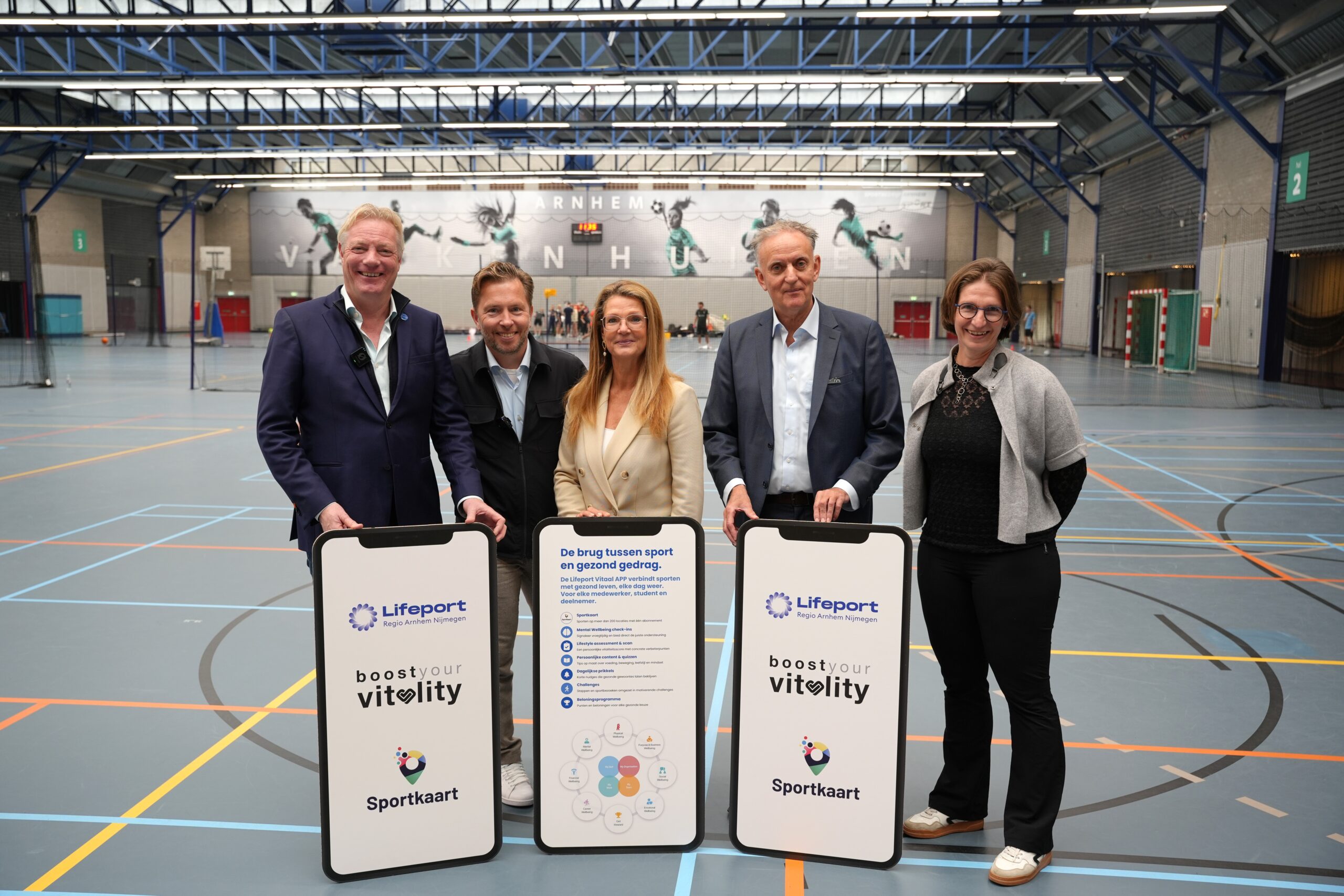
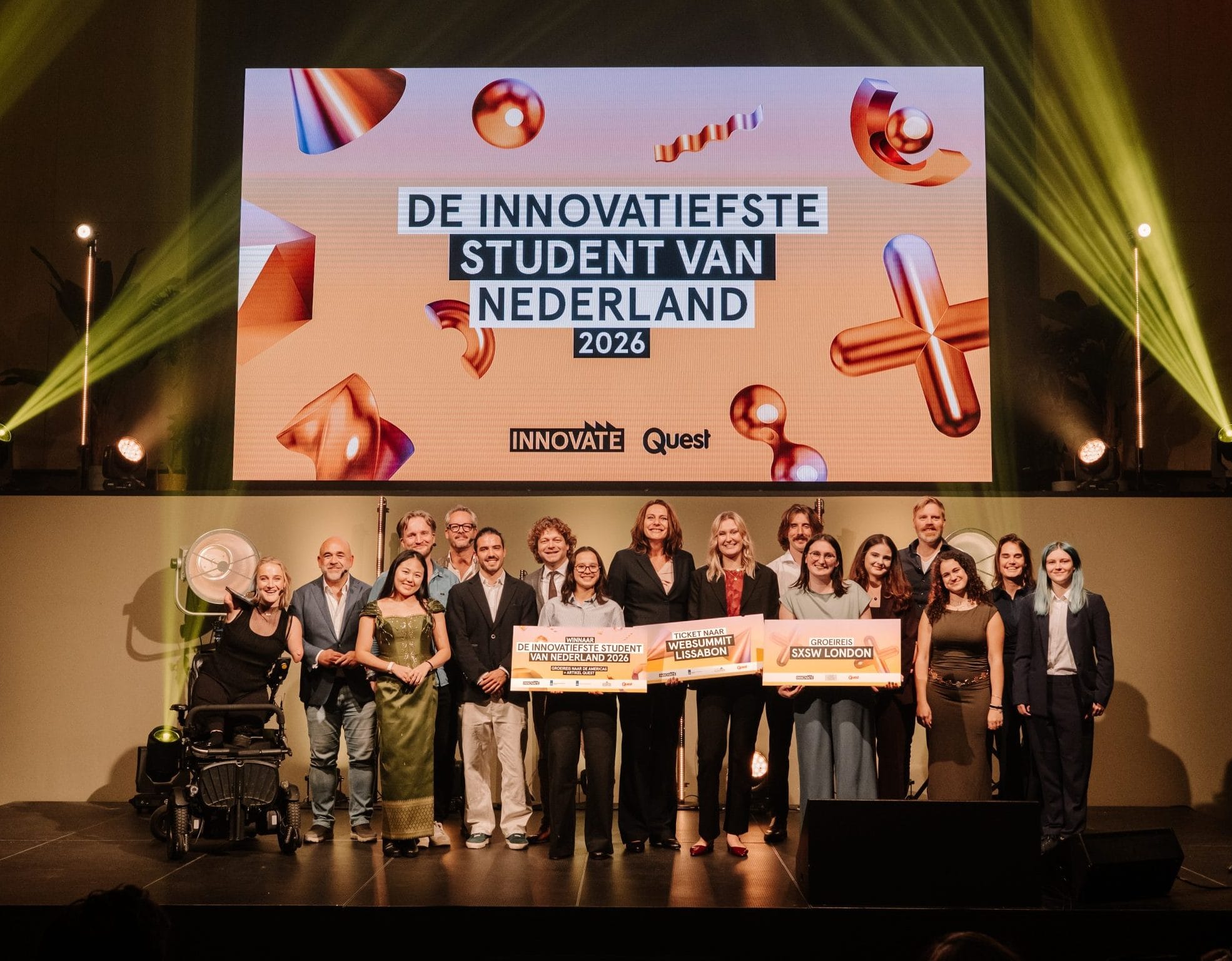
At a time when healthcare is squeaking and creaking under an ageing population, staff shortages and rising costs, this region refuses to wait for change to come naturally. Lifeport Regio Arnhem Nijmegen is opting for action. This became clear at the Health Valley Event 2026, the annual intersection where healthcare, business, government, education and research not only meet, but also set things in motion.
Lifeport street
Together with Gemeente Nijmegen, Gemeente Arnhem, Briskr, OnePlanet, HAN, Radboudumc and Radboud University, The Economic Board set up Lifeportstraat. Here we chatted with visitors and showed innovative start-ups.

Behind the crowds, the inspiring speakers, the packed halls and exhibition floor, there is a deeper story. A story about a region that wants to prevent innovations from getting stranded in pilots, systems from getting in the way of cooperation or good ideas from getting stuck in conversations. This region has the scale, the knowledge, the network and the will to turn the tide.

The story that director Egbert-Jan Bögels has been propagating for some time, that implementation and scaling up are the big issues, not the technology itself, was given new meaning at the event.
Urgency is in the air everywhere. Talks are not about whether innovation is necessary, but how to break through existing barriers:
- the regulatory burden that paralyses organisations;
- the silos between domains and institutions;
- the budgets that reduce innovation to pilots;
- the adoption gap between technology and practice.
An ecosystem that strengthens
The sessions in the Lifeport room revealed how broad the regional ecosystem is: municipalities, companies, research institutes and healthcare partners showed that they do not operate alongside each other, but with each other. Innovation is not a solo game. It is a relay race: one does research, another builds technology, a third implements, a fourth scales up. It is precisely by structuring this collaboration that acceleration occurs.

From vision to reality
What sets this region apart is that it does not linger on inspiration, but moves on to implementation. Panels openly discussed clashing systems, limited capacity and the need to radically simplify barriers. At the same time, the sessions by Rijnstate, OnePlanet, HAN and Sint Maartenskliniek showed that it can be done:
- virtual care that gives patients more control;
- technology entering the neighbourhood;
- students who pick up issues that organisations would otherwise leave aside;
- entrepreneurs ready with solutions, waiting for scale rather than another pilot.
And in the signing of Share Care, the cooperation agenda for regional ecosystems, that movement was given concrete weight. It is a confirmation of something that has been going on for some time: this region chooses to move forward together.
Lifeport can ...
The Lifeport region aims to be the place where healthcare innovation is not only conceived, but also realised. Jan van Dellen, director of The Economic Board states: this region has the scale, the will and the network to turn around 1% of national healthcare spending (€1.33 billion). Not by working harder, but by collaborating smarter. That is not an ambition. That is a roadmap.
The strength of a region that just does it
The Health Valley Event 2026 showed that the future of healthcare is not written in reports, but in ecosystems. In encounters. In guts. In people not only finding each other, but also holding on to each other.